
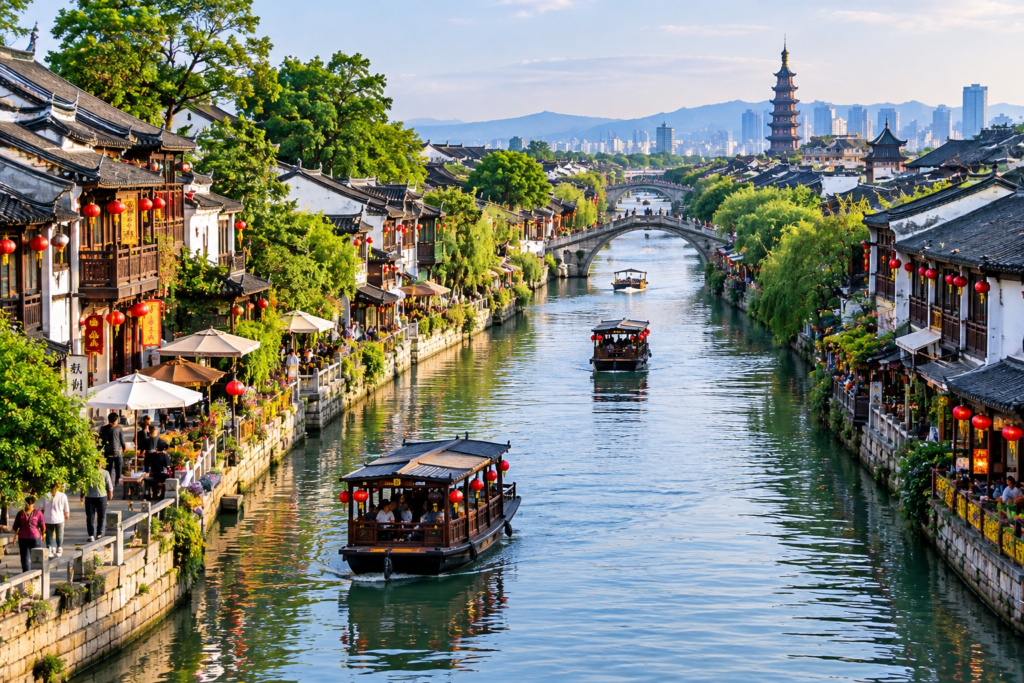
Although I had gained some knowledge about the Beijing–Hangzhou Grand Canal—which flows through the heart of Hangzhou, China—from reading historical texts, I never imagined I would have the opportunity to see it with my own eyes.
During a visit to Hangzhou, organized by the China Cultural Centre in Sri Lanka, I had the chance to study the Beijing–Hangzhou Grand Canal, as well as the trade, economic activities, and cultural exchanges that flourished around it throughout Chinese history.
Located in China’s eastern coastal region, Hangzhou is a modern city that has captured global attention. It stands out for its advancements in technology, industry, commerce, and tourism. To truly understand the prosperity Hangzhou enjoyed in the past, it is essential to examine the Beijing–Hangzhou Grand Canal—a remarkable waterway deeply intertwined with the city’s history. Ranking among the oldest and longest artificial waterway systems in the world, this Grand Canal is a monumental engineering feat that connected the northern and southern regions of China. It was not merely a waterway constructed for the transport of goods; a study of history reveals that the canal made a significant contribution to the development of China’s agricultural production, internal trade, urban growth, and cultural exchange.
A History Spanning Over 2,500 Years
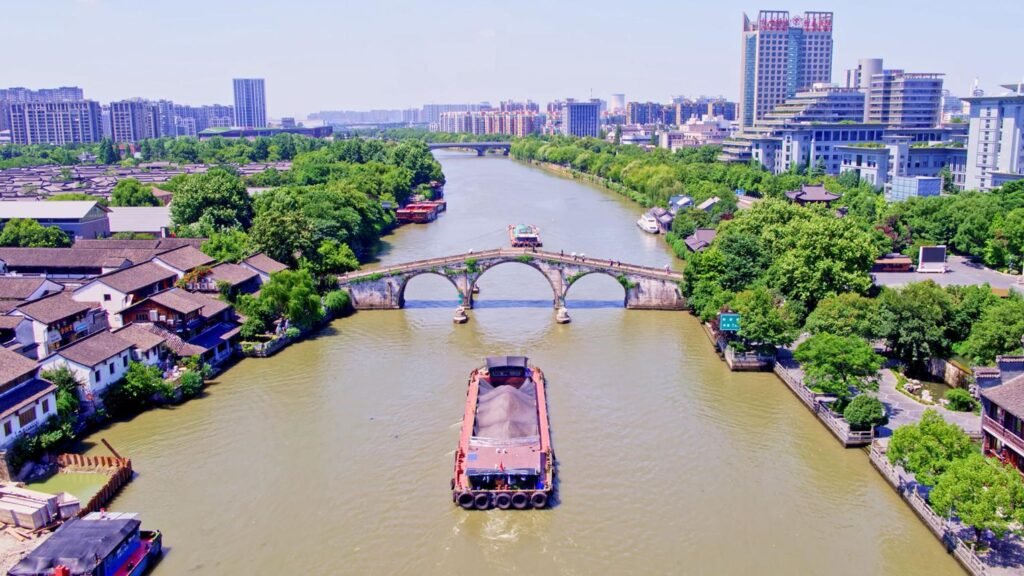
The origins of the Beijing–Hangzhou Grand Canal date back to the 5th century BCE. While its initial sections were built at different times, historical records indicate that the waterway system was extensively developed and interconnected during China’s Sui Dynasty. It is also noted that further development and restoration took place during the subsequent Yuan, Ming, and Qing dynasties.
According to various sources, the modern Beijing–Hangzhou section of the Grand Canal—the portion most commonly recognized today—stretches for approximately 1,794 to 1,797 kilometers. It extends from the city of Beijing to Hangzhou, located to the south.
This waterway plays a significant role in connecting the river systems associated with the Haihe, Yellow, Huai, Yangtze, and Qiantang rivers. It has facilitated the exchange of goods, people, and cultural ideas between various regions of China.
The boost provided to the economy of Hangzhou city
Located at the southern terminus of the Beijing–Hangzhou Grand Canal, the city of Hangzhou serves as a key hub, a fact that has defined its historical significance.
In the past, transporting large quantities of goods over land was a time-consuming and labor-intensive endeavor. However, the study of history reveals that the Grand Canal—by enabling the transport of goods via boats and vessels—opened up new opportunities for trade.
This waterway proved particularly vital for the transport of agricultural produce, rice, salt, and other essential commodities. It facilitated the movement of agricultural products from southern China to the northern regions, while also allowing for the transport of various goods from the north to the south.
As a result of this commercial exchange, trading hubs, warehouses, wharves, and human settlements flourished along the canal. Concurrently, this created expanded income-generating opportunities for merchants, artisans, and individuals engaged in various other professions. Thus, it can be said that the Grand Canal not only fostered economic activity in the city of Hangzhou but also provided a foundation for urban development throughout the entire region.
The geographical environments, agricultural produce, and economic needs of northern and southern China differed significantly. The Grand Canal served as a vital transport network, strengthening the connections between these regions.
Historical records indicate that, particularly during periods of imperial rule, the canal was used to transport rice and other essential commodities to administrative centers in the north. Furthermore, it facilitated the movement of goods required for state governance, as well as military supplies.
Consequently, the Grand Canal’s significance extended beyond mere economic activity; it helped integrate a vast expanse of Chinese territory into a unified administrative and communication system.
By connecting to this network, the city of Hangzhou was able to participate in regional trade and establish economic ties with distant areas. The significance of the Grand Canal is not limited to the economic sphere alone. It is important to note that it also served as a conduit that further strengthened cultural ties among the people of various regions in China.
As merchants, laborers, artisans, and other travelers moved along the canal, there was an evident exchange of culinary traditions, attire, arts and crafts, customs, and ideas between different regions. During this visit, I learned that this process infused diverse cultural characteristics into the cities situated along the canal.
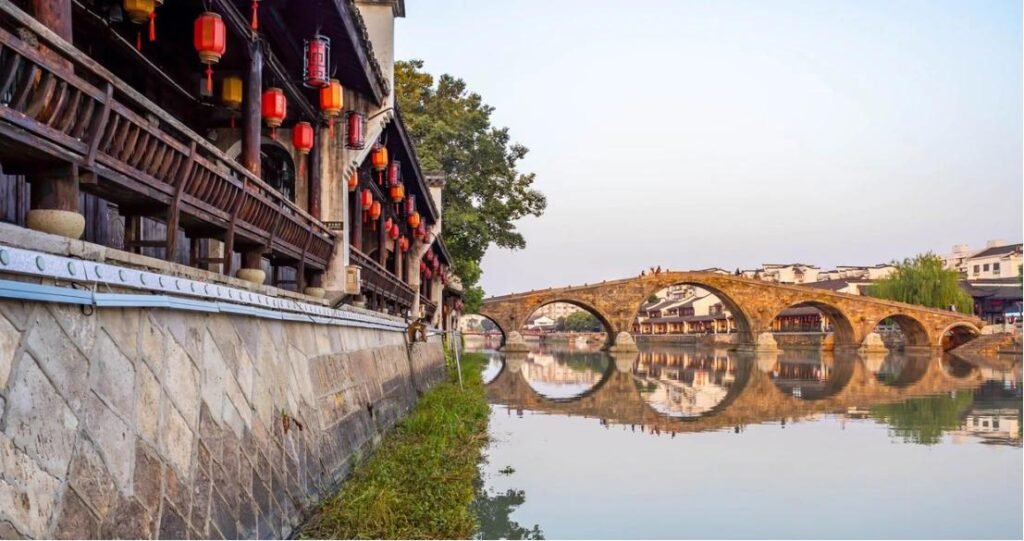
In the city of Hangzhou, the historic waterways, ancient bridges, wharves, and traditional settlements stand as evidence of this long history. Certain traditions and cultural heritage elements still observed today in areas along the Grand Canal can be considered the legacy of these past connections.
Therefore, this canal is not merely a waterway; it is a living heritage that carries the history, lifestyle, and cultural memory of the Chinese people.
Part Four

Note by—
Chandana Wijekoon


