
Introduction
The historical relationship between Sri Lanka and China dates back over two millennia. The uniqueness of the ancient China–Sri Lanka relationship lies in its fusion of religion, culture, trade, and diplomacy, all rooted in mutual respect and non-violence. It was not merely a political or economic bond, but a civilizational bridge that enriched both nations spiritually and culturally.
Sri Lanka, positioned strategically along the maritime Silk Road, was an important stop for Chinese merchants and emissaries. During the Tang and Song dynasties, diplomatic missions were exchanged, and Sri Lanka was mentioned in several Chinese geographical texts as an island of wealth, gems, and Buddhist sanctity. It is evident that the ancient Sino-Lankan relationship was built on scholarly exchange, and seaborne trade, thus laying a foundation for centuries of cross-cultural contact between the two civilizations.
Connecting the South China Sea and Indian Ocean
The relationship between China and Sri Lanka was not known only to the two countries. The Ambassadors who called on the Court of Claudius in Rome in the 1st century had commented on the trade and related activities prevailing between Sri Lanka and China. Pliny the Elder, in his ‘Natural History’ (mid‑1st century AD), mentioned that Sri Lanka sent an embassy of four envoys (led by a man named Rachias) to the court of Claudius (41‑54 AD). According to him, trade had prevailed between the island and the land of the Seres (i.e. China), which implies that Sri Lanka was a part of broader maritime trade networks linking Rome, India, Southeast Asia, and China.
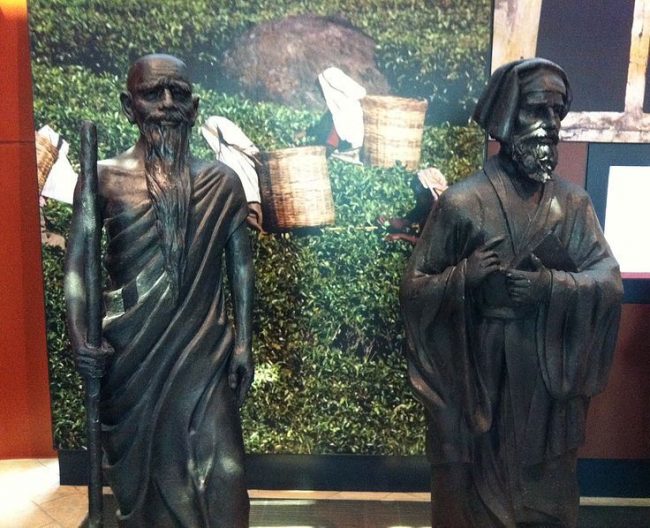
One of the most read and accepted records on Sri Lanka by a foreigner is the “A Record of Buddhist Kingdoms” by the Chinese monk Faxian (法顯) in the early 5th century. He called Sri Lanka ‘the land of the lions’, and provided one of the earliest external and eyewitness portraits and a primary source for understanding Sri Lanka. But there had been contact between China and Sri Lanka even before Faxian’s visit. The Song Shu (Book of Song 宋书) and Liang Shu (Book of Liang, 梁书) etc shows that embassies often with gifts from the king of Sri Lanka visited China in the 1st and 2nd centuries, and such visits grew even more frequent after 4th century. One of the emissaries, with an image of the Buddha from the king of Sri Lanka to the Emperor Hiao-ou-ti of the Tsin dynasty, arrived in China during the period 405-418 AD. Cheng Ho, leader of the expedition sent to Sri Lanka by a Ming Emperor in the 5th century, reportedly accompanied two intellectuals; Fei Hsin, whose work was “Description of the Star Raft” and Ma Huan, who’s work was “Description of the coasts of the Ocean”, and also a Chinese Muslim who was attached as an interpreter. Chau-Ju-Kua, a Chinese inspector of foreign trade, which sheds light on the trade of the Asian regions. According to Pi‑ch’iu‑ni zhuan (Biographies of Bhikkhunīs), a delegation of Sri Lankan bhikkhunis travelled to Nanjing in 426-456 AD to help ordain Chinese nuns, establishing the dual ordination lineage in China in the 5th century; a formal Buddhist institutional exchange.
One of the foundational aspects of international relations in the modern diplomacy today i.e. exchanging of envoys, could be observed between the two countries for centuries. The Chinese Emperor received a letter and a model of the shrine of the tooth along with other gifts from the King of Sri Lanka, Ksatriya Mahanaman in 428 AD. The Chinese Emperor was called on by five Sinhalese monks in 456 AD, and then by four embassies during the first half of the 5th century. Xuanzang (pronounced Hsüan-tsang), was an important Chinese Buddhist monk, scholar, and pilgrim who lived during the Tang Dynasty and is best known for standardizing Buddhist terminology in Chinese, and his 17-year pilgrimage to India in search of authentic Buddhist scriptures. Translating of Pali/Sanskrit texts into Chinese, possibly the translation of “Tripitaka”, the traditional collection of Buddhist scriptures (“Vinaya Piṭaka” – Discipline Basket, “Sutta Piṭaka” – Discourse Basket, and “Abhidhamma Piṭaka” – Philosophy Basket), was completed with the help of monks from Sri Lanka and South India.The mission of such emissaries was both cultural and religious in nature. They conveyed to China what they observed about Buddhism and Buddhist practices in Sri Lanka during their itinerary, It appears that the interest of the Chinese scholar-pilgrim monks at that time coincided with a ferment of Mahayana Buddhist activities in Sri Lanka and South Asia, particularly India.
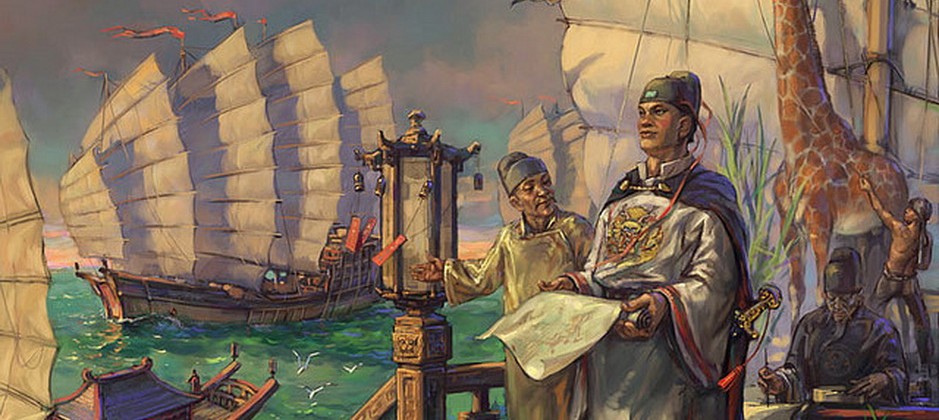
Sri Lanka was visited by Cheng Ho, first voyage in 1405 AD, second voyage in 1409 AD and the third in 1409-1411 AD. He made offerings to the Buddhist temple of Upulvan in Devundara, and to Sri Pada (Adam’s Peak). This indicates that not only diplomatic and religious contact prevailed, but Chinese presence and trade/cultural engagement as well, by the early 15th century. With the arrival of the Portuguese in Sri Lanka in 1505 AD, which followed by the Dutch and British in preceding centuries, the relationship between China and Sri Lanka appeared to have faded till the 20th century. In early 1950s, then Ceylon, recognized the People’s Republic of China (PRC) by establishing ties with the new government in Beijing, rather than Taiwan. The Rubber Rice Pact of 1952, was one of the first major bilateral agreements between PRC and a non-socialist country.
Archaeological, Epigraphic & Inscriptional Memories
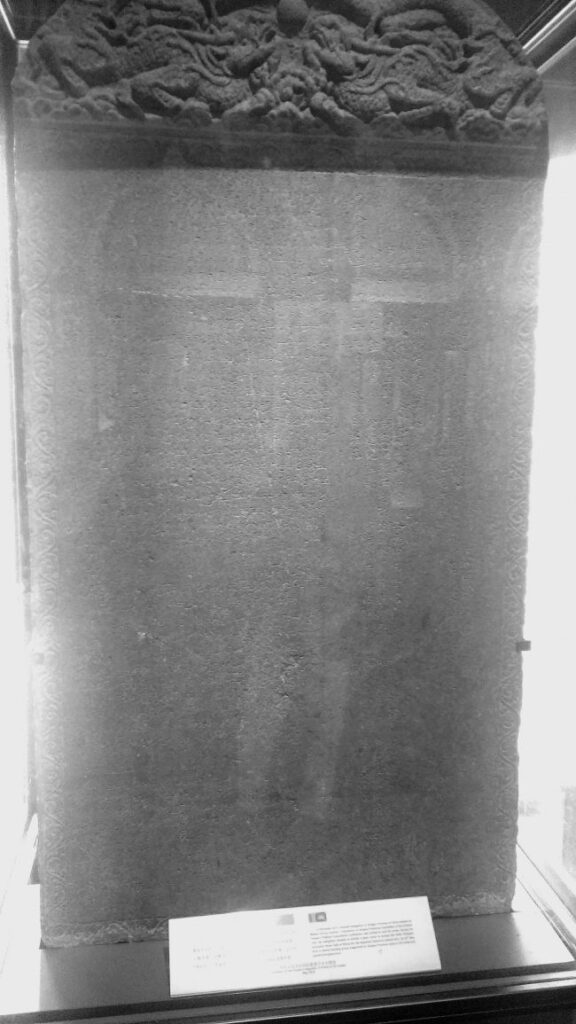
The close relationship between China and Sri Lanka from ancient times has left many memories as proof. The Galle Trilingual Inscription confirmed a Buddhist offering by Zheng He’s fleet to a temple in Devundara. The offerings suggest religious/trading diplomacy and the extent of Chinese naval/geopolitical reach. The Yapahuwa Lion, a 13th century sculpture (lion façade or guardian lion from Buwanekabahu I’s hill kingdom) described as a “hybrid between lion’s face and dragon’s body,” possibly reflecting Chinese guardian lion imagery or dragon myths. This suggests cross-cultural artistic borrowing or influence in motifs. Chinese ceramics (stoneware, porcelain) have been found in many ancient Sri Lankan port and interior sites such as Mantai, Anuradhapura, Jaffna, and Polonnaruwa. Some jars and storage vessels imply bulk trade or storage usage, which reflects the diminishing trend of West Asian ceramics (11th and 13th centuries) over time in favor of Chinese pieces. A large number of Chinese coins belong to different periods, including Tai Song (976‑997 AD), Zhen Zong (998‑1002 AD), and Ren Zong (1023‑1063 AD) etc. were unearthed in many sites. Sites with Mahāyāna Buddhist influence show the presence of Bodhisattva iconography (such as Avalokiteśvara statues) in Sri Lanka, which are more characteristic of Chinese and East Asian religious art. Cheena di (also Cheena‑Adi, the “Chinese Punching”), a martial art in Sri Lanka, is often claimed via folklore or secondary sources to have Chinese origins, sometimes linked to Shaolin monks or pilgrimage. Despite the absence of credible evidence to that effect, its existence in modern Sri Lankan culture reflects that there had been some kind of affiliation and adoption.
Conclusion
The historical relations between China and Sri Lanka reflect a remarkable legacy of cultural, religious, and commercial exchange. While interruptions occurred due to regional power shifts, and maritime trade rivalry between China and the Arabs over the trade in Asia and use of ports in Sri Lanka time to time; the resumption of ties, especially during the Ming Dynasty illustrates the resilience and strategic importance of Sino-Lanka relations for over a millennium. That legacy underscores the value of cross-cultural connectivity in shaping world history. Deep Buddhist links, diplomatic and royal exchanges, and shared cultural and symbolic influences show the uniqueness of the ancient China–Sri Lanka relationship, which was one of the earliest examples of long-distance maritime diplomacy in Asia built through the Maritime Silk Route. It showcases the extraordinary importance and significance China placed on its link with Sri Lanka. China–Sri Lankabond stood out as along-distance spiritual partnership; one that united two distant civilizations across the ocean, not through conquest or profitable trade, but through a shared quest for enlightenment, through faith, respect, and maritime enterprise.
——————————–
By Maj Gen (Dr) Prathap Tillekerathne (Rtd) RWP RSP USP PhD MCPS Pgd HRM psc
Maj Gen (Dr) Prathap Tillekerathne served Sri Lanka Army for over 34 years and held many a senior appointments including Director of Overseas Operations (United Nations Peacekeeping Missions), Divisional Commander and the Colonel Commandant of Sri Lanka Armoured Corps. He is a graduate of Army Command and Staff College, holds Post-graduate Degree in HRM, Master Degree in Conflict & Peace Studies, and Doctoral Degree in Defence and Security. He represented Sri Lanka in many international conferences, including at the UNHQ at New York as a member of delegation on UN Peacekeeping, and served in the UN as well. He is a recipient of “Alumni Achievement Award” from Asia-Pacific Centre for Security Studies – USA. He conducts personality development programmes / workshops for under graduates and the academic staff of state universities, and also government agencies/departments. He is a lecturer in International Relations, Defense & Security, and UN Peacekeeping Missions. He also an accredited International Mediator, and accredited member of the Singapore International Mediation Centre.


