
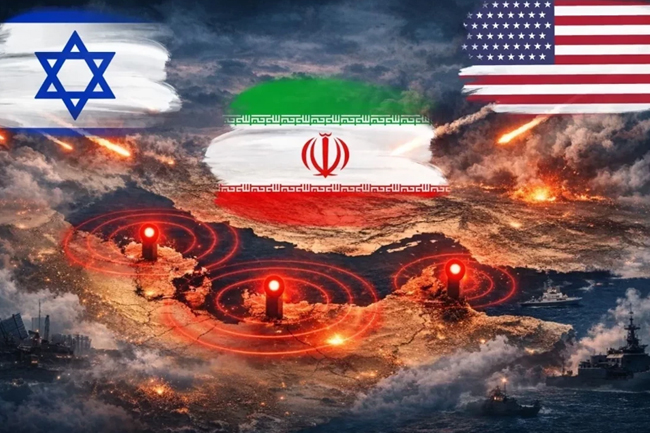
The Iran–Israel–USA conflict appeared to be taking different shapes, almost in every passing weeks. It shifted its posture from a high-intensity confrontation to a hybrid nature of military environment since mid-March 2026. It reflects a combination of economic coercion, limited kinetic operations, and proxy warfare, alongside highly fragile diplomacy. It escalated into a multi-domain war after the Israel’s strike on Iran’s South Pars gas field on 18 March 2026; Proxy engagements across Iraq and Syria, and cyber operations being carried out amidst direct air strikes and missile exchanges. Those had heightened the situation and further distanced the peace.
Despite damage to infrastructure and the civil and military leadership that Iran made to suffer, its drone and decentralized missile striking capabilities resulted both USA and Israel incurred unprecedented damages in both lives, material, and military might-image. What the whole situation reflected was that USA and Israel not successful in transforming tactical success into strategic victory, although their technological superiority and precision-strike capabilities are well known as superior to almost any other country. In this context what the conflict mirrored is, militarily, mutual but incomplete degradation.
Diplomatically, negotiations remain limited and focused on interim arrangements. Pakistan-mediated ‘indirect negotiations’ between Iran and USA, with implications for Israel, centered on an ‘interim de-escalation framework’, not a comprehensive settlement. Core disputes—including Iran’s uranium enrichment limits, sanctions relief, control of Hormuz, and verification mechanisms—remain unresolved. It resulted a persistent strategic deadlock. The ‘structural constraints’ that Pakistan’s mediation faces due to lack of any coercive leverage of a major power, inability in enforcing compliance, and Israel’s parallel but distinct security concerns; all lowered the expectations from the negotiation process. Repeated Hormuz disruptions have resulted destabilized oil and LNG flows, increased global energy volatility, and USA leveraging the crisis to strengthen its role as a global energy supplier.
According to the Bloomberg, while USA and Iranian delegations were in Islamabad and negotiations were underway, several USA navy ships attempted to cross the Strait of Hormuz on 11 April 2026 but were forced to turn back after encountering threats from Iran’s Islamic Revolutionary Guard Corps. That was a clear example of how fragile the situation, and also how far the peace that all stake holders preached and accused the other of not reaching out for.
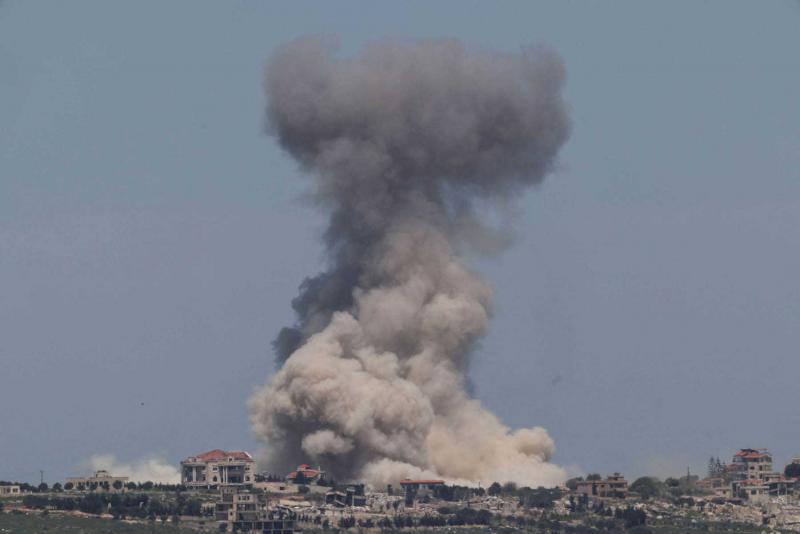
Strikes carried out by Israel on South Pars gas field of Iran led the tensions spill into Lebanon as well. Hezbollah increases alert levels and begins limited rocket fire and border probing, and Israel responds with targeted airstrikes on Hezbollah positions in southern Lebanon. By 30 March 2026, Israel expanded its strikes deeper into southern Lebanon, against which the Hezbollah retaliated with sustained rocket/missile barrages into northern Israel, making Lebanon an active front, not mere a secondary theater. Israel conducted broader air campaigns since the first week of April, and Hezbollah increased its range and volume of strike and use of drones and guided munitions. Sustained rocket/missile barrages into northern Israel, and cross-border exchanges become daily occurrences. By Mid April, Israeli forces were controlling or operating 5–10 km inside southern Lebanon, what calls a “security” or “buffer” zone, or “yellow line”. It includes dozens of villages and areas north of the immediate border belt, largely depopulated (civilians displaced or prevented from returning), and actively patrolled, including surveillance and frequent strikes. Air power and artillery reached up to Beirut and Beqaa Valley. By mid-May, the occupied/security zone was estimated at about 600 km², which is around 5.8% of Lebanon’s territory, and Israeli forces were reported to control or operate inside 47 of 62 villages within that zone. But this militarized buffer zone is politically disputed and still actively contested in combat.
Israel’s attacks on Lebanon did not remain a side operation. It expanded the war geographically, strengthened Iran’s indirect leverage, and created a persistent northern pressure front. However, it carries the same pattern observed in elsewhere ie. controlled escalation and unstable stalemate.
Despite a 10-day USA-brokered cessation of hostilities commenced from 16 April 2026 onwards between Israel and the Lebanese state, and the extended in late April and then again on 15 May 2026 for another 45 days, Israeli airstrikes in southern and eastern Lebanon continued.
Militarily, the situation in the Middle East reflects a gradual change from high-intensity war to a “frozen conflict”, and war of attrition with occasional strikes, especially in Lebanon, Iraq, and maritime zones. But it can be escalated quickly, which demands continuous military readiness on all sides. With the Strait of Hormuz closed or restricted by Iran, and USA responded with its naval blockade of Iran since 13 April, using energy flows as leverage, resulting oil prices surged to multi-year highs. The maritime standoff is now become the core strategic front, more important than land battles.
Diplomatic situation is appeared being stalled, fragmented, and mistrustful; Iran proposing reopening Hormuz and ending hostilities first before the nuclear negotiations, and USA showing its open to reviewing proposals but continuing military pressure. What is obvious is that this situation would not end with a decisive USA–Israel victory, not a collapse of Iran, and not a stable ceasefire. Core strategic reality is that USA cannot easily force regime change without massive escalation, Iran cannot sustain long-term economic strangulation, and Israel remains militarily active but strategically constrained, thus a mutual deadlock, thus, the conflict is drifting into a prolonged frozen conflict” scenario.
But the Pakistan’s mediator role had severely affected by the CBS News on 12 May 2026 that Iran’s military aircraft, including an alleged RC-130 reconnaissance aircraft, were flown into Pakistan Air Force’s Nur Khan Air Base after the April 2026 ceasefire announcement. It appears that Pakistan’s “balancing strategy”, by maintaining relations with both Iran and USA sans any alignment with any of the blocs, was not in the likes of critics in USA, who describe it as “double game” or “backstabbing”. Pakistan is heavily connected to China and Gulf states, and neither want regional instability spilling into Baluchistan and Afghanistan. coercive stalemate and intermittent escalation being prominent characteristics in this conflict, Pakistan-mediated efforts is unlikely to alter the fundamental trajectory of the conflict. However, temporary de-escalation with a fragile ceasefire and continued dialogue channels, certainly raised the Pakistan’s standing among the international community.
The stark reality on the ground is that Israel-Plasticine conflict is faded to the background, and the Lebanon front is gradually becoming the center of gravity. USA President Trump has claimed victory and demanded the reopening of the Strait of Hormuz, while pursuing “Project Freedom” to guide commercial ships. Iran has maintained a firm stance on controlling the Strait of Hormuz and has called US actions “reckless military adventure,” while utilizing a “5-point counter-proposal” to demand reparations and the removal of US and Israeli forces. Israel continues to target Hezbollah in Lebanon and monitor the nuclear program, having stated the goal was to diminish Iran’s military capacity.
Thus, Strait of Hormuz blockade is a “dual blockade”: USA Navy is blocking Iranian ports, while Iran restricts navigation in the Persian Gulf. During the ceasefire period, USA carried out strikes against Iranian military facilities on 7 May 2026, claiming it as a retaliatory “self-defense” action, and President Trump announced on 8 May 2026 that USA Navy destroyers transited the Strait of Hormuz while under fire. Iran accused USA of violating the truce by attacking an oil tanker. Iran has frequently targeted USA assets in Gulf countries, particularly the UAE, where air defenses have engaged with incoming missiles and drones.
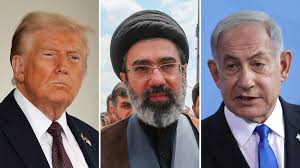
Iranian Foreign Minister Abbas Araghchi questioned on 15 May 2026 whether USA is negotiating seriously,because USA stuck over the issue of Iran’s enriched uranium stockpile. Iran indicated that they seriously consider the Russian proposals about uranium relocation as an option. Meanwhile, during the last two weeks, a vessel was seized near the UAE coast, a cargo ship was sunk near Oman after an attack, Iranian naval patrols heightened, and reportedly Iran allowed Chinese-linked oil tankers passage through Hormuz.
It was also alleged that Saudi Arabia secretly struck Iranian drone and missile launch sites, and UAE allegedly participated in parallel operations. There is little sign that Gulf states is shifting from cautious neutrality toward limited military cooperation with the USA-led coalition, despite Iran’s warnings that all ships entering Hormuz must cooperate with Iranian forces. The May 2026 summit between President Trump and Xi Jinping in Beijing was the most awaited event in 2026. According to President Trump, China promised it would not provide military equipment to Iran, and support keeping the Strait of Hormuz open.
All theses situations align with the realist expectations: when states possess resilient and decentralized military systems, decisive victory becomes unlikely. The result is a prolonged conflict characterized by attrition and signaling rather than resolution. This coercive stalemate is defined by three characteristics i.e. mutual vulnerability – all actors can impose significant costs on each other without any resolution in sight, absence of decisive capability – no actor can achieve total victory without unacceptable escalation, and reliance on indirect strategies – economic pressure and proxies signaled replacing of direct confrontation. But high risk of renewed escalation still exists.
This situation also amply illustrates the limits of military power in achieving strategic objectives. The shift toward hybrid warfare and economic coercion reflects structural constraints imposed by the balance of power and the globalized nature of energy systems.
By Prathap Thilakaratne
( Major General (Retd) )


