
At a time when young people across China are leaving rural villages in search of urban careers, a growing number are returning to their ancestral homes in Jingmai Mountain, drawn by the opportunities emerging from a centuries-old tea tradition.
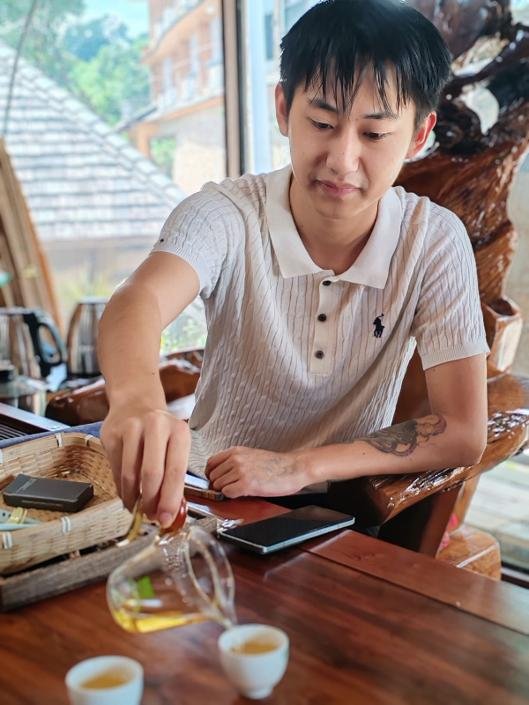
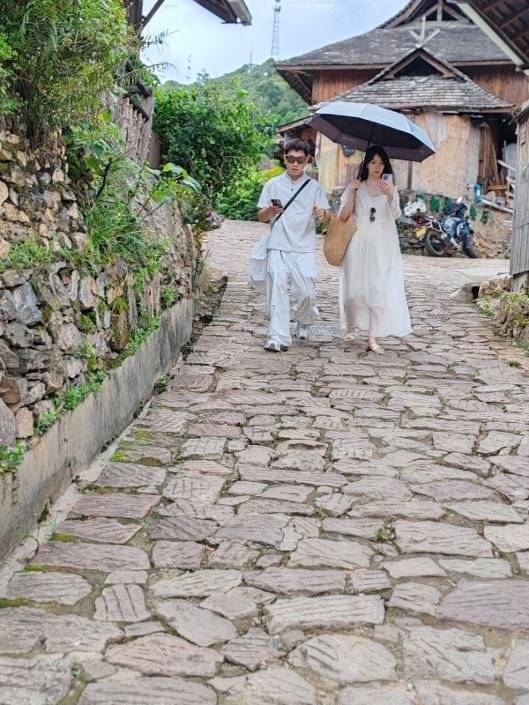
Among them is 25-year-old Luo Minhyu, a computer science graduate who chose to build his future in Wengji village rather than pursue a career in one of China’s major cities.
Today, he manages his family’s traditional tea business, combining inherited knowledge with digital platforms, tourism and a growing appreciation for Jingmai’s tea heritage.
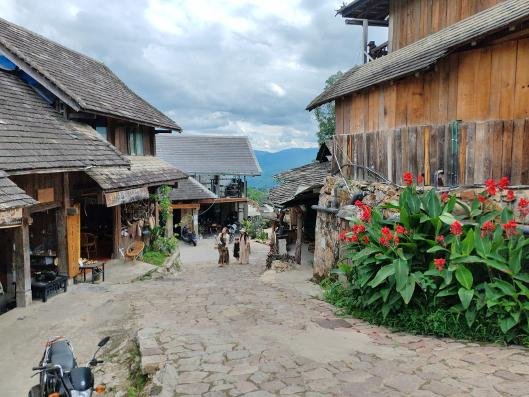
“I realised there are more opportunities here than in the city. After Jingmai became a UNESCO World Heritage Site, more tourists started visiting, and more people learned about our tea through social media,” he said.
Together with his girlfriend, who is also his business partner, Minhyu has established a tea house and boutique guesthouse in the village, offering visitors an opportunity to experience the local tea culture.
His decision reflects a remarkable transformation taking place in Jingmai, where an ancient agricultural tradition is becoming a source of renewed economic opportunity for a younger generation.
The journey through Jingmai’s mist-covered forests brought a feeling close to my heart. The landscape, with its cool climate and lush greenery, reminded me of Sri Lanka’s scenic hill country, particularly Nuwara Eliya. Yet the way tea is cultivated here is strikingly different.
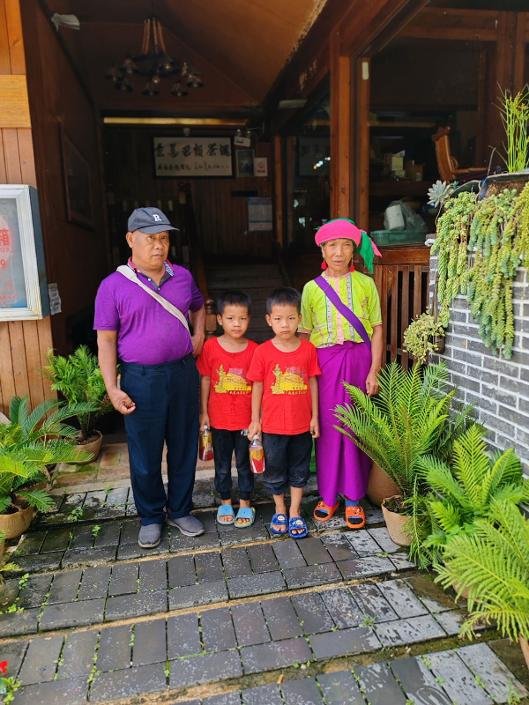
Jingmai is not simply a place where tea is grown. It is a landscape where generations have developed a relationship with nature, preserving an agricultural tradition while adapting it to changing economic realities.
A forest that grows tea
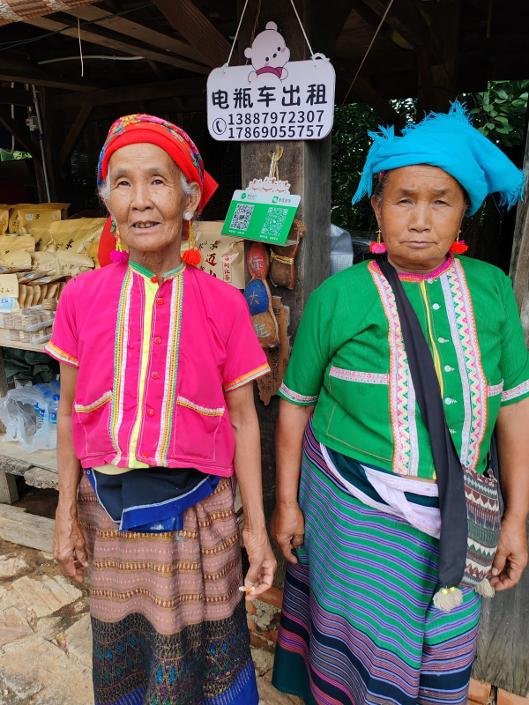
Situated in Pu’er City in southwestern China’s Yunnan Province, close to the borders of Myanmar, Laos and Vietnam, Jingmai Mountain is home to the indigenous Bulang and Dai communities, whose relationship with tea stretches back more than a thousand years.
Unlike Sri Lanka’s conventional tea plantations, where tea bushes are cultivated in carefully maintained rows, Jingmai’s ancient tea trees grow beneath the canopies of native forests.
More than 3.2 million ancient tea trees flourish across nearly 1,900 hectares of protected forest. Some are estimated to be over 1,000 years old, forming a distinctive landscape in which tea cultivation and forest conservation have evolved together.
The forest canopy provides shade, regulates temperature and humidity, enriches the soil and helps control pests naturally. This system has enabled generations of tea growers to cultivate their crop with minimal intervention while preserving the surrounding biodiversity.
In 2023, Jingmai Mountain became the world’s first tea-themed UNESCO World Heritage Site, recognised for its exceptional cultural landscape and the traditional knowledge through which local communities have sustained tea cultivation for centuries.
Its significance extends beyond the ancient trees. For the Bulang and Dai communities, tea is a way of life, deeply embedded in their beliefs, customs, family traditions and economic security.
Tea as a cultural inheritance
At a recent visit to these ancient tea forests and the traditional Bulang village of Wengji and the Dai village of Nuogan, Xiong Dengkui, who guided us explained how tea continues to shape the lives of the mountain communities.
“They respect tea because it has brought them prosperity and improved their living standards. But beyond its economic value, tea is deeply spiritual. It is woven into their beliefs, traditions and everyday lives,” Dengkui said.
Tea accompanies the community through significant milestones, from religious ceremonies and festivals to weddings and times of illness.
“When a daughter gets married, her family traditionally gives her a small plot of tea land,” she explained. “Tea is not simply property but it is a family’s inheritance and security for future generations.”
The spiritual connection is particularly evident during the first spring harvest, when villagers perform rituals to honour the tea spirit before collecting the season’s first leaves.
“They believe that everything in nature, from the grass beneath their feet to the tallest trees, has a spirit. Before the first spring harvest, they worship the tea spirit to express gratitude and pray for a good season,” Dengkui said.
For these communities, protecting the forest is not merely an environmental responsibility. It is an obligation to their ancestors and to the generations that will inherit the land.
Generations of shared responsibility
Jingmai’s traditional land management system is another distinctive feature of its tea culture.
Although land is owned by the State under China’s legal system, families have inherited the rights to cultivate specific tea forests over generations.
“The Dai and Bulang families have lived on this mountain for centuries. Their ancestors passed the tea forests down from one generation to the next,” Dengkui explained.
Physical boundaries between family lands are limited, but villagers know the extent of their inherited plots.
“There is mutual respect for each other, so disputes are extremely rare,” she said.
Unlike estate workers in Sri Lanka, Jingmai’s tea growers are independent producers. They cultivate and harvest their own tea and decide when and where to sell their produce.
“They are not employees of tea companies. They decide when to harvest, collect their own tea leaves and sell them directly. Some sell to tea companies, while local cooperatives and government agencies also help connect them with markets,” Dengkui said.
Tea provides more than 90% of the income earned by over 4,000 families in the region. Around 6,000 people from five ethnic communities continue to live across Jingmai Mountain, sustaining traditions that have remained largely unchanged for centuries.
Household incomes fluctuate according to harvest seasons, with spring tea from ancient trees fetching premium prices.
The trees themselves vary considerably in height. While many are maintained as bushes of around 1.5 to two metres to facilitate harvesting, ancient trees can grow beyond nine metres, forming a natural canopy over the forest.
“There are tea trees that are more than 10 to 15 metres tall, and they continue to grow even taller,” Dengkui said.
According to the UNESCO World Heritage website, Jingmai Mountain produces nearly 4,000 tonnes of tea during the spring harvest annually. This represents only around 0.1% of China’s total annual tea production, which exceeds 3.5 million tonnes.
Yet its limited production has become an advantage. Rather than competing with mass-market tea producers, Jingmai has established itself as a premium specialty tea destination, attracting consumers who value authenticity, heritage and quality.
From computer science to tea entrepreneurship
For Minhyu, the growing international recognition of Jingmai has opened doors that previous generations of tea growers could hardly have imagined.
“We wanted people to experience our tea culture, not just buy tea. Young people can now build businesses in their own villages because there is a growing customer base,” he said.
As he brewed the tea, the sun-dried leaves gradually released their colour, turning the water a delicate amber. He gently poured the tea into small white cups, offering visitors a taste of the mountain’s heritage.
The experience was as much about the ritual as it was about the beverage.
Minhyu’s business reflects a broader trend in Jingmai, where young people are combining traditional knowledge with modern entrepreneurship.
Many are establishing boutique homestays, tea houses, cafés and cultural centres, while using social media and e-commerce platforms to reach customers beyond their villages.
The return of young entrepreneurs is helping create a new economic identity for Jingmai, one in which cultural preservation and commercial opportunity are increasingly interconnected.
For the younger generation, the traditional tea business is no longer limited to harvesting and selling leaves. It has become an opportunity to build a distinctive brand, attract visitors and introduce a centuries-old culture to new audiences.

By Shanika Sriyananda
( Writer is a relance journalist based in Colombo. She was the former Media Director of the Ministry of Defence and Former Director of Research and Analysts at the Presidential Secretariat. )


