
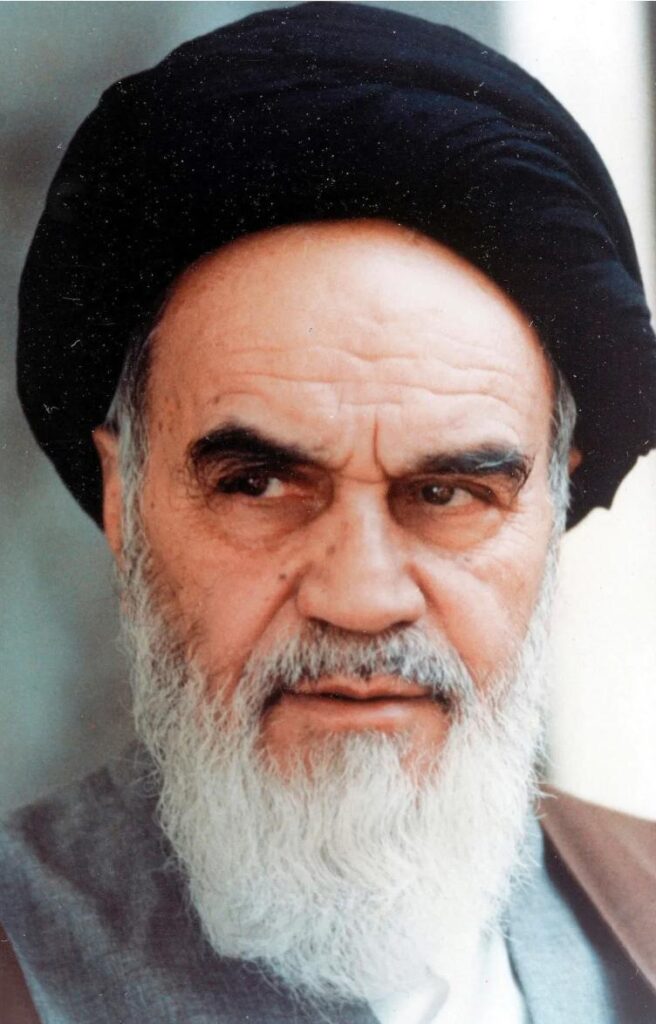
Throughout history, a few leaders have emerged whose influence has transcended borders, generations, and political environments. They are remembered not only for the positions they held, but for the vision they inspired among people, the courage they demonstrated, and the lasting impact they left on society. A truly great leader possesses the rare ability to transform challenges into opportunities, to unite diverse communities around a shared purpose, and to guide society toward a future grounded in dignity, justice, and hope. Such leaders become not merely heads of state, but symbols of determination, faith, and enduring ideals that continue to inspire future generations.
The unanimous consensus of a group of good human beings, who collectively shaped a favorable destiny for the nation and its people for many generations, can be seen as another definition of the “Iranian Revolution.” Its architect, the unparalleled heroic figure Imam Khomeini, stood for the rights of his people without violence and without opportunistic political gain, and remained steadfast in that struggle until the very end. His virtues and contributions cannot be fully described in a single article. Imam Khomeini, who embraced humanity and universal justice as a guiding principle of faith, is a true hero of our time, bestowed upon the nation in its moment of need.
The sacred dimension of Imam Khomeini’s thought on unity stood as a distinctive model, and it is essential for all believers in unity to understand the question: “What were Imam Khomeini’s intentions regarding unity, and what objectives did he strive to pursue?” The leader of the Iranian Revolution, which took place solely for the spiritual peace and well-being of humanity, was Imam Khomeini.
To describe the various dimensions of Imam Khomeini’s personality and to fully explain the life periods of such a great figure within a single essay or even an extensive book is akin to pouring the fragrance of his humanitarian virtues into a single vessel from the vast ocean. This work is especially intended for all those in other countries who admire Imam and show unconditional respect and affection toward him.
In explaining the course of events in Imam Khomeini’s life, emphasis is placed on the source, refinement, and human-centered priority of his thoughts, as well as the spiritual and intellectual dimensions that influenced his life and movements throughout his lifetime. Imam’s comprehensiveness, the integrity of his personality, and the consistency of his ideological school lead his uprising and the Islamic Revolution to be interpreted beyond the problems and reforms of a single nation or society.
Therefore, to properly understand the thoughts and path of such a great man, a mere partial or sectional study of his personality is not sufficient. Rather, he must be understood through the entirety of his lifelong ideas, beliefs, and actions. This writing offers only a passing glimpse into that realm of greatness and sublimity.
In the field of education, Imam Khomeini was both a theoretical and practical expert.
Through his educational methodologies, as a pioneer of the religious movement, he was able to dismantle a Western-oriented society that had, up to that point, suppressed culture and moral values due to the betrayals of the Pahlavi dynasty and its affiliates, and to establish a more righteous social order. At that time, society had become inclined toward apathy, and during the process of revival, he also had to confront severe challenges under oppressive social conditions.
His companions once asked him what force could enable him to rise and establish a system of justice. He then pointed to the cradle of an infant. Fifteen years later, the young Muslim generation of Iran became the principal actors of the revolution. In this way, Imam Khomeini succeeded in deeply planting the seeds of a humanitarian revolution within the youth, who are the most vital segment of any society.
Imam Khomeini regarded self-awareness and the continuous purification of one’s life from corruption and base desires as prerequisites for attaining true perfection (Kamal-e-Haqiqi). He considered work as honorable as motherhood, and believed that “a child’s first school is the lap of its mother.” Addressing educators, Imam Khomeini stated: “Pay attention; primary education is more important than university education, because mental development occurs in childhood, where teachers act as guardians, and in addition to other responsibilities, human beings are entrusted to them.”
Imam Khomeini described humanity as the essence of all living beings in the universe. He stated that “human beings are a miracle capable of evolving, through proper training and education, into either a heavenly or a destructive being, such that the entire world may be transformed through their moral reform and education.” He considered upbringing and spiritual purification to take precedence over classroom instruction. He also placed his trust in science, but emphasized that without purification of the soul, knowledge could become a tool in the service of destructive purposes, stating that “knowledge in a corrupt mind is more harmful than ignorance.”
Why are Imam Khomeini’s final messages published, distributed, and studied? In particular, why has his final testament reportedly been restricted in certain political contexts and among governments in some Arab and Islamic countries that are seen by critics as dependent or aligned with external powers? Why has it been treated as controversial or even criminalized in some settings?
What motivates some state actors to mobilize extensive alliances and institutional mechanisms to contain or control the influence of Imam Khomeini’s thought and movement? Is it anything other than his emphasis on certain truths and moral values that he believed were essential to addressing the longstanding suffering and spiritual deprivation of humanity?
For those who are familiar with Imam Khomeini’s pure life, and who have heard his message and understood his personality, there is no doubt that the torch he lit continues to endure and cannot be extinguished amid waves of distortion and opposing narratives.
Imam Khomeini had already articulated all his objectives and ideals, and in practice he devoted his entire existence to their realization. In June 1989, he was preparing to meet those whom he had loved and contemplated throughout his life. He did not seek anyone’s plea or intervention to save him; that moment of majesty was drawing near, a reality too heavy for the profound grief of his followers to bear.
In his final testament, Imam Khomeini himself wrote in a calm and reassuring tone. With a peaceful and contented soul, and with a conscience hopeful in the mercy of God, he bid farewell to his brothers and sisters and declared his journey toward eternal beloved ones. He expressed that he desired nothing except your sincere prayers, and he asked the Almighty God to accept his apologies for any insufficient service. He acknowledged his shortcomings and, with humility, sought forgiveness. He then urged the nation to move forward with strength, determination, and willpower.
Imam Khomeini regarded unity as an essential foundation for achieving peace and tranquility. He emphasized that “the Islamic Republic seeks to live in peace and calm with all other republics and nations,” and that stability can only be established through respect for the independence of nations, non-interference in each other’s internal affairs, and adherence to the principle of safeguarding territorial integrity.
From his perspective, the necessity of global peace and stability was rooted in peaceful coexistence among all countries of the world. He stated that the government and nation of the Islamic Republic were engaged in a pursuit of religious brotherhood and peaceful coexistence with Muslims across the world as well as with all nations globally. Therefore, it sought to expand relations based on mutual respect. He further affirmed that relations with all foreign nations would be founded on the principle of mutual respect, without submission to oppression or the exercise of oppression over others.
He expressed a desire for friendship with the nations of the world, and for building relationships with all states on the basis of equality. In his view, nations should establish constructive and respectful relations with one another, grounded in goodwill, mutual understanding, and equality.
Imam Khomeini’s other central intention was the moral and spiritual formation of human beings, through which justice would expand across the world under the guidance of perfected individuals, and the sources of vulnerability within Muslim societies would be eliminated. He believed that otherwise decline becomes inevitable. As he explained, “When we decay from within, we become vulnerable; when individuals decay internally, this degeneration spreads throughout society as a collective process, eventually leading to its destruction. Those trained in the teachings of the Prophets and Imams never violate this moral system, and any such violation places society at risk.”
Another key objective in his thought was the establishment of independence and freedom, and the protection of the independence, liberty, and human dignity of Muslims. In this regard, Imam Khomeini stated:
If we were to submit ourselves to the United States and other superpowers, we might appear to gain security and welfare on the surface. Our graveyards may even become filled with our beloved martyrs. However, in doing so, we would lose our independence, freedom, and human dignity, or ultimately become enslaved. America and other non-believing states claim that certain goods would become cheaper and that we would no longer have to “offer martyrs and the wounded.”
Another intention within Imam Khomeini’s ideal of unity was to resolve the difficulties faced by Muslims around the world and within their own countries. Therefore, he called all of them toward unity and advised the establishment of harmonious relations among them.
O people who value peace and justice, rely upon the culture of Islam. The struggle against blind imitation of the West and Westernization is central to Imam Khomeini’s vision of unity, which can be summarized as the protection of Islam; the promotion of enjoining good and forbidding evil; the formation and training of righteous individuals; the attainment and safeguarding of independence, freedom, and human dignity; the spread of divine justice and authentic Islam throughout the world; and the prevention of discord and division among people.
Finally, the Islamic unity envisioned by Imam Khomeini has already produced significant achievements and is expected to yield even greater results in the future. Among these are the Islamic Revolution as well as liberation movements involving Muslims and other oppressed nations. It also includes the broader ideal of global unity and the affirmation of the dignity and nobility of Muslims.
In this way, Imam Khomeini’s principle of unity stands as both a cause of victory and a key to the preservation of Islamic harmony and coexistence.

By — Fathima Zamaa Shifani
The Cultural Expert
Iran Cultural Center
Embassy of the Islamic Republic of Iran
Sri Lanka


