
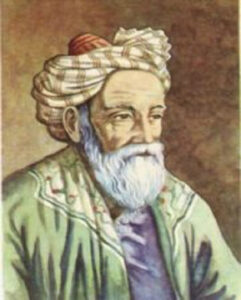
Poetry has remained a central part of human civilization for thousands of years, not merely because it serves as an ornamental form of expression, but because it accomplishes something that very few other forms of communication can achieve. It captures human experience in a manner that is concise, emotionally profound, and deeply meaningful. Poetry is important to humanity because it speaks simultaneously to both the heart and the mind. It enables us to feel, to think, to connect with one another, and to understand life in ways that ordinary language often cannot express. It is not merely a form of literature, but a reflection of humanity itself.
Persian literature is regarded as one of the most distinguished and profound literary traditions in the world, and the greatness of its poets is evident on many levels. The works of Persian poets continue to be read and admired across the globe even today, demonstrating the timeless quality and universal appeal of their poetry. One of the defining characteristics of Persian poets is their remarkable ability to unite philosophy and poetry into a single artistic expression. Persian poetry is regarded as one of the world’s most spiritual and profound literary traditions. The spiritual nature of Persian poetry has been interpreted in diverse ways by various scholars and critics. The poetry of Jalal al-Din Rumi is considered the highest expression of Sufi philosophy of divine love. The works of Hafez are filled with symbolic spiritual language, while Saadi Shirazi connects social and ethical philosophy with spiritual values. Likewise, the poetry of Omar Khayyam presents a spiritual quest through a skeptical and philosophical perspective.
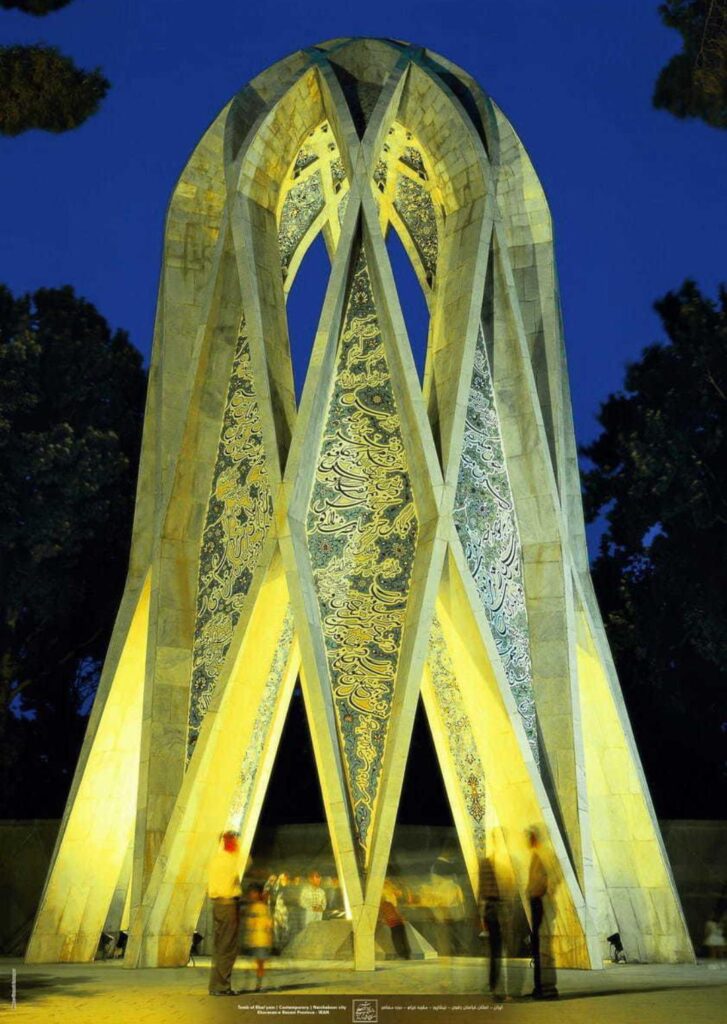
Located in eastern Iran, the ancient Silk Road city of Nishapur was, during the medieval era, an important political center and a flourishing hub of art, craftsmanship, philosophy, and trade. Yet even today, the city’s enduring fame largely rests upon the great scholar and artist it produced Omar Khayyam. A magnificent white marble monument situated within a vast garden commemorates this 11th-century polymath. Inscribed with his poetry and adorned with rhombus-shaped geometric designs, the mausoleum stands as one of the city’s principal tourist attractions.
His full name was Ghiyath al-Din Abul-Fath Omar ibn Ibrahim al-Khayyam. Although he is widely celebrated today as a poet, he was also an exceptional scholar who demonstrated remarkable intellectual mastery in the fields of mathematics, astronomy, and philosophy. Not only as a poet, but also as a scholar, Omar Khayyam made remarkable contributions to scientific fields. In mathematics, he conducted significant research on cubic equations and contributed to the development of an exceptionally accurate solar calendar. These achievements clearly demonstrate his scientific brilliance and rational mode of thinking. Research scientist Reza Vahedi of Shahid Beheshti University states that, “Many of his astronomical ideas were first developed in the Seljuk capital of Isfahan.”
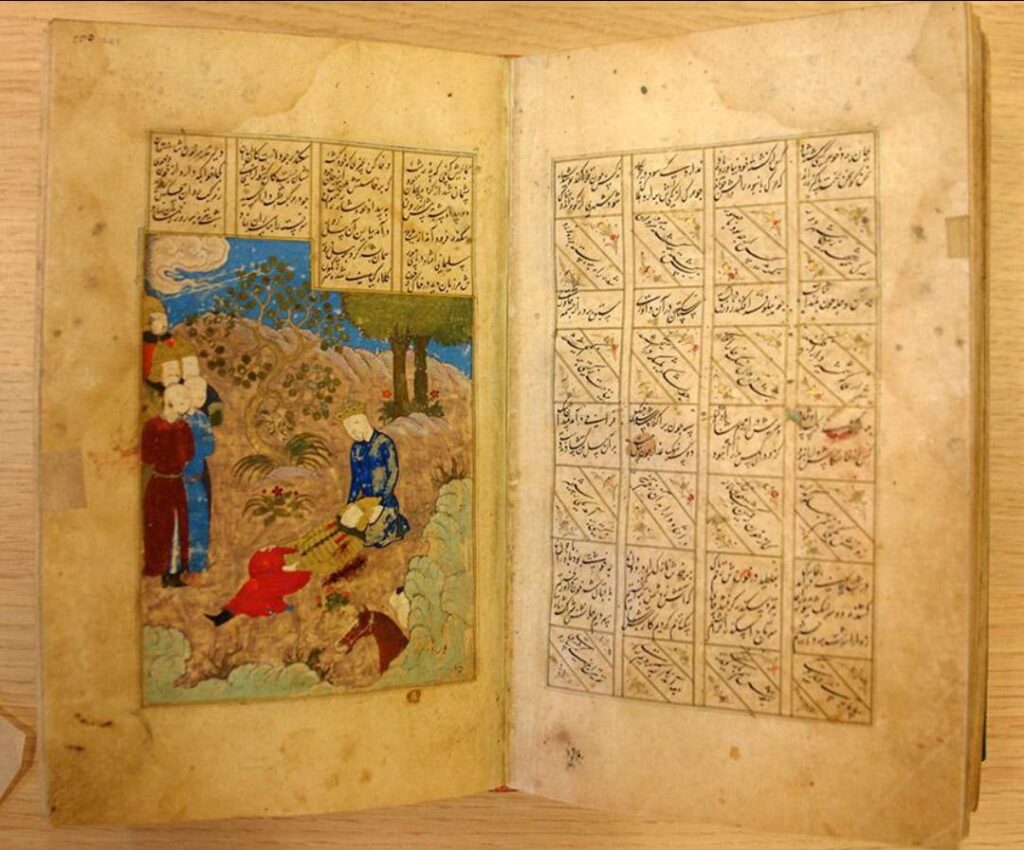
“In Isfahan, Khayyam led a team of astronomers. They developed the Jalali calendar and carried out important planetary observations. These findings are recorded in his work, the Astronomical Handbook of Khayyam.”
When examining Khayyam’s life, his multidimensional talents and immense contributions become clear. He lived during a period in which Persian culture, science, and philosophy flourished significantly. Within this intellectual and cultural environment, Khayyam contributed to the world not only through poetry, but also through scientific inquiry and research. Khayyam’s literary fame is primarily founded upon the Rubaiyat of Omar Khayyam. Although these quatrains possess a simple poetic structure, they are filled with profound philosophical meaning. Through his poetry, Khayyam explores fundamental human concerns such as the transience of life, the uncertainty of existence, and the inevitability of death. His verses frequently emphasize the importance of living in the present moment and encourage humanity to embrace the brevity of life with wisdom and joy.
The central themes of Khayyam’s poetry include the impermanence of life, the passage of time, the uncertainty of human existence, and the importance of living meaningfully in the present. His writings often convey the idea that, because life is brief, it should be lived with happiness, strength, and purpose.
“ The Moving Finger writes; and, having writ,
Moves on: nor all thy Piety nor Wit
Shall lure it back to cancel half a Line,
Nor all thy Tears wash out a Word of it.”
In these celebrated lines, Omar Khayyam presents a profound philosophical reflection on fate and the limitations of human existence. The metaphor of the “Moving Finger” symbolizes time or inevitable destiny an unstoppable force that continues forward without pause. Once an action has been completed, it cannot be altered or erased. The concepts of “Piety” and “Wit” suggest that neither religious devotion nor intellectual brilliance possesses the power to change the past. Likewise, the image of “Tears” represents human sorrow and regret, emphasizing that remorse itself cannot undo what has already occurred. Through this, the poem conveys a philosophy of acceptance, encouraging humanity to recognize the irreversible nature of life.
One of the defining characteristics of Khayyam’s poetry is its philosophical depth and skeptical spirit. He raises searching questions about life, destiny, death, and the afterlife, yet deliberately avoids offering absolute answers. Instead, he invites readers into contemplation, allowing space for personal reflection and interpretation. This verse clearly illustrates Khayyam’s philosophical vision. The “Moving Finger” once again symbolizes time or destiny, reinforcing the idea that the past cannot be rewritten. The poem therefore highlights the importance of accepting what has passed and living meaningfully in the present moment.
Khayyam’s poetry is far more than a collection of lyrical verses; it is an intellectual and philosophical inquiry into human existence. He continuously questions life, mortality, fate, and the mysteries of the hereafter. This quality gives his poetry a unique and enduring significance, as it leaves readers with profound thoughts to contemplate long after reading. Another distinctive feature of Khayyam’s work is its skeptical and questioning nature. He challenges fixed assumptions regarding destiny, the afterlife, and divine truth, encouraging readers to examine the boundaries of human understanding. His philosophy inspires critical and reflective thinking, while also acknowledging the limitations of human knowledge.
Through this intellectual openness, Khayyam’s poetry grants freedom to human thought and secures for him a complex and multidimensional place within the intellectual history of Persia. A defining characteristic of Omar Khayyam’s poetry is its philosophical and reflective nature. He questions established beliefs concerning fate, destiny, and the afterlife. Rather than offering definitive answers, he presents life itself as an enduring mystery.
This openness has enabled his poetry to be interpreted in diverse ways. Some critics regard him as a skeptic, others as a spiritual poet, while still others view him as an existential thinker. The principal reason for the global recognition of Khayyam’s poetry was the English translation produced by Edward FitzGerald in 1859. Although FitzGerald’s translation was not entirely literal, it played a crucial role in introducing Khayyam’s philosophical ideas to the Western world. Modern scholarly studies critically re-examine this translation, emphasizing the distinction between the “historical Khayyam” and “FitzGerald’s Khayyam.”
Khayyam made significant contributions not only to literature but also to the scientific sphere. In particular, his research on cubic equations laid important foundations for the later development of mathematics. He also participated in the creation of a highly accurate solar calendar. These achievements demonstrate his scientific methodology, grounded in observation, experimentation, and logical analysis. In this sense, his philosophical skepticism may also be understood in relation to scientific reasoning.
One of the central themes in Khayyam’s poetry is the transience and impermanence of human life. A powerful theme in the poetry of Omar Khayyam is the idea of time as an active force that moves relentlessly forward, destroying all things in its path. This vision gives humanity a profound awareness of its own limitations and mortality. Khayyam strongly emphasizes the importance of living in the present moment an idea that may be described as the “Ethics of Presence.” The recurring images in his poetry, such as wine, gardens, companionship, and convivial gatherings, symbolize direct and immediate experiences of life itself.
This “ethics of the present” deeply affects the human spirit by encouraging individuals to free themselves from fear of the future and regret over the past and instead seek peace within the reality of the present moment. Within the Rubáiyát, symbols such as wine, the tavern, the garden, and the cupbearer possess rich layers of meaning. They may be interpreted in physical, philosophical, or spiritual ways. This hermeneutic openness allows readers to engage actively with the text and discover meanings shaped by their own experiences and reflections. Khayyam’s poetry also reveals a paradoxical relationship between joy and sorrow. The tension between the beauty of life and its impermanence reflects the true nature of human existence. His verses encourage reflective thinking, promote skepticism and intellectual freedom, and offer profound insight into the human condition.
One of the defining features of Khayyam’s poetry is its universality. Human concerns such as life, death, time, destiny, and the search for meaning stand at the center of his work. This universality is what makes his poetry timeless and continually relevant across generations. Khayyam’s poetry transcends the boundaries of literature and intersects with philosophy, psychology, and culture. His works invite readers to contemplate their own lives and existence. Rather than simplifying the complexities of life, his poetry faithfully mirrors them. His verses create a space in which readers may confront their own fears, hopes, and existential questions. Khayyam does not offer definitive answers; instead, he invites inquiry and reflection. As a result, his poetry continues to nurture understanding, serenity, and profound contemplation within the human spirit, remaining a living philosophical legacy in world literature. Even today, his verses transcend time and continue to engage in a timeless dialogue with the human soul. Therefore, the poetry of Omar Khayyam can be regarded as an immortal legacy in world literature.

By — Fathima Zamaa Shifani
The Cultural Expert
Iran Cultural Center
Embassy of the Islamic Republic of Iran
Sri Lanka


