
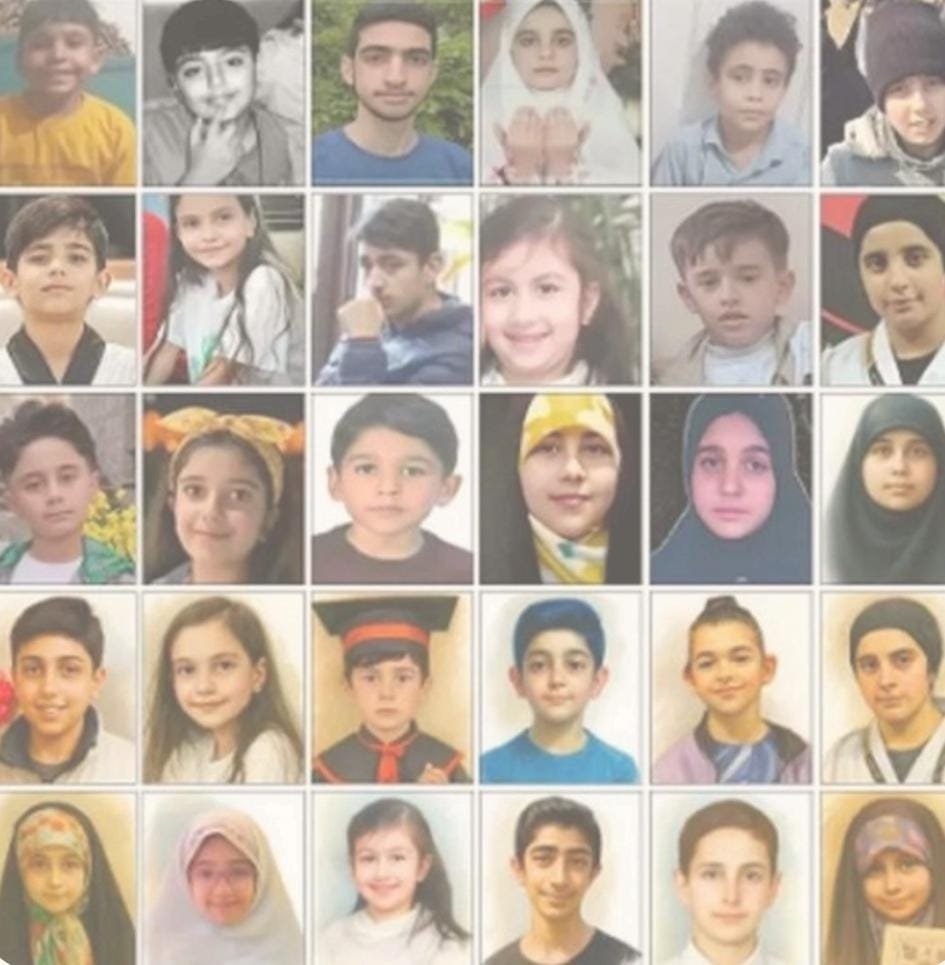
- On Universal Children’s Day, we remember the children of Minab not merely as victims of tragedy, but as young souls whose dreams, innocence, and futures deserved to be protected. Their memory reminds humanity of its responsibility to safeguard every child’s right to life, peace, education, and dignity.
Children are the most precious promise of humanity. Their laughter brings warmth to our homes, their curiosity opens doors to knowledge, and their dreams carry the hope of a brighter tomorrow. Every child deserves to grow in safety, learn in peace, experience the beauty of childhood, and look towards the future without fear. Yet, when violence enters the innocent world of children, it leaves behind wounds that cannot be measured by numbers or fully expressed through words.
The tragedy of the children of Minab stands as a heartbreaking reminder of the vulnerability of innocent lives caught in the devastating realities of conflict. The attack on Shajareh Tayyebeh School in Minab, Iran, transformed a place of learning and childhood innocence into a scene of unimaginable sorrow. Children who had gathered to learn, dream, and build their futures became victims of a tragedy that shook the conscience of humanity.
They were not merely students whose names appeared on a list. They were daughters and sons, beloved siblings, cherished friends, and the centre of their families’ worlds. Each child had a personality, a favourite colour, a beloved toy, a favourite subject, and dreams that extended far beyond the walls of their classroom. Some may have dreamed of becoming doctors who would heal the sick, teachers who would inspire generations, scientists who would discover new possibilities, or artists who would fill the world with beauty. Others simply dreamed of growing up, playing with their friends, and returning home every day to the loving embrace of their families.
Their dreams were as innocent as their smiles and as precious as life itself.
A school is meant to be a sanctuary of knowledge, protection, and hope. It is where children learn their first letters, discover the world, develop friendships, and begin to understand who they wish to become. The sound of a school bell should signal the beginning of another day of learning, while the voices of children should fill classrooms with life and joy.
No child should have to experience the terror of violence in a place where they are meant to feel safe.
The tragedy in Minab forces us to confront a painful reality: the places entrusted with protecting children’s futures are not always spared from the violence of conflict. When a school is attacked, the damage extends far beyond its physical walls. It strikes at the very foundation of humanity’s commitment to education, safety, and the protection of the innocent.
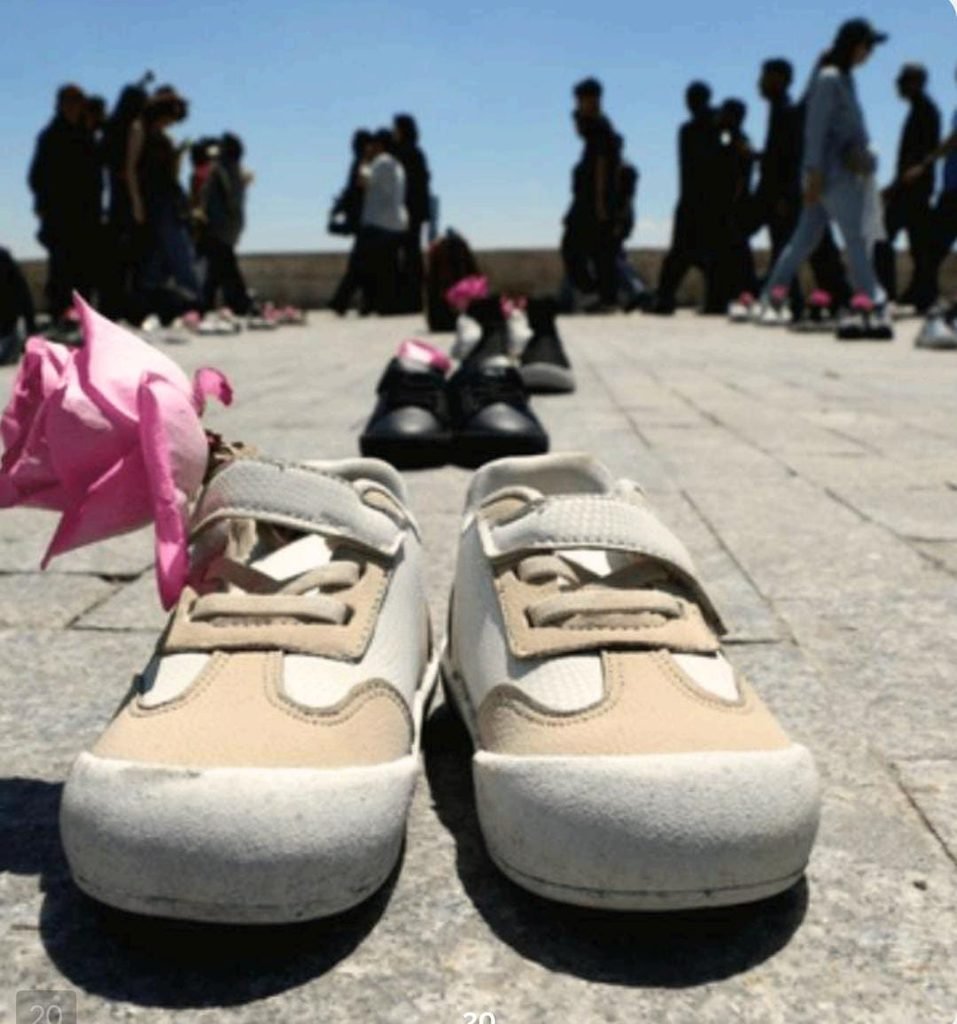
The empty desks, scattered schoolbooks, unfinished lessons, and abandoned schoolbags become silent witnesses to a tragedy that words cannot adequately describe. Every empty seat represents a life interrupted, a family shattered, and a future that will never unfold as it should have.
A schoolbook left unfinished is not simply a book. It is a lesson that will never be completed by the child who opened it.
A schoolbag left behind is not merely an object. It is a reminder of a young life that should have returned home carrying it.
And an empty classroom is not simply a room without students. It is a space filled with memories, unanswered questions, and dreams that will never again be spoken by those little voices.
Perhaps the deepest sorrow of losing a child lies not only in the loss of the life that existed, but also in the countless possibilities that will never become reality.
There will be birthdays that families can no longer celebrate with the same joy. There will be school ceremonies where parents will search instinctively for their children. There will be graduation days that will never arrive, photographs that will never be taken, and milestones that will remain forever beyond reach.
A mother may still remember the little hands that held hers. A father may still hear the footsteps that once ran towards the door. A brother or sister may continue to look at an empty place where laughter once filled the home.
Grief does not always speak loudly. Sometimes it lives in the silence of a child’s bedroom, in a school uniform carefully preserved, in a toy left untouched, or in a photograph that becomes more precious with every passing day.
Behind every lost child is a family carrying a sorrow that the world may witness but can never completely understand.
The deepest wounds of tragedy are often invisible. They are carried by parents, siblings, grandparents, relatives, teachers, and friends who must continue living in a world from which someone they loved has suddenly disappeared.
For a mother, the loss of a child is the loss of a part of her own heart. The hands that once dressed a child for school, prepared meals, arranged books, and gently touched a forehead in the night may now reach towards an absence that cannot be filled.
For a father, the familiar footsteps returning home, the small voice calling his name, and the daily routines that once seemed ordinary may become memories of unbearable tenderness.
For brothers and sisters, the loss may mean a home without a playmate, a shared secret that can no longer be told, a birthday without its familiar companion, or a childhood suddenly burdened by grief.
The pain of these families cannot be measured by casualty figures. It cannot be adequately expressed through photographs, speeches, or commemorative ceremonies. It is a grief that continues long after the headlines disappear and the attention of the world moves elsewhere.
While the world may remember a tragedy for a day, the families who lost their children must remember it every day.
Their pain deserves compassion, dignity, and sustained remembrance not temporary sympathy that fades with the passing of time.
The sorrow of Minab belongs not only to Iran, but to the conscience of the entire human family. A mother’s tears need no translation. A father’s grief requires no explanation. The pain of losing a child transcends nationality, religion, ethnicity, language, and political boundaries.
Whether a child is born in Iran, Sri Lanka, Palestine, or any other corner of the world, the value of that child’s life remains the same. Every child deserves protection, compassion, justice, and the opportunity to grow.
The suffering of innocent children should never be reduced to statistics, political arguments, or headlines that disappear with the passing of days. Behind every number is a human life—a story that began with hope and deserved to continue.
The children of Minab remind us that humanity must never become indifferent to the suffering of the innocent. When the world becomes accustomed to images of wounded children, destroyed schools, and grieving parents, we risk losing one of the most essential qualities of our humanity: compassion.
To remember these children is to refuse that indifference. Education is one of the most powerful instruments through which children transform their dreams into reality. It gives them knowledge, confidence, independence, and the ability to contribute meaningfully to society. A classroom represents more than an educational institution; it represents the possibility of a better future.
The destruction of a school and the loss of its students is therefore a tragedy that affects not only individual families, but also society and generations yet to come.
Protecting schools, teachers, students, and educational institutions during conflict is a moral responsibility and a humanitarian imperative. Children must never become targets or casualties of political and military confrontations. Their right to education and their right to life must be safeguarded under all circumstances.
The international community, governments, humanitarian organisations, educational institutions, and individuals must continue to advocate for the protection of children and the preservation of schools as safe spaces.
A world that invests in education but fails to protect students contradicts its own promise to future generations. As we remember the children of Minab, we must remember them beyond the tragedy that took their lives. We must imagine their smiles, their playful conversations, their excitement over new books, their friendships, and their dreams.
They were children who deserved to experience the beauty of childhood. Their memory should inspire us to create a world where children can walk to school without fear, where parents can send their children away each morning with confidence that they will return safely, and where the sound of laughter is never replaced by the sound of destruction.
Their lives, though tragically interrupted, must not be forgotten. The remembrance of innocent children should become a call for peace, a commitment to justice, and a renewed determination to protect every child, everywhere.
Universal Children’s Day is not merely a celebration of childhood. It is also a reminder of the responsibilities that adults, societies, and nations bear towards children. It calls upon us to defend their rights, protect their dignity, ensure their education, and create an environment in which every child can flourish.
On this day, our thoughts turn towards the children of Minab the children whose dreams were interrupted, whose families continue to grieve, and whose memories deserve to be carried with tenderness and respect.
Let their memory remind us that peace is not simply the absence of war; it is the presence of safety, justice, compassion, and the freedom for every child to live a full and meaningful life.
Let us transform our sorrow into a commitment to humanity. Let us raise our voices for the protection of children. Let us ensure that the tragedy of Minab is remembered not only in tears, but also through our determination to build a safer world.
May their innocent souls rest in peace. May their grieving families find strength and comfort. And may the dreams that were taken from them become a lasting reminder of the future that every child deserves.
The children of Minab may no longer walk through their school gates, but their memory must continue to walk through the conscience of humanity. Their voices may have fallen silent, but the world must never stop listening.
Even in sorrow today, the children of Minab still know how to dream of tomorrow.
Their smiles tell the whole world that after darkness, light will come.
May every tear you shed become our silent prayer. May your smiles bloom freely once again.
children of Minab, may the world never forget you.

By Zamaa Shifani


