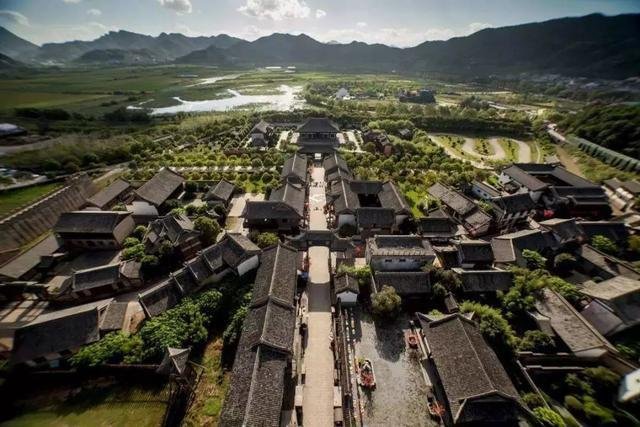
When discussing the global film and television industry, China’s contribution holds a prominent place. This is largely due to Hengdian World Studios located in the city of Dongyang, Zhejiang Province, in eastern China which serves as a cornerstone for the industry.
Recently, with the support of the China Cultural Centre in Sri Lanka, we a group of journalists had the opportunity to visit Hengdian World Studios, one of the largest film production complexes in the world. We were particularly amazed by how the site recreates China’s historical kingdoms, ancient cities, imperial palaces, streets, villages, and battlefields, all designed to mirror authentic, real-life environments. It is quite evident that Hengdian World Studios is a massive complex used today for the production of films and television dramas. It is worth noting that Hengdian World Studios is not merely a filming location; it serves as a unique cultural and tourism hub where China’s history, architecture, and culture converge with the modern entertainment industry.
Origins and Development
Research indicates that the development of the Hengdian studio complex began in 1996. It is noted that the project was initiated under the leadership of Chinese businessman Xu Wenrong.
What began as an endeavor to create sets for a historical film has since transformed into a vast cinematic production city a truly remarkable evolution. A notable feature here is the presence of numerous massive structures and environments constructed over time, representing various dynasties and historical eras of China. Consequently, Hengdian has established itself as one of the world’s premier film and television production hubs.
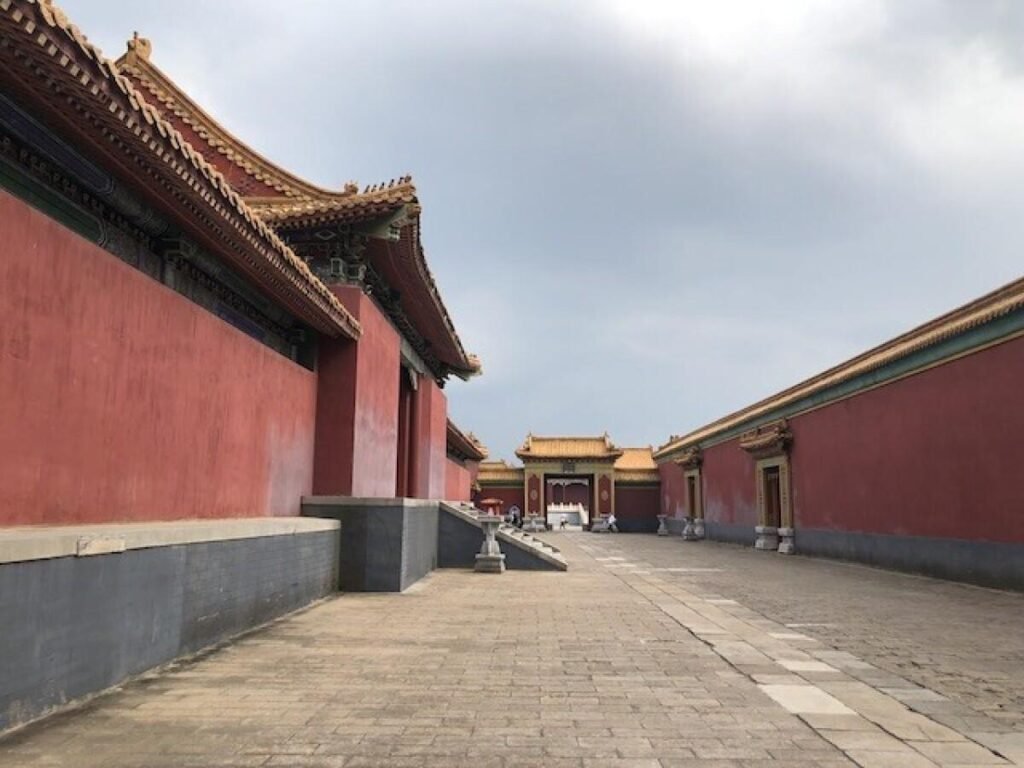
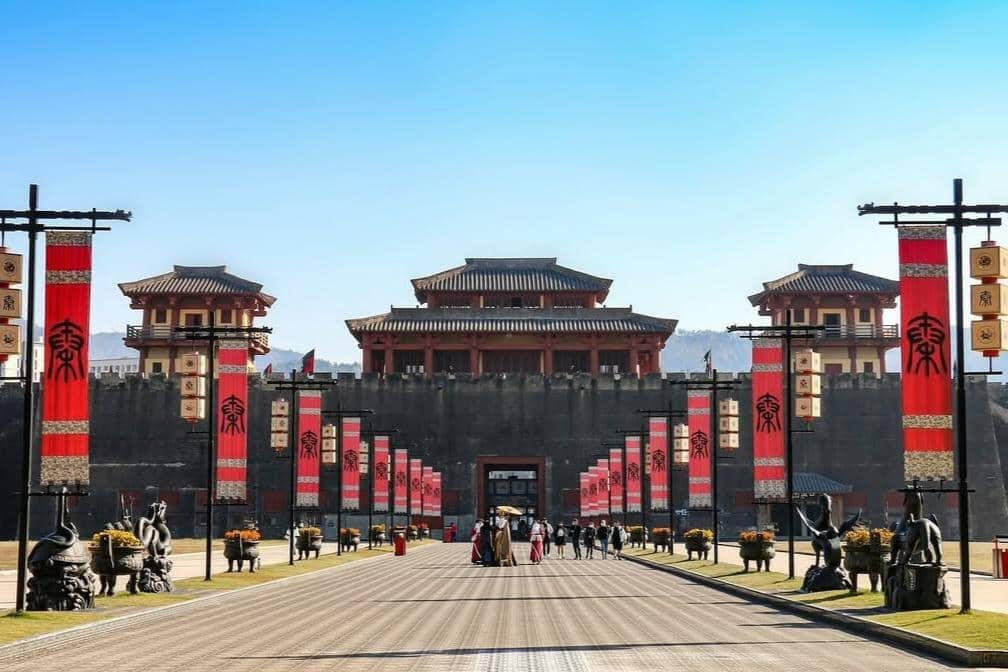
Qin Palace
This palace complex is designed to evoke the kingdom of Qin Shi Huang, the first emperor of China. Featuring imposing gateways, towering palaces, royal halls, and expansive courtyards, it cinematically captures the power and architectural grandeur of the ancient Chinese empire.
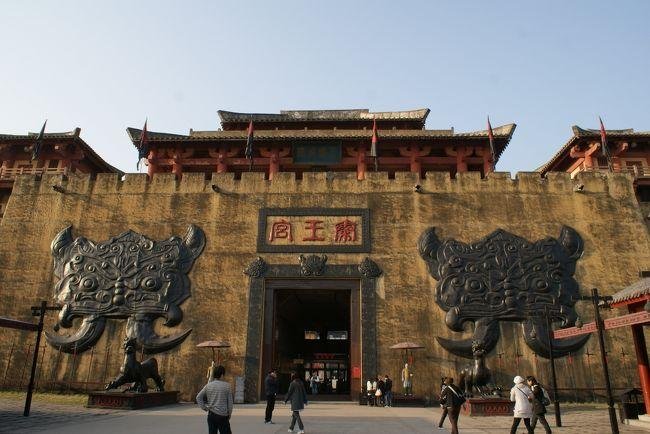
Ming and Qing Palatial Garden
This set, which depicts the imperial architecture of China’s Ming and Qing dynasties, draws particular attention. It is notable for its palaces, gardens, imperial gates, and expansive courtyards reminiscent of the architectural style found in Beijing’s Forbidden City.
Historic Chinese City Streets Guangzhou and Hong Kong Streets
Constructed in 1996, Guangzhou Street is considered the original film set at Hengdian; it was built for the filming of *The Opium War*. With the subsequent addition of the Hong Kong Street set, the area has evolved into a location that captures both traditional Chinese urban life and the urban environment of the colonial era.
Life in an Ancient Chinese City *Qingming Shanghe Tu* (Along the River During the Qingming Festival)
This set depicts urban life during China’s Song Dynasty. We were thoroughly captivated by the recreation of ancient marketplaces, rivers, wooden bridges, shops, traditional dwellings, and the daily lives of the people. It provided an insight into trade, transportation, architecture, and urban culture in historical Chinese society.
The Importance of Hengdian to the Film Industry
Hengdian is more than just a tourist destination featuring various sets and buildings; it serves as a comprehensive hub for China’s film and television production industry. It offers a wide range of facilities, including costumes, weaponry and equipment, set construction, coordination of actors, and post-production services.
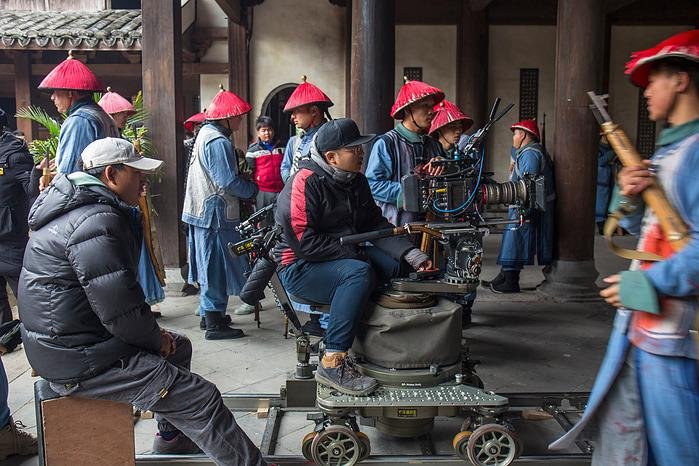
According to official information from the Hengdian Group, the site houses over 30 filming locations (sets) and more than 100 studios of varying sizes. Studies on the subject reveal that hundreds of production crews arrive here every year. Another unique feature of Hengdian is the integration of film production with the tourism industry. Visitors here can not only explore settings reminiscent of China’s ancient kingdoms but also dress in historical costumes for photographs, observe filming in progress, and attend various cultural performances.
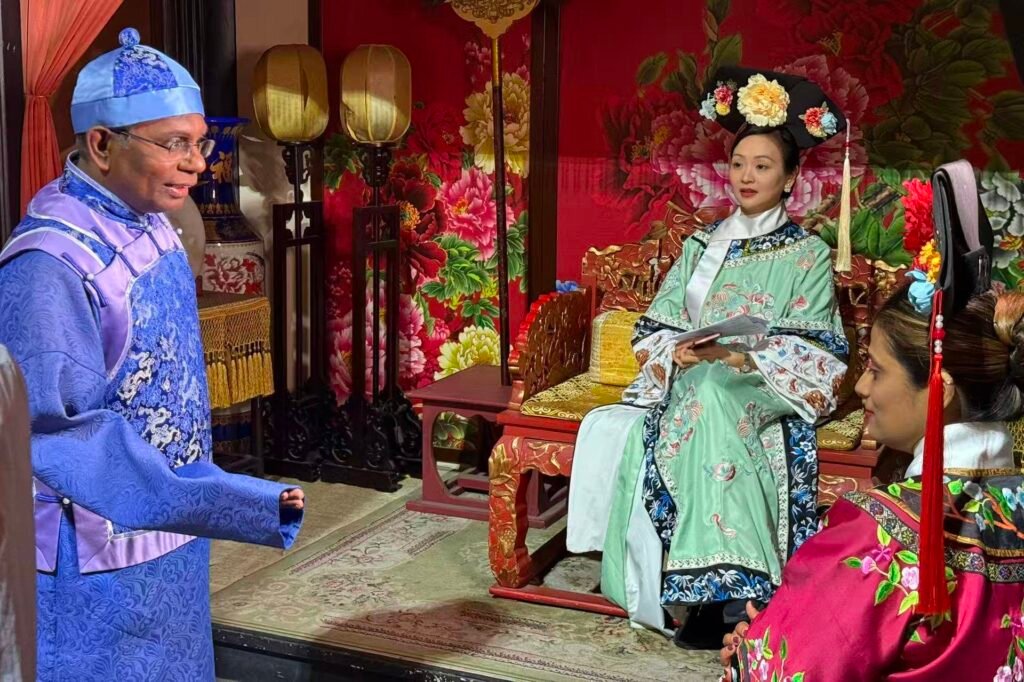
The Performance of Sri Lankan Journalists
We, a group of Sri Lankan journalists, even had the opportunity to don historical attire and take part in a short cultural performance—a truly novel experience for us.
This industry has also created economic opportunities across sectors such as hospitality, transportation, food and beverage, retail, costume production, and entertainment services. Our guide mentioned that in 2010, Hengdian World Studios was designated a “National AAAAA-level Tourist Attraction” the highest classification for tourist destinations in China.
A “Cinema City” that brings Chinese culture to the world.
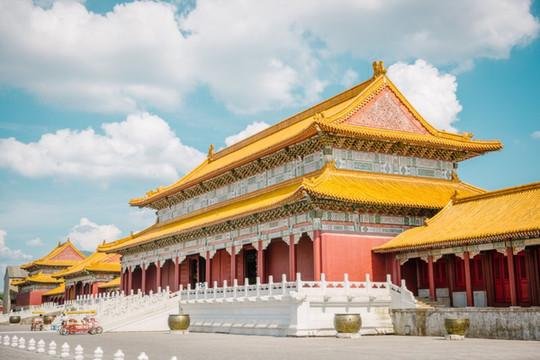
Today, Hengdian World Studios has become a significant medium for bringing China’s history and culture to a global audience. It is evident that it makes a substantial contribution to the production of historical television dramas and films specifically those centered on China’s ancient dynasties, imperial rule, martial arts, traditional attire, and the lives of the people. Furthermore, the capacity for film production utilizing modern technology has also been developed here. Consequently, Hengdian has evolved into a vital hub not only for China’s film industry but also for its cultural and economic development.
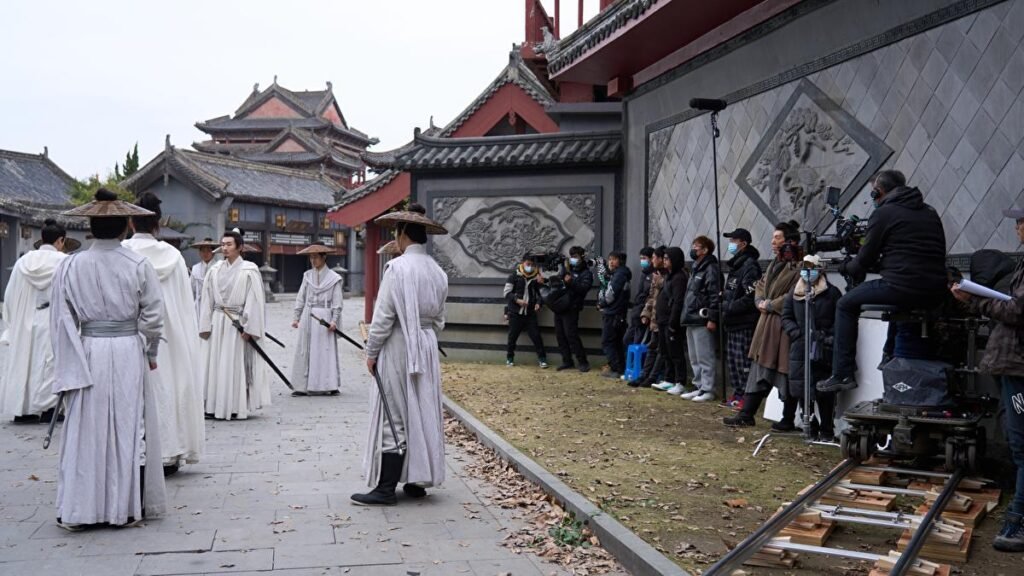
A Place Where History Meets Modern Technology
To understand the significance of Hengdian World Studios, one particular point must be clarified. Many of the palaces and ancient cities found here are not genuine archaeological monuments, but rather reconstructions built for film production and tourism. Nevertheless, they have been created with the objective of enhancing public understanding of China’s historical architecture, artistic traditions, and the lifestyles of various dynasties.
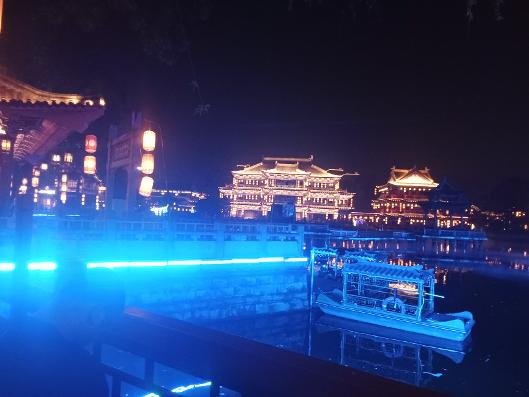
Beginning in 1996 with a single street constructed for a film, Hengdian has since evolved into a massive hub integrating the film, television, tourism, and entertainment industries.
Hengdian World Studios which brings China’s ancient civilization to the world through modern cinematic technology serves as a remarkable example of how culture and economic development can progress hand in hand.
Part Seven

Note by
Chandana Wijekoon


