
Colombo during the week of the Sinhala and Tamil New Year is a much quieter city. Shops and businesses close. The tension of the city traffic slackens as people return to their families; scores of internal migrants travel by bus or train to their hometowns and villages.
Across Asia, the solar New Year is a time of rest, rejuvenation, and consumption. In many agrarian societies, it marks the end of the harvest season and the beginning of a new cycle of cultivation.
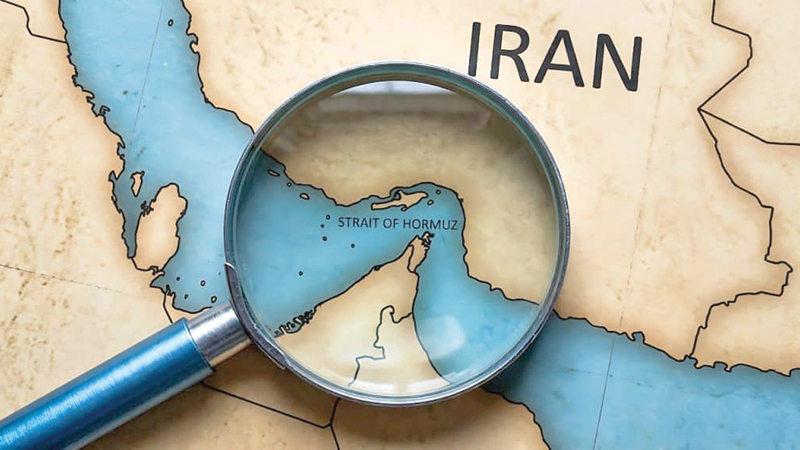
But the war in West Asia casts a long shadow over the upcoming cycle. The US-Israeli attacks on Iran have disrupted production and supply chains. Oil has been trading at well over US $100 a barrel, causing downstream increases in the costs of production and distribution.
Supply constraints of essential inputs for fertilisers mean that a major global food crisis is on the horizon.
An economic crisis in the Persian Gulf also entails a decline in remittances and the potential repatriation of scores of migrant workers back to Sri Lanka – this means a decline in foreign currency revenue combined with a rise in surplus labour.
All things considered, a perfect storm is approaching.
The fourth West Asian oil crisis
G.V.S. De Silva
Report after report, chart after chart, places Sri Lanka at or near the top of the list of countries most vulnerable to the Hormuz crisis. This should not be so surprising; we have been here before.
The Sri Lankan economy is almost a bellwether for global economic downturns. Following the Covid-19 pandemic and supply chain disruptions from the Russia-Ukraine conflict, Sri Lanka was the second country to default (after Zambia). When global capitalism catches a cold, we get pneumonia.
The 1973 oil shock, a consequence of the Arab oil embargo against Western supporters of Israel in the Yom Kippur War, caused a massive foreign currency shortage which led to inflation, rationing and the eventual fall of the Government.
The 1979 oil shock, a reverberation of the Iranian Revolution, triggered a balance of payments crisis which pushed Sri Lanka into a three-year IMF Extended Fund Facility program. The 1990 oil shock, a product of the Gulf War, was relatively milder yet still caused an inflationary spike amid a civil war.
The Hormuz crisis, therefore, is the fourth major West Asian oil crisis that Sri Lanka has suffered. Due to the petrochemical industry’s overlap with the fertiliser industry, every oil crisis is also a food crisis.
This vulnerability to ‘external shocks’ is a reflection of the internal economic structure. Sri Lanka retains the basic contours of a colonial plantation economy, exporting low value-added goods and depending on volatile revenue from tourism and remittances to cover up the trade deficit. The country remains highly dependent on imports for intermediary goods such as oil and fertiliser.
Without a firm agro-industrial base and domestic supply chain, there are no buffers to external shocks.
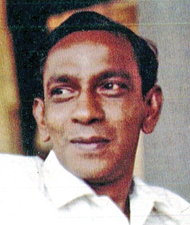
G.V.S. De Silva’s heresy
At the time of the first oil shock in 1973, economist G.V.S. De Silva – an architect of the Paddy Lands Act and the establishment of the Ceylon Petroleum Corporation– wrote a pamphlet titled ‘Some Heretical Thoughts on Economic Development’.
De Silva was writing at a time when Sri Lanka was attempting a form of Import-Substitution Industrialisation (ISI). An unintended consequence of this strategy is that the attempt to industrialise based on the home market often intensified the foreign currency constraint – due to the need for imported capital and intermediary goods which are so necessary for industrialisation.
Pessimistic about the prospects of expanding export markets during the crises of the 1970s, and cognizant of the growing foreign currency demand of ISI, De Silva advocated for a less capital-intensive model of development based on a total socio-political restructuring and economic-cultural rejuvenation of the countryside.
De Silva said that the adverse terms of trade between the city and countryside mirrored the adverse terms of trade between the industrialised and non-industrialised countries. This, he said, siphoned the wealth out of the countryside and fuelled conspicuous consumption in the city. The resulting rural-to-urban migration – itself a kind of internal brain drain – was, therefore, seen as the root cause of the urban housing, transport and food crises.
Writing just two years after the 1971 insurrection led by the Janatha Vimukthi Peramuna, De Silva’s heretical thought was that the entire edifice of urban-centric development models –the foundation for which was built by Arthur Lewis’ classic essay ‘Economic Development with Unlimited Supplies of Labour’ – had to be toppled.
Instead of the countryside supplying surplus labour to the city, De Silva advocated for urban labour, capital and technical expertise to be poured back into the countryside in a process of agrarian reform and rural industrialisation. The development of food crops and agricultural support industries were to provide a stable foundation for a future urbanisation based on industrial development.
This process was to be combined with a push to rejuvenate national culture in order to increase the confidence and dignity of rural society.
Lopsided economic structure
The data from Sri Lanka’s latest census (2024) highlights a stark pattern of internal migration. Swathes of the country, from the agrarian South (Galle, Matara, Hambantota, and Ratnapura) to the plantation high lands (Badulla, Nuwara Eliya, Kandy and Matale) experience negative net migration. Most of this internal migration is towards urban centres in or around the Western Province, including Gampaha, Colombo, Kegalle, and Kalutara.
These internal migrants are the drivers, guards, hawkers, shopkeepers, attendants, cashiers, tellers, nurses, waiters, clerks, peons, and janitors that keep the service sector running. They also comprise a significant share of the white-collar professionals, the aspirants and social climbers struggling to get a foothold in Colombo and eventually, London, Toronto and Melbourne.
De Silva’s assertion that the policy dilemmas of the urban sector are linked to the collapse of the rural sector remains relevant today. High real interest rates, lack of appropriate financing and marketing mechanisms, lack of capital for technology, and the proliferation of parasitic intermediaries continue to stifle rural agriculture and industrialisation.
The existing urban economy – characterised by consumption, retail trade, transport and logistics, and banking and financial services – remains a poor and irrational use of labour. An ageing population, declining birth rate, and shortage of skilled workers further reinforces the need for the rational training and allocation of labour – something the market cannot provide under the existing path dependencies.
The tourism sector, which gets Government support due to short-term foreign exchange calculations, actually has a long-term distortional effect on the economy. Tourism, which is based on a natural monopoly of ‘location’, drives up land prices in rural areas, increasing the overheads for industrial production and disincentivising the use of land for cultivation. Moreover, tourism has a kind of ‘Dutch disease’ effect, reinforcing the shift away from production.
Inflation, that fixation of so many economists (or ‘economisers’, as De Silva would have called them), should also be understood as not merely a monetary phenomenon but an outgrowth of the lopsided structure of an economy that privileges rentiers and middlemen, and channels credit to sectors of the economy that do not produce real use values.
Go East
Sri Lanka’s entire spatial map, with the population and economic output centred around the Western Province, is a legacy of colonialism. It is a product of the plantation economy and the British administration’s decision to build railways from the Central highlands to the port of Colombo to facilitate the extraction of export crops. It is why Colombo became a financial and logistical centre of the country.
Post-war rural infrastructure and connectivity projects have accelerated rather than reversed the drain of labour and capital from the peripheries to the Western Province. This is largely due to the fact that infrastructure development has not been paired with agrarian reforms and industrial policies to facilitate employment and capital accumulation in the peripheral regions of the country.
While our spatial dynamics looks West, the world’s industrial supply chains have shifted to the East. Sri Lanka today needs a ‘Go East’ policy, combining a push of resources out of the Western Province, with a greater focus on trade with Southeast and East Asia – a ‘delinking’ from the Western core and a ‘relinking’ with the maritime silk road.
The synergy between the domestic and international is what is crucial to grasp so that a change in trade orientation does not merely mirror the imbalances and structural deficiencies of the past.
Clarity or confusion?
The year 1973 was not only defined by the Arab oil embargo. De Silva was writing at a time when the peasant masses of Vietnam had defeated the industrial might of the United States, and when the Cultural Revolution upended Chinese society – laying the decentralised foundations for China’s later Reform and Opening-Up process.
This is not to draw a causal inference between any of these events and De Silva’s polemic, but to situate it in its conjuncture. The protagonism of the peasantry as a class and the centrality of the countryside as a battlefield of class and national liberation struggles no doubt informed De Silva’s thinking in this era.
De Silva concluded his 1973 polemic with the statement, ‘The bankruptcy of orthodox economic theory, and its inability to understand and state, leave alone solve our economic problems, will become increasingly apparent as our crisis deepens.’ He was far too optimistic.
There is no reason to believe that the deepening crisis would necessarily lead to an understanding of the limits of orthodox economic theory. After all, the crisis of the 1970s was followed immediately by the neoliberalisation of the 1980s and 1990s, the hangover of which we are still stumbling through. Deepening crisis need not lead to clarity; it could just as easily lead to further confusion.
Source- Sunday Observer

Shiran Illanperuma is a Sri Lankan journalist and political economist. He is a researcher at the Tricontinental: Institute for Social Research and a co-editor of Wenhua Zongheng: A Journal of Contemporary Chinese Thought. He is also a visiting lecturer at the Bandaranaike Centre for International Studies.


