
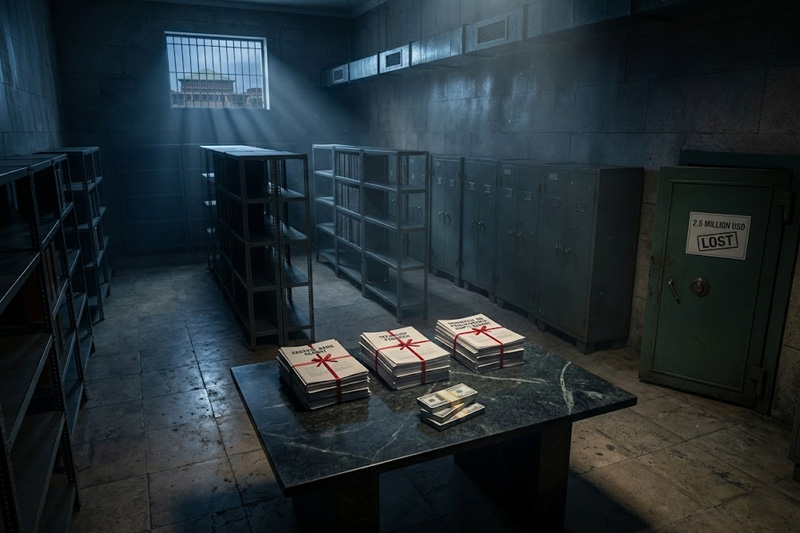
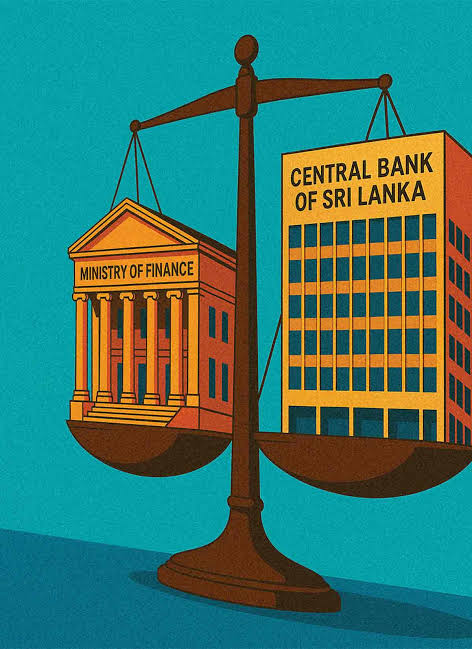
An institutional dispute has developed between the General Treasury and the Central Bank of Sri Lanka (CBSL) regarding the disappearance of $2.5 million from the Treasury.
These institutions were granted a four-week period to report their findings on this matter to the Committee on Public Finance in Parliament. Subsequently, they were granted extensions of over two weeks on two further occasions. This delay has created substantial room for altering, delaying, and concealing information.
Over eight months have passed since the $2.5 million fraud occurred. To date, the legislature has failed to table any official report regarding this matter in Parliament. It is imperative to end this time-wasting dramatic performance carried out through the parliamentary Committee on Public Finance, and these reports must be tabled at the very next parliamentary sitting.
Sri Lanka is currently in a highly critical phase of debt restructuring following a severe economic crisis. Under a condition of the International Monetary Fund (IMF) loan programme, the government’s debt management functions, previously carried out by the CBSL, were recently transferred to a new institution established under the General Treasury—the Public Debt Management Office (PDMO).
‘Debt management’ is simply the process of repaying foreign and domestic loans obtained by the government to the correct parties on time, and maintaining accurate records. During the transition period of transferring this duty from the Central Bank to the Treasury, due to the failure to follow proper control mechanisms and the conflicts that arose between the two institutions, a massive sum of public funds amounting to $2.5 million (nearly 1 billion rupees) was diverted by fraudsters to unauthorized foreign accounts. This is not merely a technical error but a direct result of serious flaws within the governance. This tragedy, which even claimed the life of one official, is not limited to a financial loss.
The intervention of Free Lawyers and the silence of parliament
This serious financial fraud was first revealed to the public on 22 April 2026 by ‘Free Lawyers’, a collective of lawyers and professionals. Although the Speaker of Parliament was officially informed of this breach, no official reply has been received from the authorities to date. Furthermore, we informed the Parliamentary Committee on Public Finance (COPF) of the matter in writing. We have also notified other institutions via letters and public announcements.
However, as a tactic to suppress or delay this revelation, the authorities took about a month to provide the relevant confidential report. Even after that, the Ministry Secretary sent the report to the residence of the COPF Chairman, Mr Harsha de Silva. After he instructed that it be officially directed to Parliament, more than 10 days passed without further action.
Accordingly, Parliament, which possesses absolute control over public finance under Article 148 of the Constitution of Sri Lanka, has failed to present an official report of the facts regarding this incident to the public over the past seven weeks. Therefore, for the sake of the public’s right to know the truth, we have decided to reveal the facts of this fraud and expose the responsible parties to the country, based on confidential reports.
The circumstances that led to the fraud and the responsible parties
Both the Central Bank of Sri Lanka and the General Treasury must be held directly responsible for this massive fraud, and no one should be allowed to be exonerated:
*Dereliction of duty by the Central Bank of Sri Lanka: With the transfer of debt control to the Treasury through the new Act, the Central Bank argues that it no longer has any responsibility regarding debt management. Using the independence granted by the Central Bank Act of 2023 as a shield, the Bank claims it only acted upon the government’s request. The most serious issue is the concealment of highly critical warnings and information from the Treasury, citing Anti-Money Laundering and Countering the Financing of Terrorism (AML/CFT) laws and privacy policies.
*Ignoring international warnings: Although JPMorgan Chase and the Federal Reserve in the United States had clearly warned about the suspicious nature of these foreign transactions via SWIFT messages, the authorities completely ignored them and released the funds.
*The General Treasury’s haste and negligence: The Treasury acted in haste to take over these debt operations even before the proper regulations were finalized. Furthermore, officials lacked adequate technical knowledge regarding debt management.
The Central Bank cannot wash its hands of responsibility in international transactions simply because its legal powers were removed, thereby setting aside its 75 years of debt management experience. Similarly, the Treasury officials who forcefully took over the operations must also bear responsibility for this financial damage.
What Must Be Done to Prevent Such Disasters from Recurring?
Proposals have already been put forward outlining the following steps that must be taken to ensure the circumstances that led to the robbery at the General Treasury do not occur again:
*Strengthening technical and cybersecurity: It must be made mandatory to verify the authenticity of relevant invoices and beneficiaries’ bank accounts during foreign debt repayments. A forensic audit must be conducted immediately to identify existing vulnerabilities in the systems.
*Closing legal loopholes: The Finance Business Act must be amended immediately so that the Central Bank of Sri Lanka is also subject to the reporting obligations for preventing money laundering and terrorist financing.
*Establishing a joint security unit: Instead of the two institutions blaming each other, a joint crisis management unit must be established, combining the Central Bank and the Treasury to monitor foreign payments and cybersecurity.
*Rebuilding human resources and stopping political interference: Arbitrary transfers and appointments made based on political affiliations must be stopped immediately. Instead, professionals with merit and private-sector experience should be recruited into this system.
*Addressing the inefficiency and lack of professionalism of the Secretary to the Ministry of Finance: The operations of the Ministry of Finance and the Treasury have completely collapsed. Even the annual report presented by the Chief Accounting Officer is riddled with shortcomings. The National Audit Office has also expressed a qualified opinion regarding the Ministry of Finance’s annual report. To prevent this situation from deteriorating further, it is imperative to immediately appoint an officer with professional experience from the Sri Lanka Administrative Service or the state service to the post of Secretary to the Ministry of Finance.
As the ‘Free Lawyers’ organization, we strongly emphasize that no authority has the right to allow the public’s tax money and national wealth to be misappropriated in this manner, nor to escape accountability by offering excuses.
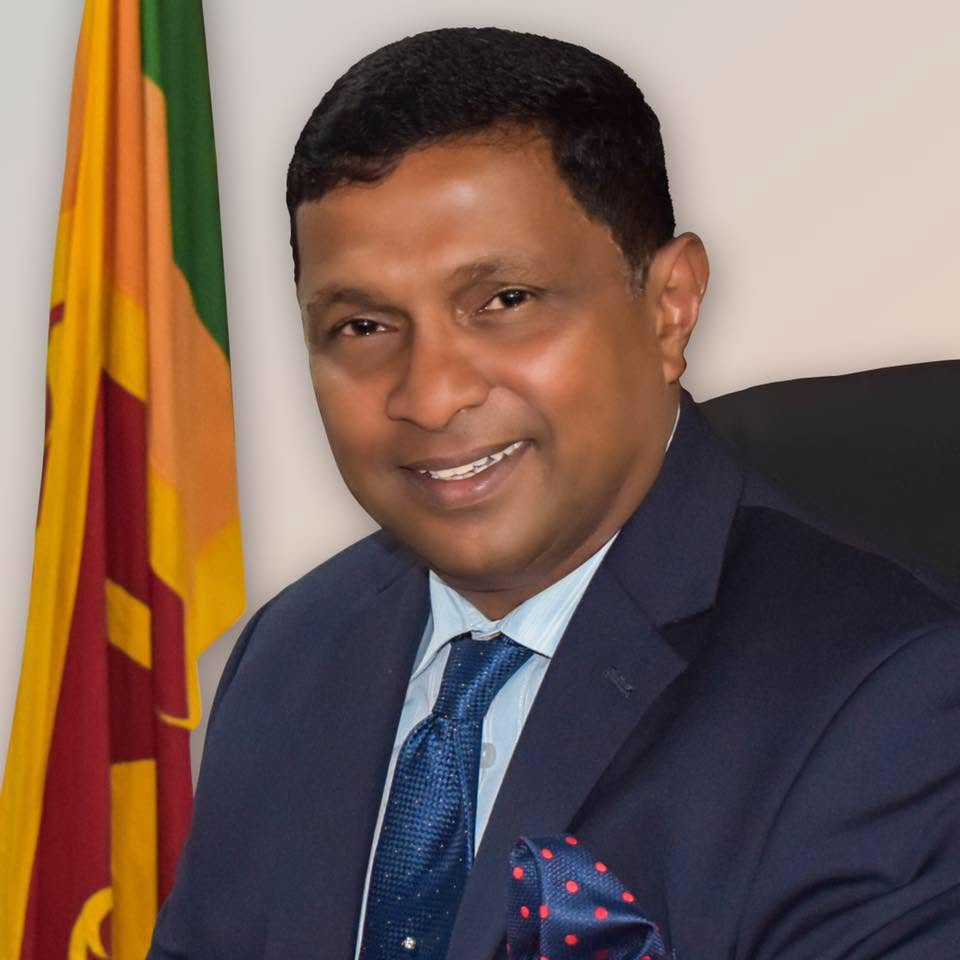
Maithri Gunarathna,
( PC Former Governor)


