
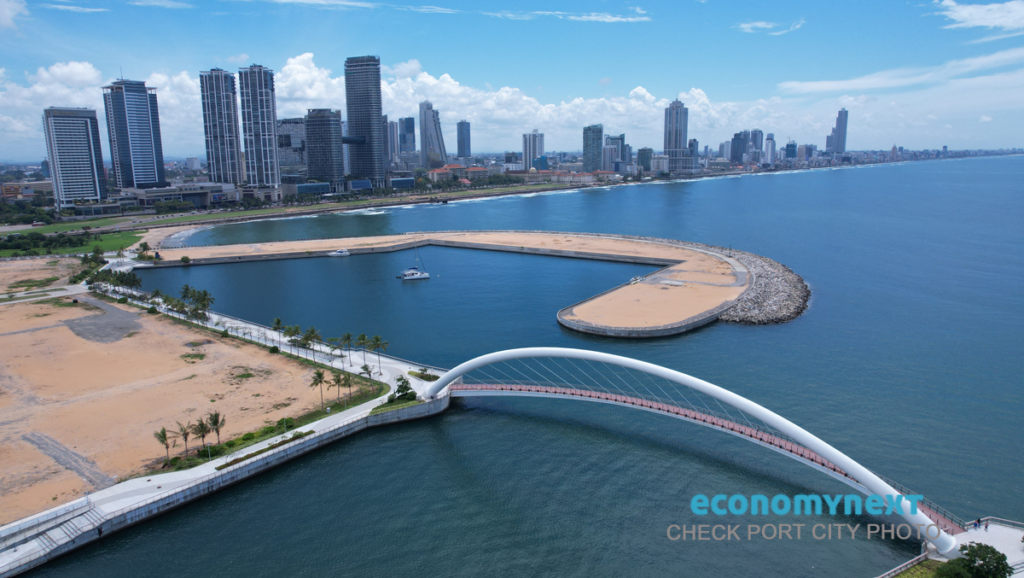
Sri Lanka’s proposed US$540 million deal with Clothespin Management and Development to build a hotel within the Colombo Port City, has expired unsigned in January 2026, the Director General of the Colombo Port City Economic Commission (CPCEC) told Economy Next.
The CPCEC in a Gazette in July last year gave a 25-year tax holiday to Clothespin Management and Development (Private) Limited, which plans to build a ‘twin tower marvel’ that will have a clock tower bigger than the Big Ben.
The plan was to build a property that will house the “world’s largest art gallery in the “Hotel Use Land Plot 2-01-11 spanning over an area of 24,324 square metres in Colombo Port City”, the government said in a gazette notice last year.
“The investor advised us he’s not going ahead with that development,” Revan Wickramasuriya, Director General, CPCEC told Economy Next.
“But he’s discussing new developments,” he said referring to Clothespin Management and Development’s latest talks with the CPCEC.
The developer was unable to finalize the contract due to outstanding bond issues and internal board complications, a Clothespin Management and Development source privy to the project said.
New discussions have been ongoing with the Colombo Port City Economic Commission (CPCEC) and China Harbour Engineering Company (CHEC) on a new lease, the source said.
Should a new lease agreement be finalised and signed, it will not be the same plot that will be assigned for the project, both the CPCEC Director General and the source said.
The source also said the clock tower was removed from the original plan because it was not lucrative.
As per the Gazette for the project published in July 14, 2025, the project needed to be signed within a six month period. However, it was not signed as agreed before January 14, 2026.
The company previously pledged 540 million dollars, of which 75 million dollars was allocated for the land lease, and 465 million for construction.
By Sanchitha Paranagama
Source – Economy Next


