
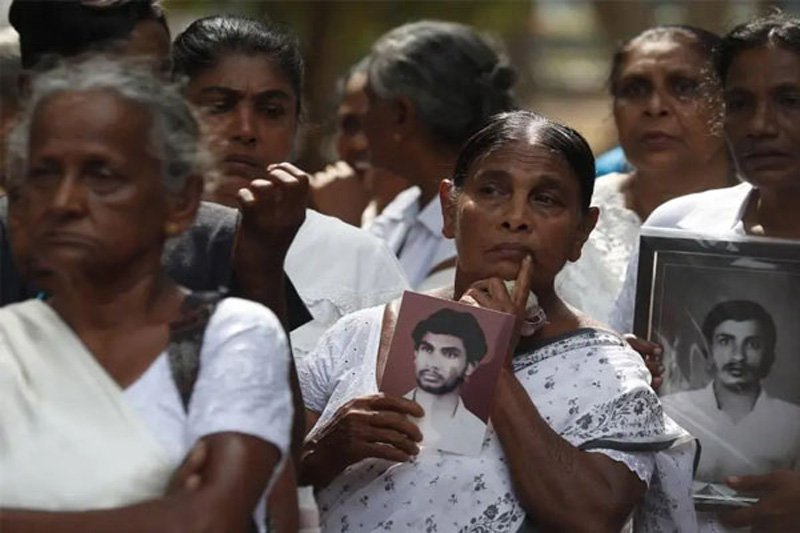
The British Tamil Forum (BTF) has called on the government to release without delay the final reports of all Commissions of Inquiry that remain hidden from public view.
In a statement issued this week, the BTF said that no government can credibly claim to have established a new political culture, good governance or accountability while reports investigating serious human rights allegations remain concealed, delayed or acted upon selectively.
Selective accountability
The BTF said that the public held an absolute right to know what these commissions had uncovered, and that victims were entitled to truth and resolution.
It noted that where evidence established criminal responsibility, perpetrators must face impartial justice regardless of their political affiliation, position or historical standing.
The organisation said that although the NPP government was currently viewed more favourably than its predecessors by sections of the international community and the UN Office of the High Commissioner for Human Rights, it appeared to be proceeding with excessive caution on accountability, constrained by pressure from Sinhala nationalist forces as well as from within its own ranks.
The BTF claimed this had created a growing perception that the government intended to handle justice only gradually, selectively and when politically convenient, and it stressed that accountability could not be used as a weapon against opponents while shielding those within one’s own political tradition.
JVP’s historical record
The organisation pointed to the substantial historical record of the Janatha Vimukthi Peramuna, the NPP’s principal constituent party, arguing that this record required open examination.
It referenced the JVP’s role in opposing the 2002 Norwegian led peace process, its campaign against the P-TOMS agreement intended to assist tsunami victims, and its resistance to the demerger of the Northern and Eastern provinces, alongside pressure it exerted to resume the war.
The statement also raised concerns over former JVP cadres who had subsequently joined the security forces through state recruitment drives, saying that credible allegations of their involvement in grave human rights violations required thorough investigation.
It further highlighted unresolved questions surrounding the 1987 to 1989 insurrection, during which widespread killings, disappearances and torture were reported, noting that the JVP led government had taken no meaningful action to investigate these crimes, including the disappearances of its own members, and questioned whether the party feared exposing its own past.
Call for international cooperation
The BTF said that the NPP faced a clear conflict of interest given its own history, which it said tempted the party to avoid genuine commitment to an international process of accountability, adding that being a past victim of state violence did not erase crimes committed by its own members now that they held state power.
It said that the true test of a new political culture lay not in exposing the crimes of political opponents but in a government’s willingness to confront uncomfortable truths about itself, and questioned what was preventing the Sri Lankan state from permitting an international criminal justice mechanism if it had nothing to hide.
(Quote- The Leader)


