
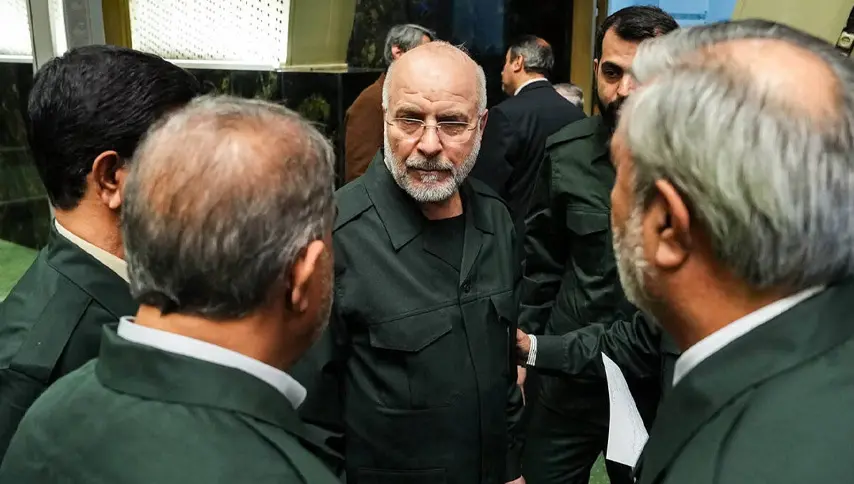
Iran’s chief negotiator in talks with the United States, Mohammad Bagher Ghalibaf, said Wednesday that Americans voted “NO TO WAR” after Democrats routed the Republicans in the midterm elections.
Democrats won full control of the US Congress in a sweeping landslide of upsets that delivered a crushing rebuke of President Donald Trump and his party.
The vote reflected deep anger over living costs, tariffs and Trump’s war against Iran, which has sent fuel prices soaring and compounded dissatisfaction with an already deeply unpopular president.
“Conscience or the cost of living, Americans said NO TO WAR, and we endorse this message,” Ghalibaf posted on X.
“If the U.S. govt betrays their public will to serve international paymasters and blackmailers, it will learn our NO comes with a Nightmare.”
The war, triggered by U.S.-Israeli strikes on Iran in February, has been at a stalemate for months, punctuated by sporadic exchanges of fire amid fears of a full-scale resumption of hostilities.
The Iran war has been a central issue for voters in the midterms, after U.S. President Donald Trump launched joint strikes with Israel against the Islamic Republic in February. The conflict has pushed up energy prices across the U.S., which has led to cost of living concerns.
Trump is also blaming the Iran war in part for the Democratic sweep of both chambers of Congress, telling the Wall Street Journal that “Iran was a piece of it” when asked if the war contributed to the Republicans losses.
However, he maintains that prosecuting the war was the right decision, saying, “I don’t think about it. I did the right thing. I would have done it again.”
Washington has not explicitly stated it plans to resume attacks on Iran, but reports from The Wall Street Journal and The New York Times indicate the U.S. is preparing for possible renewed military actions after the midterm elections.
With their new majorities, Democrats might be able to push through a War Powers Resolution, which will direct Trump to end the conflict with Iran should Congress not authorize it.
In June, both chambers which were then Republican controlled passed a concurrent resolution to end the conflict, although a concurrent resolution is not binding and does not have the force of law. Previous attempts to impose a binding War Powers Resolution had been defeated.
(Agencies)


