
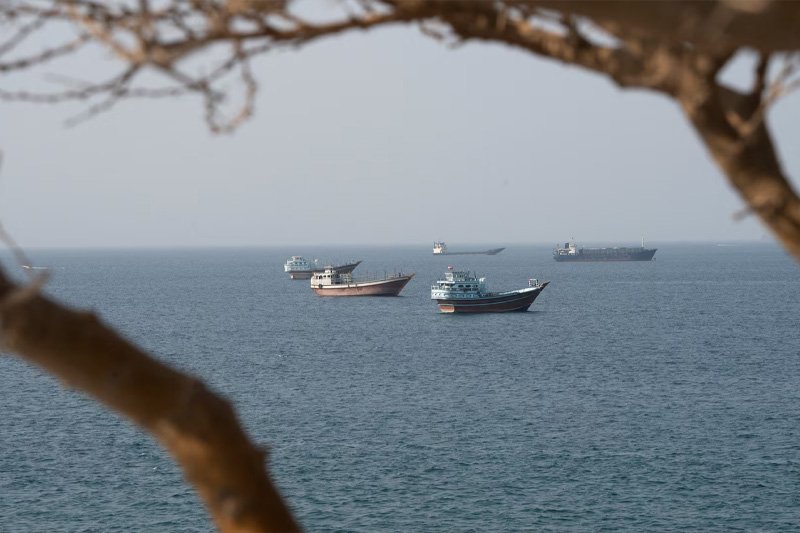
Oil prices on Thursday (20) pushed to their highest point in three weeks, with the continuing deadlock in the U.S.-Iran war and the United Arab Emirates’ move to sever all financial and economic ties with Iran squeezing supply.
October Brent crude futures added $2.44, or 2.7%, settling at $94.06 a barrel, while West Texas Intermediate’s more active October contract climbed $2.41, or 2.9%, to $86.80 a barrel. Both benchmarks recorded a fifth consecutive session of gains and reached their highest levels since July 24.
The UAE’s suspension of all financial and commercial transactions with Iran until further notice deepened an already volatile Gulf standoff. The announcement, made Wednesday by the UAE Ministry of Foreign Affairs, drew renewed attention to the strained relationship between Abu Dhabi and Tehran and compounded the supply worries already hanging over the market.
“Tensions in the Middle East remain high, leaving room for further supply disruptions,” UBS analyst Giovanni Staunovo said, according to Reuters. “Lower oil exports from the Middle East are once again tightening the oil market.”
According to Reuters, Trump on Wednesday threatened economic repercussions against nations that offered Iran any form of assistance. Trump had declared Tuesday that negotiations with Iran were not happening and that the Strait of Hormuz was open for transit, a claim Iran flatly rejected.
Wednesday’s shipping data showed transit through the strait holding steady compared with Tuesday, even as ceasefire negotiations stalled. The waterway once carried roughly a fifth of the world’s oil consumption before hostilities erupted with U.S. and Israeli strikes on Iran on February 28, and throughput today remains a fraction of that volume.
Hiroyuki Kikukawa, chief strategist of Nissan Securities Investment, said the market was likely to maintain a gradual upward trend given uncertainty around peace talks and tensions involving the UAE, Oman, and Iran.
Refiners receiving less crude because of the war have seen their finished-fuel stocks erode. The Energy Information Administration reported Wednesday that U.S. distillate inventories — covering diesel and heating oil — declined for the third week running in the period ended August 14, while crude stockpiles bucked expectations and jumped 4.4 million barrels, against a projected draw of 600,000 barrels, according to CNBC.
American drivers faced a national pump average of $4.10 a gallon for gasoline on Thursday — 38% more than before the war started — while diesel reached $5.55 a gallon, a 48% jump over the same span, according to The New York Times.(Source- The Leader)


