
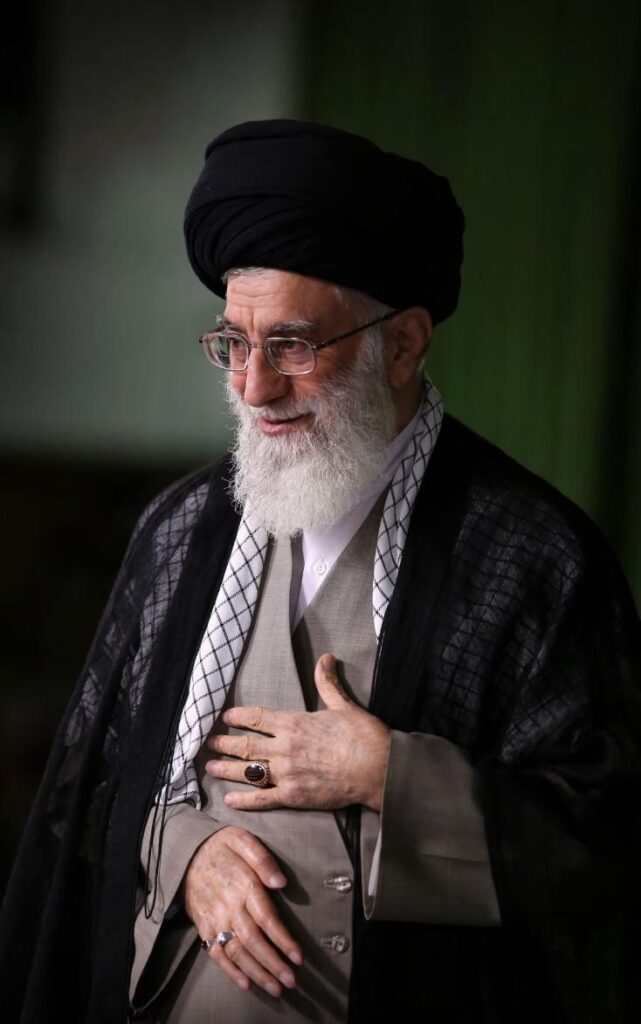
When we examine history, we encounter certain noble and remarkable personalities whose true legacy lies not in the positions they held or the political power they possessed, but in the values they embodied. When speaking of such individuals, it is not their titles that first come to mind, but the principles that radiated through their lives. Their lives themselves become lessons for future generations. Among such figures, Seyyed Ali Khamenei, the former spiritual leader of Iran, occupies a distinctive place.
His life has been a long journey shaped by simplicity, spirituality, knowledge, patience, and responsibility. Opinions about him may differ among people around the world. Some view him primarily as a political leader, while others regard him as a religious scholar. Yet, the simplicity that characterized his life, his devotion to learning, and his commitment to spiritual values have earned the respect and admiration of many.
His life story serves as an example of how faith, perseverance, and intellectual pursuit can be combined to guide both personal conduct and public service. Regardless of differing perspectives, his emphasis on moral values, education, and spiritual growth continues to be a subject of reflection and discussion among many people today.
He was Born in 1939 in the holy city of Mashhad, Iran, Seyyed Ali Khamenei spent his childhood in an exceptionally simple environment. His father, Hojjat al-Islam Seyyed Javad Khamenei, was a respected religious scholar, and the family’s life was enriched not by material wealth but by religious values and moral principles. In later years, he recalled that although the family’s financial circumstances were modest, there was never a shortage of love, respect, and spiritual richness. Such an environment nurtures values in a child’s heart that remain throughout life.
Today, many people measure success by wealth, possessions, or social status. However, Seyyed Ali Khamenei’s life teaches us that true greatness often emerges from simplicity. From an early age, he possessed a deep passion for knowledge. The Holy Qur’an, Hadith, the Arabic language, Islamic jurisprudence, and history became the main fields of his study. Later, he pursued his education at some of Iran’s leading religious institutions, further developing his spiritual and intellectual foundations.
According to his perspective, knowledge is not merely the accumulation of information. Rather, it is a force that purifies the heart, elevates the human being, and improves society. For this reason, he consistently encouraged people to cultivate knowledge together with moral character. He believed that science and religion are not contradictory; instead, genuine knowledge helps humanity gain a deeper understanding of God’s creation.
To truly understand Seyyed Ali Khamenei’s life, one must understand his spirituality. For him, religion was not limited to a set of rituals or ceremonies. Rather, it was a guiding light that illuminated every aspect of life. One of the recurring themes in his speeches was the importance of “purity of the heart.” In his view, a person’s greatest victory is not defeating others, but overcoming one’s own arrogance, anger, and desires.
His teachings suggest that a moment spent in the quietness of the night remembering God is more valuable than all the riches of the world. He frequently emphasized that prayer, reflection upon one’s shortcomings and sins, recitation of the Qur’an, and self-examination strengthen the inner life of a human being. In today’s world, power is often associated with luxury and privilege. Yet many people see in Seyyed Ali Khamenei’s life a different example one in which spiritual devotion, simplicity, and self-discipline are regarded as the true measures of success and fulfillment.
His supporters point out that he not only spoke about living a simple life but also sought to demonstrate it through his own example. Simple clothing, a modest lifestyle, and disciplined daily habits are often described as integral aspects of his character.
For him, simplicity did not mean poverty. Rather, simplicity meant choosing what is meaningful over what is excessive. Through his own life, he sought to show that inner values should take precedence over outward appearances and material luxuries.
A fact that many people may not know is that Seyyed Ali Khamenei has long been deeply interested in poetry and literature. The works of the great Persian poets Hafez, Saadi, and Rumi are among those he has greatly admired. He has also authored numerous books, many of which aim to convey moral, intellectual, and social guidance to society. His contributions as a writer, poet, translator, and intellectual with a deep appreciation for literature are particularly noteworthy.
From childhood, Seyyed Ali Khamenei developed a strong passion for reading. In addition to Persian literature, he studied many significant works of world literature in depth. He highly praised Victor Hugo’s Les Misérables, describing it as one of the greatest novels ever written, and he explored the writings of authors from diverse cultural backgrounds.
Khamenei’s love for Persian poetry deserves special mention. He has participated in literary gatherings with poets and has engaged in the appreciation and critique of poetry. It is also reported that he wrote poems under the pen name “Amin.” In his view, poetry and literature are powerful means of promoting spiritual and moral values within society.
Among the works he has authored, An Outline of Islamic Thought in the Quran occupies a special place. First published in 1974, this book presents a systematic exposition of Islamic thought based on the Holy Qur’an. It continues to be regarded as an important work in the field of Islamic intellectual studies and remains influential among readers interested in Islamic thought today.
Another of his notable works is A 250-Year-Old Person, which contains his analysis of the lives of the Islamic Imams and their social struggles. Many scholars and commentators note that this book offers readers a fresh perspective on Islamic history. Another important contribution he made as a writer was the translation of works by prominent Arabic thinkers into Persian. Through these translation efforts, he helped make Islamic and intellectual thought accessible to a wider audience.
And “Kanevadeh” (The Compassionate Family) is one of Seyyed Ali Khamenei’s notable works focusing on the institution of family, marriage, and the values that form the foundation of a healthy society. In this book, he presents profound reflections on the spiritual significance of family life, mutual respect, love, responsibility, and moral conduct. One of the central messages of the work is that the strength of a family is built not upon material wealth, but upon understanding, commitment, and virtuous character.
The book also highlights Seyyed Ali Khamenei’s skill as a writer. Although his writing style is simple and accessible, it is enriched with deep intellectual and spiritual insights. He possesses a remarkable ability to explain complex religious and social concepts in a manner that can be understood by ordinary readers while still offering meaningful reflections for scholars and intellectuals. For this reason, he is regarded not only as a religious and political leader but also as a gifted writer whose words have inspired thought, nurtured minds, and conveyed timeless moral values to generations of readers.
Seyyed Ali Khamenei’s writing style is simple yet rich with profound ideas. His writings on religion, history, culture, society, and human values invite readers to reflect deeply. A recurring theme throughout his works is the relationship between knowledge, spirituality, and social responsibility.
Therefore, Seyyed Ali Khamenei is remembered not only as a political leader but also as a distinguished writer who cherished Persian literature, sought to shape thought through writing, and provided intellectual inspiration to generations of readers. He believed that poetry was not merely the music of words but also a medium capable of elevating the human soul. He frequently emphasized that literature, art, and culture play a vital role in preserving the spirit of a society.
Life is never an easy path. Challenges, hardships, and trials are part of every leader’s journey, and Seyyed Ali Khamenei’s life was no exception. His followers believe that the difficulties he faced strengthened his character. Remaining hopeful in times of adversity, preserving faith, and staying committed to one’s purpose are regarded as some of the defining characteristics of his life.
Many of Seyyed Ali Khamenei’s speeches have been directed toward young people. He believed that the future of every nation is determined by its younger generation.
He encouraged young people to pursue knowledge, embrace innovation, act with self-confidence, and uphold moral values. He repeatedly emphasized that knowledge and character must develop together. Another theme frequently found in his speeches is justice. In his view, a society becomes strong not merely through economic power but through fairness and justice. He stressed that caring for the poor, orphans, the oppressed, and those in need is a religious responsibility. His philosophy clearly reflects the belief that serving humanity is itself a form of worship.
When we look at the life of Seyyed Ali Khamenei, there are many lessons that can be learned.
First, simplicity does not diminish a person’s worth; rather, it elevates it. Second, knowledge is one of the fundamental driving forces behind the progress of society. Third, spirituality strengthens the inner character of a human being. Fourth, patience and steadfastness in the face of challenges are essential for success in life. Fifth, power is not a privilege but a responsibility.
The life of Seyyed Ali Khamenei is not merely a chapter in political history. It is a long story of faith, knowledge, simplicity, and spirituality. His life reminds us that a person’s true greatness is determined not by the power they possess, but by the values they carry within their heart. As time passes, positions, authority, and material wealth may disappear. Yet good character, a moral way of life, and sincere devotion to God continue to live on through generations.
Therefore, when we reflect upon the life of Seyyed Ali Khamenei, we see more than just a leader. We see a man who found greatness through simplicity, shared enlightenment through knowledge, and touched human hearts through spirituality. What emerges from his life is the enduring fragrance of simplicity itself.
For him, poetry was not merely a hobby. It was a means of expressing faith, contemplative thought, and spiritual devotion.
Throughout his life, he demonstrated remarkable resilience in the face of adversity. Before the Iranian Islamic Revolution, he was imprisoned on several occasions because of his opposition to the monarchy. Yet even amid such hardships, he did not abandon his convictions. Instead, he continued his religious and social activities with determination and commitment.
Following the Revolution, he assumed various governmental responsibilities and later served as the President of Iran. In 1989, he became Iran’s Supreme Leader. His supporters particularly admire his emphasis on self-reliance, his steadfast resistance to external pressures, and his commitment to preserving Islamic values. In their view, he sought to promote scientific and educational advancement while safeguarding Iran’s independence and cultural identity.
For decades, he encouraged younger generations to dedicate themselves to knowledge, innovation, and moral excellence. Beyond politics, many of his speeches focused on ethical values such as honesty, justice, humility, compassion, responsibility, and service to humanity. He consistently reminded people that true success is found not in power or wealth, but in goodness and closeness to God.
Above all, his commitment to serving his beliefs and his society stands as an example of a life built upon purpose and unwavering conviction.
From the perspective of many of his admirers around the world, Seyyed Ali Khamenei’s legacy cannot be measured solely by political achievements. Rather, it can be seen in the example of a scholar who rose from humble beginnings, remained devoted to his religious beliefs throughout his life, valued knowledge and culture, and sought to connect spiritual principles with public service. Whether viewed as a religious leader, teacher, poet, or statesman, his life continues to inspire discussions about faith, morality, perseverance, and dedication to higher ideals.
The life of Seyyed Ali Khamenei teaches us that true leadership is built not upon power, but upon faith, knowledge, and dedication to serving the people. The intellectual depth he demonstrated as a writer, the wisdom he displayed as a religious scholar, and the service he rendered as a leader continue to live on in the hearts of millions around the world.
Although only a short time has passed since his departure, the ideas contained in his writings, the moral values he championed, and the humanitarian messages he conveyed will continue to illuminate future generations. Therefore, Seyyed Ali Khamenei will be remembered not merely as a political leader, but as a unique thinker and writer who touched hearts through his words, enriched minds through knowledge, and shaped lives through the power of his example. His legacy will remain etched in history for generations to come.

By – Ms. Fathima Shifani Zamaa
Cultural Expert
Iran Cultural Center
Embassy of the Islamic Republic of Iran
Sri Lanka


