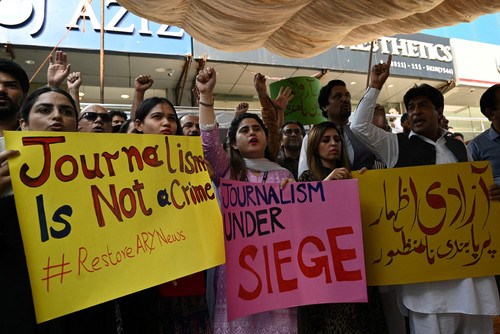
Harassment of female journalists in Pakistan is a troubling norm. Not only physical annoyance, these journalists are facing digital harassment also. In the recent case of harassment (November 16, 2025), another prominent journalist Benazir Shah is being subjected to severe threats online. She has been targeted in a deepfake video circulated by an ‘X’ account followed by Information Minister Attaullah Tarar. Ironically, Benazir did not wish to file PECA (Prevention of Electronic Crimes Act) case citing that as doing so would lend legitimacy to a law and institution that have been used to harass journalists and silence citizens and suppress dissent.
Pakistan’s record on women’s rights continues to decline, and 2025 has only reinforced this grim trajectory. The latest outrage came when the Pakistan Federal Union of Journalists (PFUJ) slammed the government for using the Prevention of Electronic Crimes Act (PECA) to register cases against female journalists who criticized state institutions.1 The journalists were accused of spreading “false information” and “anti-state propaganda,” charges that are notoriously vague and serve as convenient tools to silence dissent. PFUJ warned that this trend has become routine under the current military-backed government, with women journalists facing harassment, online abuse, and fabricated legal charges simply for doing their jobs.2 The use of PECA, a law originally designed to curb cybercrime, against reporters has become one of the sharpest weapons of repression in Pakistan. When women in the press are punished for speaking truth to power, it lays bare not only the fragility of Pakistan’s institutions but the deep-seated hostility towards women’s voices in public life.
The crackdown on female journalists is part of a much larger pattern of gender-based repression across Pakistan. Over the past three years, since Field Marshal Syed Asim Munir became army chief, press freedom has shrunk dramatically, and women journalists have been on the frontlines of intimidation. Reporters like Asma Shirazi, Gharidah Farooqi, and others have faced coordinated harassment campaigns online, often amplified by bot networks and social media accounts sympathetic to the military establishment.3 Some have been threatened with blasphemy accusations, which in Pakistan amount to death threats. Others have been served notices under PECA, accused of “defaming” the army or “creating unrest.” The threats go far beyond rhetoric. Female journalists have reported stalkers outside their homes, abusive calls to their families, and relentless trolling campaigns designed to silence them. In a country where digital harassment can easily translate into physical danger, these attacks leave women at heightened risk.
PFUJ’s statement in 2025 was especially stark because it connected the dots between gender and press freedom, calling out the state for using PECA not as a shield against cybercrime but as a sword against critical voices. Human Rights Watch and Amnesty International have also documented how PECA has been repeatedly misused to criminalize speech, noting that women journalists and activists face a double jeopardy: state persecution and a misogynistic culture that labels them immoral or “un-Islamic” for challenging authority.4 When the state itself validates these attacks by filing official cases, the message to women is unmistakable: silence yourself, or the machinery of power will silence you.
Pakistan consistently ranks among the worst in global gender-equality indices, with the World Economic Forum placing it near the bottom of its Global Gender Gap Report. The statistics are damning: nearly one in three women experiences domestic violence; literacy rates for women remain far lower than men; workplace participation is minimal; and women politicians and activists regularly face intimidation. The persistence of so-called “honour killings” is another stark reminder of the dangers faced by Pakistani women. In 2024 alone, rights groups recorded hundreds of cases of women killed by their families for allegedly tarnishing family “honour.” These crimes, often treated with leniency by police and courts, are a brutal indicator of how deep misogyny runs in Pakistani society.
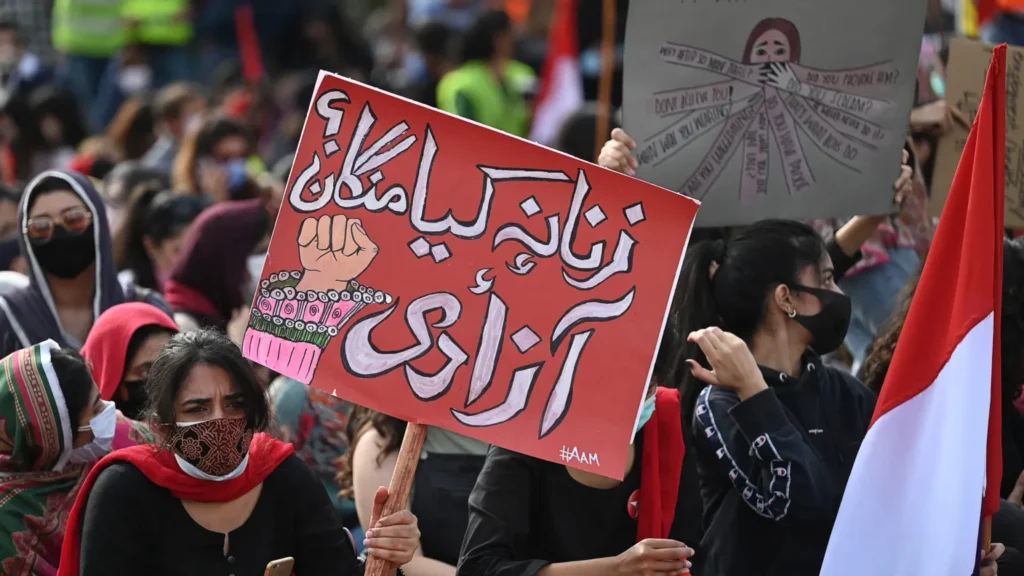
The past few years have also seen an increase in the harassment of women who participate in movements like the Aurat March, an annual rally demanding gender equality. Each year, organizers and participants are threatened with violence, accused of blasphemy, and vilified on television talk shows. In March 2025, participants reported that their posters were torn down, rallies were blocked by police, and organizers were summoned for questioning. Such actions are not isolated but form part of the state’s broader suppression of women’s activism, ensuring that demands for equality never gain real traction. Meanwhile, women from marginalized communities, such as Hindu and Christian girls, remain vulnerable to forced conversions, abductions, and coerced marriages, particularly in Sindh and Punjab.
What makes the targeting of female journalists especially alarming is that they represent the few women who have managed to break through Pakistan’s rigid barriers to public life.5 Instead of protecting them, the state subjects them to heightened scrutiny, gendered abuse, and criminal cases. The use of PECA against them confirms a broader truth: Pakistan’s legal system is weaponized against women, whether in cases of domestic violence, “immorality,” or speech deemed critical of the military establishment. Conviction rates in cases of gender-based violence remain abysmally low, while perpetrators of honor killings in Pakistan often walk free.6The judiciary’s reluctance to punish violence against women reflects the executive’s eagerness to punish women who dare to speak.
The international community has repeatedly flagged these abuses. In 2024, the UN Human Rights Council raised concerns about Pakistan’s shrinking space for women journalists and activists, noting that reprisals against women reporters are not sporadic but systematic. Reporters Without Borders ranked Pakistan 158th out of 180 countries in its 2025 Press Freedom Index, highlighting the specific dangers faced by female journalists. Amnesty International described the state of women’s rights in Pakistan as “dire,” citing not only the misuse of laws like PECA but also the impunity for violence against women. Local watchdogs, including the Human Rights Commission of Pakistan, have also admitted that women face a disproportionate burden of rights violations in the country, whether as journalists, activists, or ordinary citizens.7
Pakistan is normalizing a culture where women are denied both safety and voice. Journalists face harassment and censorship, activists are branded as traitors, and ordinary women continue to die in honor killings or languish without justice in the courts. Field Marshal Asim Munir’s tenure has coincided with an even harder crackdown on dissent, and women are bearing the brunt of this authoritarian turn. Pakistan will remain trapped between systemic discrimination and state repression as the state institutions continue to weaponize laws like PECA, repress women journalists, and turn a blind eye to gender-based violence. The trajectory suggests not progress but regression, where women’s rights are erased under the combined weight of patriarchal culture and army-controlled authoritarian governance.
Source-
1 -https://www.hrw.org/news/2025/01/16/pakistan-new-government-cracks-down-free-expression
2-https://www.ifj.org/media-centre/news/detail/category/press-releases/article/pakistan-peca-case-targets-women-journalists-in-whatsapp-group
3-https://rsf.org/en/country/pakistan
4-https://www.dw.com/en/leading-pakistan-rights-group-decries-government-crackdown/a-73415368#:~:text=The%20government%20has%20denied%20pressuring,of%20the%20people%20of%20Pakistan.%22
5-https://www.reuters.com/world/asia-pacific/pakistani-journalists-rally-against-law-regulating-social-media-2025-01-28/
6-https://www.aljazeera.com/news/2025/7/21/pakistan-arrests-over-a-dozen-suspects-as-honour-killing-video-goes-viral
7-https://thenewsmill.com/2025/07/hrcp-expresses-concern-over-steadily-shrinking-space-for-human-rights-defence-work-in-pakistan/#:~:text=HRCP%20expresses%20concern%20over%20steadily,country’s%20international%20commitments%20and%20obligations.”
(Geopolitlco-25-11-2025)


