

On 28 February 2026, the United States and the Zionist regime, through an unlawful act of aggression contrary to the fundamental principles of international law, acted against the territorial integrity and national sovereignty of the Islamic Republic of Iran. In response, and within the framework of the inherent right of self-defense pursuant to Article 51 of the Charter of the United Nations, the Government of the Islamic Republic of Iran has adopted a set of measures to counter this aggression.
As a result of this unlawful aggression, passage through the territorial sea of the Islamic Republic of Iran in the Persian Gulf, including in the Strait of Hormuz, has become unsafe, and an emergency and extraordinary situation has arisen in the Strait of Hormuz. This situation has had wide-ranging effects on the national security and vital essential interests of the Islamic Republic of Iran, as well as on the safety and security of international navigation and shipping in the Persian Gulf. In light of the emergency and extraordinary conditions created, the possibility of innocent passage as under normal circumstances has, in practice, ceased to exist. This situation is the natural and direct consequence of the unlawful aggression by the United States and the Zionist regime against the territory and sovereignty of Iran, and responsibility for it lies with these hostile parties.
The particular and unprecedented situation arising from this war of aggression has compelled the Islamic Republic of Iran, in order to safeguard its vital essential interests and simultaneously ensure peace, stability, and maritime security, to apply a set of precautionary and restrictive measures with regard to innocent passage through the Strait of Hormuz. In the exercise of the inherent right of self-defense under Article 51 of the Charter of the United Nations, the primary objective of these measures is to prevent support for the ongoing and future aggression against Iran, as well as to ensure free maritime navigation in the Persian Gulf and the Sea of Oman.
Within this framework, the Islamic Republic of Iran, as the concerned and responsible coastal State with regard to maritime safety in the Persian Gulf and the Strait of Hormuz, in accordance with established rules of customary and treaty-based international law, prevents the transit of all vessels belonging to or affiliated with the aggressor parties and participants in or supporters of the aggression. Furthermore, the innocent passage of third States through the Strait of Hormuz shall be lawful only insofar as it is not prejudicial to the national security and essential interests of the Islamic Republic of Iran and the peace and order of the Persian Gulf region, and is free from any form of support for threat or use of force against the sovereignty, territorial integrity, or political independence of the State of Iran. It is evident that should the Government of Iran determine that there are reasonable grounds to believe that the passage of a vessel through the Strait of Hormuz would constitute a threat to national security, public order, or regional peace, it will prevent such passage.
The aggressors, by abusing passage through the Strait of Hormuz and their deployment in the Persian Gulf, have initiated a war of aggression against the Islamic Republic of Iran and have continuously threatened the national security of the country. It is evident that in such a situation, characterized by the violation of a peremptory norm (prohibition of aggression) and the breach of Iran’s sovereignty and national security, the normalization of conditions and the expectation of refraining from exercising effective control over the Strait of Hormuz are impossible and devoid of any legal or practical basis.
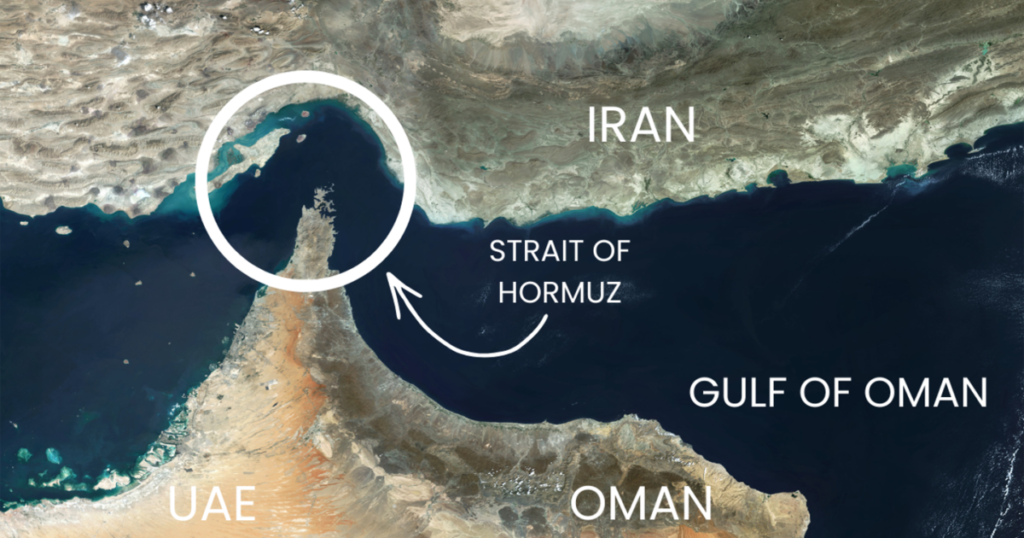
It should be noted that the right of States to adopt precautionary and restrictive measures within the context of armed conflicts has been recognized in international conventions and instruments. The aggressive actions of the United States and the Zionist regime, which clearly violate the provisions of the law of the sea—particularly with regard to the threat or use of force against the sovereignty, territorial integrity, or political independence of a coastal State (which are, under Article 14(4) of the 1958 Convention and Articles 19(2)(a) and 39(1)(a) of the 1982 Convention, considered activities inconsistent with the principles of innocent passage and transit passage)—have disrupted the fragile balance between the rights and security of coastal States and the freedom of maritime navigation, and directly and seriously violate the sovereignty and national security of the Islamic Republic of Iran. Therefore, under these conditions, the prevailing legal regime (innocent passage) has been suspended, and this passage is subject to the conditions declared by the competent authorities of the Islamic Republic of Iran. Accordingly, under such circumstances, the exercise of effective and intelligent control by the Islamic Republic of Iran over the transit of all vessels, particularly those belonging to or affiliated with the aggressor parties, based on the inherent right of self-defense and the principles of necessity and proportionality, is entirely lawful and legitimate.
The Islamic Republic of Iran has always respected the principle of freedom of navigation as well as the safety and security of maritime transport; however, it is evident that the practical realization of these principles with regard to passage through the Strait of Hormuz is not possible except in light of respect for the sovereignty and sovereign rights of the Islamic Republic of Iran as the coastal State. The Islamic Republic of Iran emphasizes that responsibility for any disruption, insecurity, or increased risks in this vital waterway and its surrounding region lies directly with the United States and the Zionist regime, which, by engaging in unlawful and criminal war against Iran, have exposed regional stability and international maritime safety and security to an unprecedented threat and have clearly violated the fundamental principles of the Charter of the United Nations.
In view of the foregoing, the lawful and legitimate measures of the Islamic Republic of Iran have been adopted within the framework of established principles of international law and are based on the two principles of necessity and proportionality. These measures have been implemented with the aim of repelling aggression and neutralizing the source of threats, and in accordance with legal standards, they will continue until the full realization of these objectives and the elimination of the source of threat and aggression. Within this framework, any passage through the Strait of Hormuz must be carried out in compliance with the measures adopted by Iran and in coordination with the competent authorities of the country.
By Dr Alireza Delkhosh


