
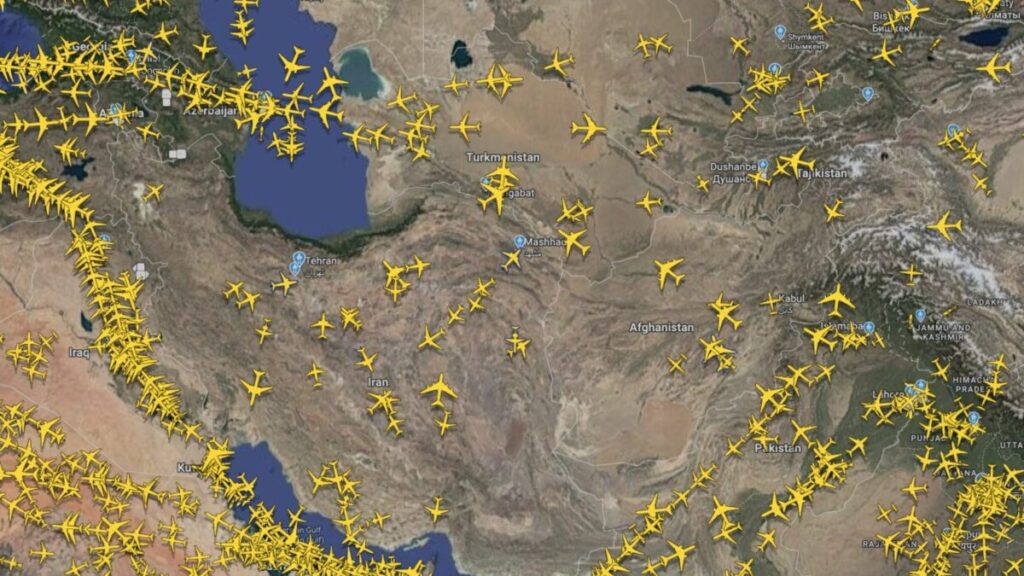
Photo by- Flightradar on January 15, 2026.
Iran reopened its airspace on Thursday after a closure of nearly five hours that disrupted regional flights, as tensions remained high following repeated threats by US President Donald Trump to intervene over Iran’s crackdown on protests.
Iran’s semi-official Tasnim news agency said Foreign Minister Abbas Araghchi discussed the situation in a phone call with Saudi Foreign Minister Prince Faisal bin Farhan Al Saud, pledging to “firmly defend” Iran’s borders. The Saudi minister voiced concern about the risk of escalation and stressed the need for diplomacy and regional cooperation to preserve stability, Tasnim reported.
The reopening of Iranian airspace followed the temporary shutdown imposed amid fears of possible military action. Iran’s nationwide internet blackout entered its seventh day, severely limiting access to information. Satellite internet provider Starlink has reportedly begun offering free service in Iran, while France said it was examining options to send Eutelsat satellite terminals to help restore connectivity.
Anti-government protests that erupted weeks ago over economic grievances and broadened into calls for political change appeared to ease in Tehran after large pro-government rallies on Monday, though rights groups say the overall death toll from the unrest has continued to rise.
In a sign of mounting international scrutiny, the United Nations Security Council is scheduled to meet later on Wednesday for a briefing on the situation in Iran.
Meanwhile, Reza Pahlavi, the U.S.-based son of Iran’s last shah, outlined what he described as a vision for a “free Iran,” saying a future government would end Iran’s nuclear military programme and halt support for armed groups abroad. Trump said on Tuesday he doubted Pahlavi would command sufficient domestic support to lead the country if the current system collapses.
Iran’s judiciary has denied reports that a 26-year-old man arrested during the protests had been sentenced to death, as officials push back against international criticism of the crackdown.
by Siyar Sirat – Amu


