
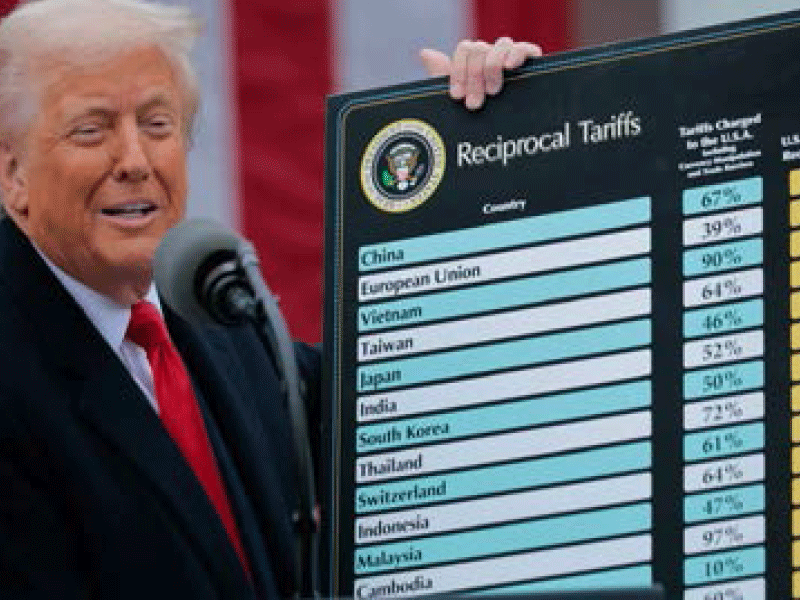
A year ago, Donald Trump stood in Washington and declared ‘Liberation Day’. He unveiled sweeping ‘reciprocal tariffs’ against dozens of countries – from China to Lesotho – and sold it as a defense of US workers, rooted in nationalism. Most analysts took him at his word. They called it protectionism. They called it mercantilism.
They missed the point.
The tariffs are not about trade deficits. They are a coherent political-economic strategy aimed at reversing the most consequential structural shift of the past two decades – the slow, uneven, but real rise of economic autonomy across the Global South. Trump himself has been explicit about this, threatening an additional 10% tariff on any country ‘aligning itself with the Anti-American policies of BRICS’. This isn’t economic nationalism. It’s a hegemonic counter-offensive.
On 4 April 2025, Secretary of State Marco Rubio said at NATO headquarters in Brussels that the tariffs were designed ‘to reset the global order of trade.’ To ‘reset’ means to put back into an original position. Nearly a year later, Rubio’s remarks at the Munich Security Conference on 14 February 2026 made clear what that original position was: the US wishes to roll back a century of gains made by labor and national liberation movements.
The New Mood in the Global South
Something shifted after 2008. The Global Financial Crisis cracked the credibility of the Northern-dominated economic order, and across the periphery, a new political mood began to consolidate. The Tricontinental: Institute for Social Research has called it exactly that – a new mood: a growing refusal, uneven and often contradictory, of the subordinate position the post-Cold War order had assigned to peripheral nations.
BRICS – which began as BRIC in 2009 – became the institutional expression of this mood. By the mid-2020s, it had expanded into a grouping that, for the first time, combined the world’s largest oil exporters (Saudi Arabia, the UAE, Russia), its most populous states (India, China), and major emerging market economies spanning four continents. If that grouping developed effective coordination – a common payment system, a development bank with real lending capacity, currency arrangements that cut dollar dependency – it would structurally challenge US financial hegemony.
Figure 1. BRICS vs G7: share of world GDP (PPP), 2002–2024.
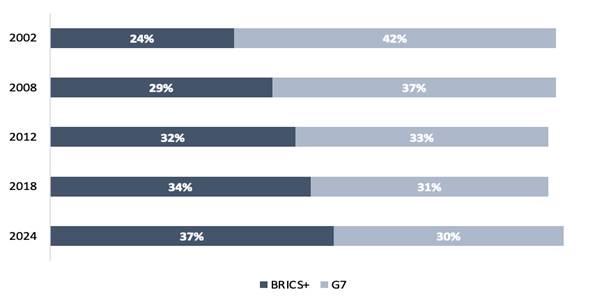
Source: IMF World Economic Outlook data, via EY Economy Watch (2024). BRICS+ = original five + Egypt, Ethiopia, Iran, Saudi Arabia, UAE.
Beyond BRICS, states across the Global South intensified debates over resource nationalism and de-dollarisation. Indonesia insisted its nickel be processed at home before export. India and Russia experimented with rupee-rouble trade. China pushed for IMF voting reform to reflect the actual weight of developing economies. None of this was a clean break from the Northern-dominated order. But each initiative chipped away at it.
Meanwhile, the institutional framework designed to restrain US commercial aggression was quietly dismantled by the US itself. Since 2019, Washington has blocked new appointments to the WTO’s Appellate Body, effectively disabling its dispute resolution mechanism. The ‘rules-based order’ invoked to discipline others no longer applies to the power that built it.
It is this dual movement – Southern institutions consolidating, Northern legal constraints collapsing – that produced the conditions for Trump’s tariff offensive. When the structures of constraint weaken, and the structures of autonomy strengthen, hegemonic powers face a choice: tolerate the shift, or interrupt it. Trump chose interruption.
Tariffs as Imperial Strategy
The conventional debate treats tariffs as a response to trade deficits – as if the trade deficit were a natural disaster rather than the structural expression of dollar reserve-currency status and of four decades of deliberate US capital offshoring.
Here is what actually happened. The neoliberal order didn’t just liberalize trade. It cultivated a specific dependency relationship: the United States as the buyer of last resort for Global South export-oriented growth. From the maquiladoras of Mexico to the export processing zones of Sri Lanka, developmental models across the Global South were structured around access to the US consumer market as the primary engine of growth.
Export revenues, foreign exchange stability, employment, and political legitimacy all became contingent, in varying degrees, on continued US market access. This wasn’t comparative advantage at work. It was the architectural logic of dependency, reproduced through structural adjustment programs, bilateral investment treaties, and the WTO framework.
The comprador interests cultivated over those four decades didn’t disappear when BRICS expanded, or South-South rhetoric intensified. They remained embedded in the export industries, finance ministries, and national business associations of the very states most vocally pursuing strategic autonomy. Trump’s tariffs didn’t create this vulnerability. They reactivated it.
Then came the bilateral negotiation framework – and this is where the strategy becomes obvious.
A multilateral forum would require the US to negotiate with the Global South as a collective. Bilateral dealmaking atomizes that collectivity into a competition between individual states for preferential access to a market being deliberately made scarcer.
Vietnam underbids Malaysia. Indonesia moves faster than India. The Philippines accepts terms that ASEAN as a whole would have rejected. Each state, responding rationally to the immediate threat of exclusion, deepens the fragmentation of exactly the South-South solidarity that might have produced collective leverage.
This is the deepest mechanism of re-compradorisation: not dependency imposed by force, but dependency reactivated by incentive. The tariff regime doesn’t need to permanently close the US market. It only needs to threaten closure credibly enough that national elites recalculate their interests, decide that the costs of Southern solidarity exceed the costs of bilateral accommodation, and return to the queue.
Modern Unequal Treaties: South Korea, Malaysia, and India
The nineteenth-century unequal treaty – imposed on China, the Ottoman Empire, Japan, and others – fixed tariff rates, extracted extraterritorial jurisdiction, and locked in ‘most favored nation’ clauses. It maintained colonial hierarchy while preserving the formality of sovereign statehood.
The bilateral agreements of the Trump era are structurally analogous. Three cases make this visible: South Korea, Malaysia, and India.
Table 1. Tariff trajectory from pre-Trump baseline to deal outcome.
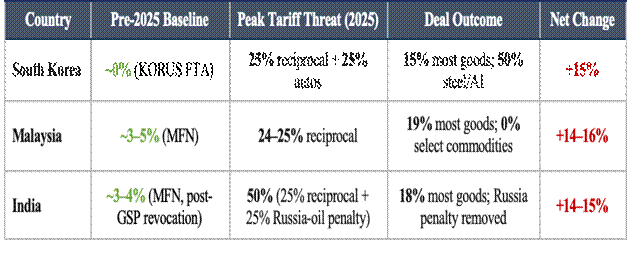
Source: Own elaboration with data from USTR fact sheets; US Federal Register (2025–26); WTO MFN tariff schedules. GSP = Generalized System of Preferences, revoked for India in 2019.
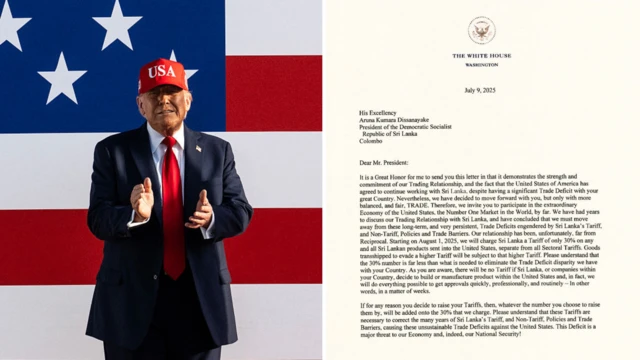
South Korea is the clearest example of dependency reactivated through structural exposure. Seoul’s automotive sector exported nearly $35 billion in vehicles to the United States in 2024 – nearly half of its total automotive export volume. Its semiconductor industry is structurally irreplaceable in the global technology supply chain.
When Trump imposed 25% tariffs on automobile imports and threatened equivalent measures on semiconductors, the response was immediate: a $350 billion investment pledge directed toward US facilities, elimination of the 50,000-unit cap on US vehicle imports, and acceptance of US food and digital services standards.
The KORUS free trade agreement, which had governed the relationship since 2012 at near-zero tariff rates, was effectively nullified – replaced by a deal that locked in a 15% rate on most goods while leaving 50% sectoral tariffs on steel, aluminum, and copper untouched.
South Korea gave up the terms of an existing agreement for something objectively worse. It did so because the alternative – exclusion from the US market at the moment when its semiconductor and auto industries face profound restructuring – was politically unacceptable to the national business class whose interests the state was managing.
Malaysia’s agreement is the most structurally revealing because it most nakedly exposes the industrial policy dimension of this new unequal treaty. A country with no prior US free trade agreement accepted 48 obligations against three placed on Washington, including a prohibition on export restrictions for critical minerals that forecloses the very industrial upgrading strategy Indonesia had used successfully with nickel.
Malaysia’s semiconductor assembly and packaging sector, built over decades as a node in a US-designed supply chain, rendered it acutely vulnerable: its export revenues, its investment attraction model, and its position in US corporate supply chains all depended on continued access.
The deal it signed preserves that access at 19% – worse than the zero it had before – while binding its industrial policy and embedding a termination clause triggered if Malaysia signs agreements that ‘jeopardise US interests.’
India is the most instructive confirmation of the trend. The interim agreement announced in February 2026 bears the hallmarks of a colonial-era unequal treaty, as economist Prabhat Patnaik has called them. While the US imposes 18% on Indian goods, India is committed to effectively zero tariffs on US goods – institutionalising the kind of asymmetry imperial powers once imposed on states they did not directly rule.
More striking still: India must buy at least $100 billion of US goods annually for five years. The most immediate mechanism for meeting that target is replacing discounted Russian crude oil with US oil, which is at least 20% more expensive, thereby imposing an inflationary drain directly on working people.
That this deal was welcomed by the Indian stock market while devastating agrarian and working-class interests is not incidental. The Indian business and professional class – whose appetite for US market access had always strained against India’s posture of strategic autonomy – got what they wanted. Strategic autonomy was surrendered from within by the compradorisation quietly built over four decades of neoliberal integration.
A Capitulation Foretold
The classical unequal treaty operated through three mechanisms: fixing the colonized state’s tariff rates to prevent protective industrialization; granting foreign nationals exemption from local law; and extracting ‘most favored nation’ clauses that gave imperial powers automatic access to any privileges granted to third parties.
The contemporary bilateral agreement operates through analogous mechanisms: locking in tariff rates that reflect the power differential of the negotiation rather than any principle of reciprocity; imposing technology export controls and supply chain requirements that constrain the signatory’s industrial policy autonomy; and embedding the entire arrangement within US domestic law.
The vulnerability of countries like South Korea, India, and Malaysia to such unequal treaties was measurable – and foretold.
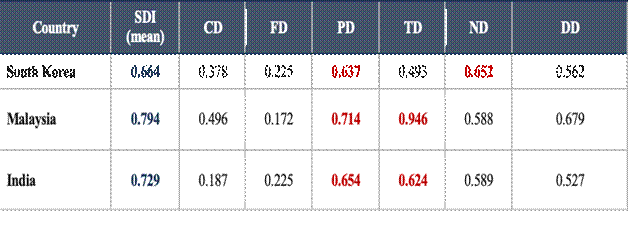
Table 2. Structural Dependency Index (SDI)of South Korea, Malaysia, and India (mean 1996–2023).
Source: Own elaboration with data from WB, IFM, and OECD.
The Structural Dependency Index (SDI), developed by Tricontinental: Institute for Social Research Chief Economist Emiliano Lopez, measures economic dependency across six dimensions – commercial (CD), financial (FD), productive (PD), technological (TD), network (ND), and distributive (DD) – for 31 countries from 1996 to 2023. The index measures economic dependency from a range of 0 to 1.
All three countries examined above all had SDI scores well above 0.65, reflecting decades of integration into circuits of accumulation designed in Washington and operationalized through the very trade architecture Trump is now dismantling.
The data also reveals where each country is most exposed.
Malaysia registers the highest technological dependency score in the dataset (0.946), reflecting its position as an assembly node in US-designed semiconductor supply chains. South Korea’s network and productive dependency scores reflect an automotive and chip industry structurally embedded in the hegemonic production network. India’s productivity and technological scores confirm that the BJP’s ‘Make in India’ rhetoric is far from reality.
The SDI cannot predict political outcomes. But it can map the terrain on which political outcomes become structurally probable. A country with a high dependency score is likely to capitulate because the costs of refusal are calibrated to what its comprador elites cannot afford to lose.
Building the Southern Institutions
Then something unexpected happened. The US constitutional order intervened.
On 20 February 2026, the US Supreme Court ruled that the International Emergency Economic Powers Act did not authorize Trump to impose tariffs. All Liberation Day reciprocal tariffs were terminated on 24 February 2026.
Trump immediately substituted a flat 10% global tariff under Section 122 of the Trade Act of 1974 – but this collapsed the entire architecture of differential bilateral pressure. Countries that had accepted tariffs of 15–20% and offered significant concessions now faced the same rate as countries that had signed nothing.
The consequences were swift. On 15 March 2026, Malaysia declared its agreement with the US ‘null and void,’ arguing the Supreme Court had removed its legal foundation. India moved with equal speed: a delegation scheduled to fly to Washington to finalize the trade agreement postponed its visit, with no new date set. Deals extracted through months of coercive pressure lost their legal basis in days.
Whether this reprieve holds is uncertain – Trump has already launched Section 301 investigations against many of the same countries. But it reframes the strategic question clearly: the Global South needs institutional infrastructure that makes resistance viable without the prohibitive costs that individual bilateral confrontation with US power currently imposes.
Three domains are essential. Payment systems that reduce exposure to dollar-denominated coercion. Technology and supply chain linkages that reduce Washington’s chokehold over industrialization. Development finance institutions that offer genuine alternatives to IMF and World Bank conditionality.
Initiatives like the New Development Bank and the Asian Infrastructure Investment Bank are early, imperfect experiments in this direction – but they lack a theoretical and operational framework genuinely distinct from the dominant financial paradigm.
Re-compradorisation is not a fate. It is a project – and its outcome depends on whether the institutional alternatives to dependency can be built quickly enough, and consolidated firmly enough, to make the costs of imperial pressure higher than the costs of resistance.
More than that, it depends on whether social movements in the periphery can capture state power and use it to discipline the comprador class to act in the national interest. That political-economic work – unglamorous, institutional, requiring the patient construction of South-South infrastructure – is the central task of this moment.
The structural conditions for surrender are already in place. What isn’t yet built is the infrastructure for sovereignty. That’s the work.

Shiran Illanperuma is a researcher at Tricontinental: Institute for Social Research and a co-editor of the international edition of Wenhua Zongheng: A Journal of Contemporary Chinese Thought. He is a Visiting Lecturer at the Bandaranaike for International Studies. His current research focuses on development and industrial policy in Asia.
(Source- Tricon Political Economy – Apr 01, 2026)


