
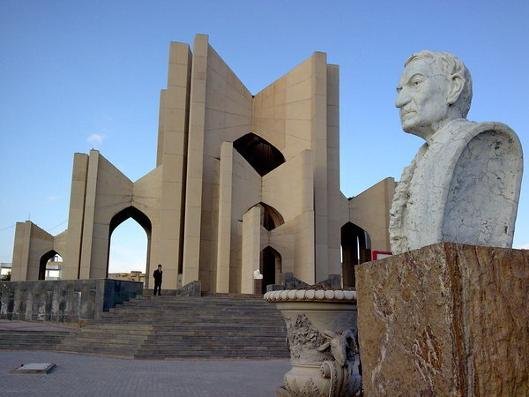
Marking Persian Poetry Day, observed on September 18th.
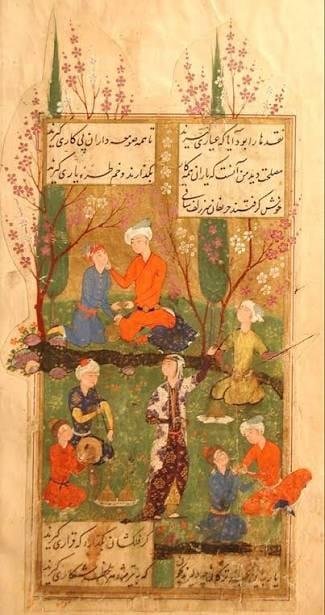
Persian poetry is more than a chapter in the history of world literature. It is a living cultural heritage through which generations have explored love, wisdom, spirituality, justice, beauty, human dignity and the meaning of life. From the ancient traditions of Persian literature to the profound verses of Ferdowsi, Saadi, Hafez, Rumi, Omar Khayyam and Nizami, Persian poetry has travelled far beyond the geographical boundaries of Iran and touched hearts across the world.
Persian Poetry Day is therefore not simply a celebration of poems and poets. It is a celebration of the power of language to connect people, cultures and civilizations.
*A Literary Tradition of Universal Human Values*
One of the most remarkable qualities of Persian poetry is its ability to transform deeply personal experiences into universal ideas. A poem written centuries ago can still speak to a reader today because its central concerns are profoundly human: love, friendship, compassion, mortality, hope, knowledge and the search for truth.
Saadi Shirazi, one of the greatest voices of Persian literature, expressed the interconnectedness of humanity through his famous idea that human beings are members of one body. His poetry continues to be associated with compassion, social responsibility and human solidarity.
Rumi, whose poetry has reached readers throughout the world, explored the human journey toward love and spiritual awakening. His verses invite the reader to look beyond external differences and discover a deeper connection between human beings.
Hafez transformed the language of love, spirituality and inner freedom into poetry of extraordinary beauty. His Divan remains one of the most cherished works of Persian literature, read not only as poetry but also as a source of reflection and inspiration.
Ferdowsi, through the monumental Shahnameh, preserved a vast cultural memory and demonstrated the relationship between literature, history, identity and civilization. His work remains an essential part of Iran’s literary heritage.
Together, these poets demonstrate the extraordinary diversity of Persian poetry: epic and mystical, philosophical and romantic, social and spiritual.
*Persian Poetry Beyond Borders*
Persian poetry has never been confined to one country or one community. For centuries, Persian became an important language of literature, scholarship and culture across large parts of Asia.
Its influence can be found in Central Asia, South Asia and beyond. Persian literary traditions interacted with local languages and cultures, creating a rich network of intellectual and artistic exchange.
South Asia, in particular, developed a deep relationship with Persian literature. Persian became an important language of administration, scholarship and courtly culture in different historical periods, while Persian poetry influenced literary traditions in languages such as Urdu and contributed to the wider cultural landscape of the Indian subcontinent.
This history reminds us that civilizations do not develop in isolation. They grow through encounters, exchanges and mutual influence.
*A Cultural Connection Between Iran and Sri Lanka*
For Sri Lanka, Persian poetry offers another fascinating window into the historical and cultural connections between South Asia and Iran.
Sri Lanka has long been part of the maritime world of the Indian Ocean, where merchants, scholars, travellers and ideas moved between distant shores. The relationship between Iran and Sri Lanka can therefore be understood not only through political or economic contacts, but also through cultural and intellectual exchange.
Today, Persian poetry provides an opportunity for Sri Lankan readers, students, academics and artists to discover another dimension of Iranian civilization.
The universal themes found in the poetry of Rumi, Saadi, Hafez, Ferdowsi and Khayyam can be appreciated regardless of language, nationality or religious background. Their poetry encourages dialogue between cultures because it begins with something shared by all human beings: the desire to understand ourselves and one another.
*Poetry as a Language of Peace*
In an increasingly interconnected yet divided world, poetry has a special role.
Poetry does not require people to become identical. Instead, it allows people to encounter difference with curiosity and understanding. A Persian poem translated into Sinhala, English or another language becomes more than a translated text it becomes a meeting point between cultures.
The poetry of Rumi speaks about love.
The poetry of Saadi speaks about humanity.
The poetry of Hafez speaks about the mysteries of the heart.
The poetry of Ferdowsi speaks about cultural memory and identity.
The poetry of Khayyam invites reflection on time, existence and the human condition.
These voices belong to a particular literary civilization, yet their questions belong to humanity.
*Preserving a Living Heritage*
Celebrating Persian Poetry Day also reminds us of the importance of protecting literary heritage.
In an age dominated by rapid communication, short messages and digital media, poetry reminds us to slow down and listen to language. A single verse can contain an entire world of thought. A metaphor can cross centuries. A poem can preserve the emotions and imagination of people whom we will never meet.
For younger generations especially, Persian poetry offers an opportunity to discover that literature is not simply something preserved in old books. It is a living conversation between the past and the present.
*A Celebration of Dialogue*
Persian Poetry Day can therefore become a celebration of cultural dialogue between Iran and the world.
When a Sri Lankan reader discovers Rumi, when a student encounters Saadi for the first time, when Hafez is translated into Sinhala, or when Iranian and Sri Lankan scholars discuss poetry together, a small bridge is created.Such bridges are built not from stone, but from words.
And perhaps that is the greatest gift of Persian poetry: it teaches us that although civilizations may speak different languages, the human heart understands many of the same truths.
On Persian Poetry Day, we celebrate not only Iran’s magnificent literary heritage, but the enduring ability of poetry to bring human beings closer to cross borders, connect civilizations and turn words into bridges between hearts.
Happy Persian Poetry Day — روز شعر و ادب فارسی مبارک
May the verses of Persian poets continue to inspire wisdom, compassion, beauty, dialogue and friendship among peoples and cultures.

By Shifani Zamaa


