
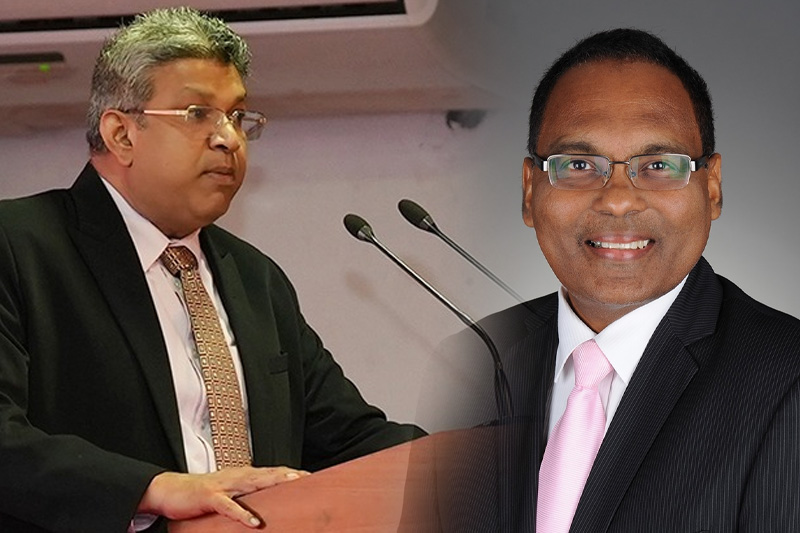
Sri Lanka plans to establish a new Department of Public Prosecution (DPP) for criminal cases, with an initial draft expected by April, Justice Minister Harshana Nanayakkara said.
The move will create an independent entity for criminal prosecutions while leaving the Attorney General’s Department intact.
Minister Nanayakkara told reporters that a committee led by Supreme Court Justice Yasantha Kodagoda, alongside the Sri Lanka Bar Association and the Law Commission, is reviewing which powers will remain with the Attorney General and which will transfer to the new office.
He said the DPP will ensure decisions are guided solely by legal and evidential considerations, not government policy, and that a “zero draft” will be issued for public consultation once completed.
The Minister said that the controversial Protection of the State from Terrorism bill will undergo further amendments following feedback from international organisations, the European Union, civil society groups, and individuals.
He said the committee is reviewing proposals and will release a revised draft for public scrutiny.
Sri Lanka needs robust anti-terrorism legislation – Security Expert
Security expert Professor Rohan Gunaratna defended the need for robust anti-terrorism legislation, citing the continued threat of the Liberation Tigers of Tamil Eelam (LTTE) through underground networks and overseas diaspora activities.
He compared the threat to a “cancer” that resurfaces if laws are weakened and called for stronger intelligence, law enforcement, and military capabilities to prevent terrorism from resurfacing in Sri Lanka.
Professor Gunaratna also highlighted the need to address global extremist ideologies, especially threats from Al-Qaeda and Islamic State affiliates, and warned that radicalisation and recruitment increasingly occur in digital spaces.
He stressed the importance of upstream prevention programs in mosques, madrasas, and schools, robust legal frameworks, and well-trained law enforcement to monitor online extremist activity.
He also called for the swift reinstatement of government rehabilitation programs for former extremists, warning that without them, released or imprisoned individuals can become “icons” for radicalisation.
He urged religious leaders to actively support rehabilitation initiatives and avoid spreading conspiracy theories or false narratives about past attacks.
(Source- The Leader)


