
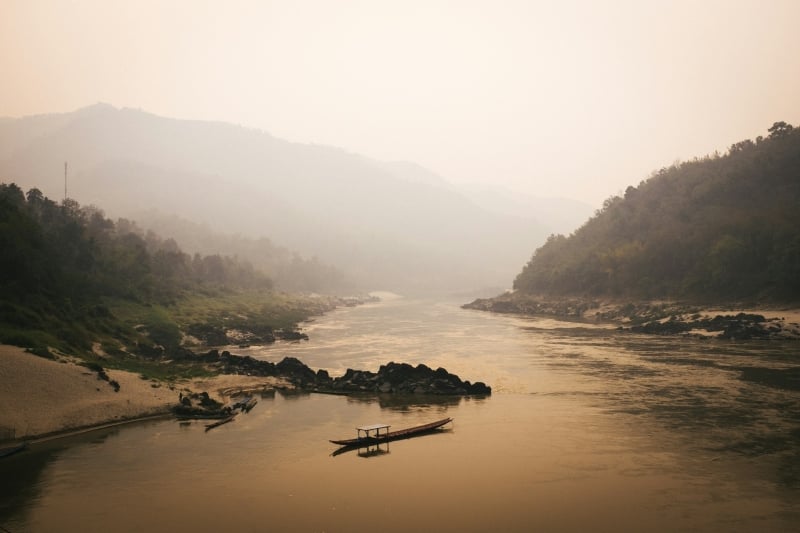
The Mekong River, stretching over 4,350 kilometres and sustaining nearly 70 million people across Southeast Asia, has become the epicentre of a growing environmental and socio-economic crisis. At the heart of this crisis lies China’s assertive dam-building strategy on the upper Mekong, known as the Lancang River. Over the past two decades, Beijing has constructed a cascade of 12 massive dams, altering the river’s natural flow and sediment transport. While these projects serve China’s energy and water security needs, they have unleashed profound consequences downstream, particularly in Vietnam’s Mekong Delta the country’s agricultural and fisheries hub.
Vietnam, already grappling with climate change and rising sea levels, now faces compounded challenges due to China’s upstream interventions. The dams have drastically reduced water flow and sediment reaching the delta, leading to soil erosion, salinization, and declining agricultural productivity. Farmers in the delta, who rely on nutrient-rich silt for rice cultivation, report diminishing yields. Vietnam, the world’s second-largest rice exporter, risks losing its competitive edge as fertile lands turn barren. The socio-economic implications are immense: millions of livelihoods tied to agriculture are under threat, and food security across Southeast Asia is destabilized.
Equally alarming is the impact on fisheries. The Mekong River is one of the world’s most biodiverse freshwater ecosystems, supporting over 1,000 fish species. Yet, dam construction has disrupted migratory patterns, reduced fish stocks, and endangered aquatic biodiversity. For Vietnam, where fish is a staple protein source and a vital export commodity, the decline in fisheries is not merely ecological but deeply socio-economic. Fisher folk communities are witnessing shrinking incomes, forcing migration and exacerbating rural poverty.
China’s assertive role in shaping the Mekong’s future reflects a broader geopolitical strategy. By controlling upstream water flows, Beijing wields hydro-political leverage over downstream nations. Vietnam, Laos, Cambodia, and Thailand find themselves increasingly dependent on China’s water release decisions, which are often opaque and unilateral. This lack of transparency fuels distrust and dissent. Vietnam, in particular, has voiced concerns through bilateral and multilateral channels, including the Mekong River Commission, but Beijing’s reluctance to engage meaningfully underscores its dominance.
The ecological crisis extends beyond agriculture and fisheries. Reduced sediment flow accelerates coastal erosion in the Mekong Delta, threatening urban centres and infrastructure. Saline intrusion, worsened by diminished freshwater inflows, contaminates drinking water and devastates aquaculture. Vietnam’s shrimp industry, a major export earner, faces declining productivity as brackish water ecosystems collapse. The cumulative effect is a socio-economic spiral: declining rural incomes, rising urban migration, and mounting pressure on Vietnam’s social safety nets.
Critically, China’s dam-building is not an isolated environmental issue but part of a larger pattern of assertive resource control. By financing dam projects in Laos and Cambodia, Beijing extends its influence across the Mekong basin, creating a network of dependency. Vietnam’s dilemma is acute: while it seeks cooperative ties with China for economic and political stability, it cannot ignore the existential threat posed to its environment and economy. This tension manifests in Hanoi’s cautious diplomacy balancing protest with pragmatism, voicing dissent while avoiding outright confrontation.
The crisis also raises questions about regional governance. The Mekong River Commission, tasked with fostering cooperation among riparian states, remains weak in enforcing compliance. China, not a full member, sidesteps accountability, further undermining collective action. Scholars argue that without stronger regional mechanisms, unilateral dam-building will continue unchecked, deepening ecological degradation. Vietnam’s calls for transparency and equitable water-sharing highlight the urgent need for reform, yet progress remains elusive.
From a socio-political perspective, dissent against China is growing within Vietnam. Civil society groups, environmental activists, and local communities increasingly criticize Beijing’s disregard for downstream impacts. This dissent, however, faces constraints under Vietnam’s political system, where public protest is tightly controlled. Nonetheless, the simmering discontent reflects a broader regional unease: China’s pursuit of hydropower supremacy is perceived not as development but as domination.
Looking ahead, Vietnam must navigate a precarious path. Strengthening resilience in the Mekong Delta through adaptive agriculture, improved irrigation, and climate-smart practices is essential. Diversifying protein sources and investing in aquaculture innovation may mitigate fisheries decline. Yet, these domestic measures cannot substitute for regional cooperation. Vietnam’s challenge is to galvanize collective action among ASEAN states, pressuring China to adopt transparent and sustainable water management.
In conclusion, China’s Mekong dams epitomize the intersection of environmental degradation and geopolitical assertiveness. For Vietnam, the consequences are stark: declining agriculture, collapsing fisheries, eroding ecology, and socio-economic instability. The crisis underscores the urgent need for regional solidarity and international advocacy to counterbalance China’s unilateralism. Without decisive action, the Mekong Delta Vietnam’s lifeline risks becoming a casualty of hydro-political power.
Source- Mizzima- News From Myanmar-November 22, 2025
Sun Lee is the pseudonym of a writer who covers Asia and geopolitical affairs.


