
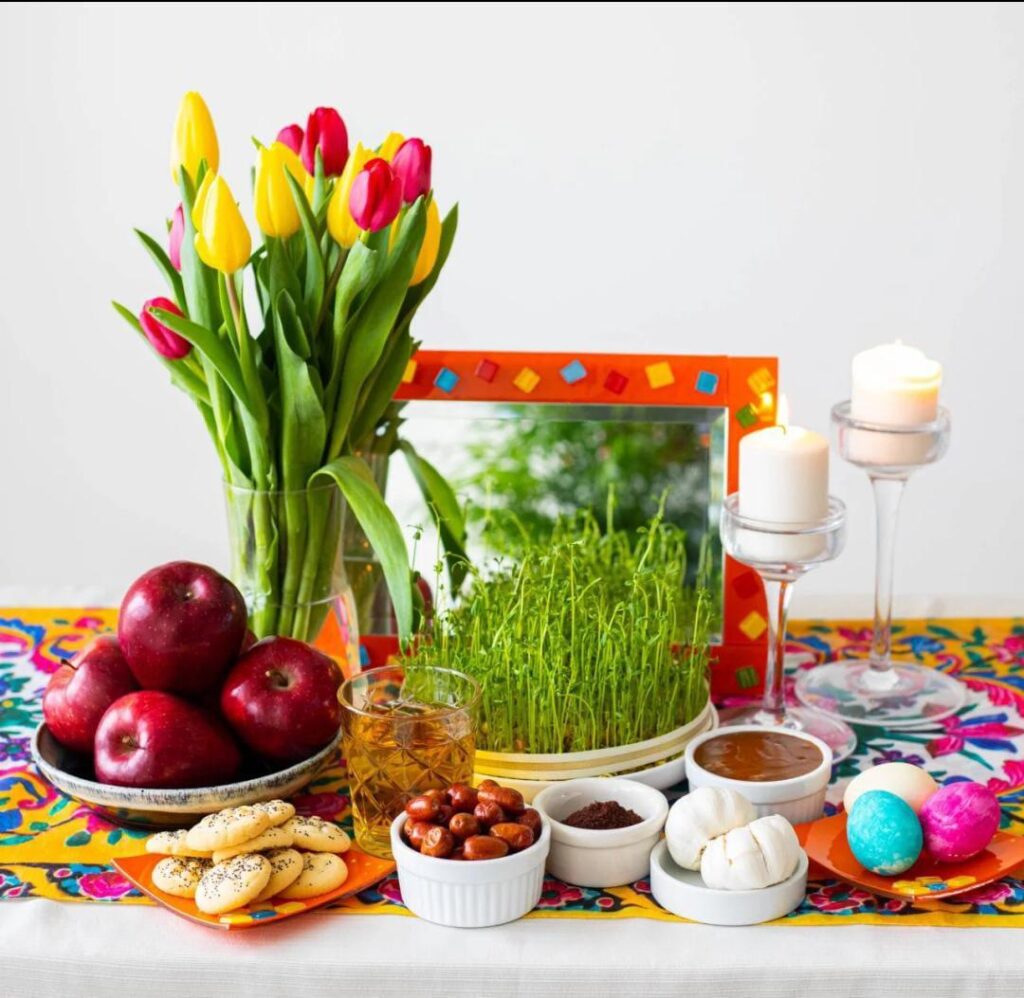
Spring is a magical experience. After the cold winter, when everything seems lifeless, the arrival of spring brings the whole world back to life. The earth overflows with colors and the fresh scent of greenery. What once appeared dark and cold is revived again. Beneath the harsh, frozen ground, trees prepare to be reborn.
In the same way, spring brings hope for renewal in our own lives. It is a time to refresh our inner energy, awaken our spirits, and renew our hopes. Every season has its own beauty, but spring is often considered the most beloved. Watching lifeless plants come back to life never fails to bring joy to the heart. Roses that looked like dry sticks just a week ago now bloom with green leaves and fresh buds.
As plants and trees grow, bright green leaves appear, bringing new colors into our lives. Flowers bloom, spreading their fragrance through the air, allowing everyone to enjoy nature’s beauty.
Regions near the equator receive sunlight throughout the year. However, countries in the northern and southern hemispheres experience seasonal changes spring, summer, autumn, and winter due to the Earth’s tilt and its movement around the sun.During this journey, the Earth experiences two equinoxes each year around March 21 and September 23 when day and night are equal across the planet.
The March equinox marks the official beginning of spring in the northern hemisphere. It signals the end of the harsh winter, where snow melts, animals awaken, and the environment gradually transforms into a colorful landscape filled with blooming flowers.For over 3,000 years, the first day of spring in the northern hemisphere has been celebrated as Nowruz, the Persian New Year, by more than 300 million people across regions such as the Balkans, the Black Sea basin, the Caucasus, Central Asia, and the Middle East.
According to UNESCO, the return of spring holds deep spiritual meaning, symbolizing the victory of good over evil and joy over sorrow.
This celebration is recognized as part of the Intangible Cultural Heritage of Humanity, and in 2010, the United Nations officially declared March 21 as International Nowruz Day.
Because most countries are located in the northern hemisphere, seasonal changes are more noticeable there. Many cultures celebrate the arrival of spring such as the colorful Holi festival in India. Just as nature revives after winter, this transformation reflects our own lives.
Nowruz is a New Year celebration that brings fresh emotions, beautiful hopes, and happiness into people’s hearts. It is widely celebrated across different cultures and communities around the world. Ancient Persia was home to diverse communities, each with unique customs and traditions. Among them, the most important celebration is Nowruz, observed on the first day of spring. For over 3,000 years, people influenced by Persian culture have celebrated it with great joy and pride.
The significance of celebrating the first day of spring has amazed modern scholars, as ancient Persians understood its value long ago. In 2010, through international cooperation, the United Nations officially recognized Nowruz as an international observance under the theme of promoting peace and cultural harmony.
Countries such as Afghanistan, Azerbaijan, Albania, Iran, India, Tajikistan, Kyrgyzstan, Turkey, and Turkmenistan celebrate this festival, highlighting a shared culture of peaceful coexistence. Historically, Nowruz was first celebrated by followers of Zoroastrianism, where the arrival of spring held deep spiritual importance. It marked a time of moving away from negativity and embracing positivity, joy, and renewal.
Ancient legends, including those about the Persian king Jamshid, are closely linked to Nowruz. Even today, in Iran, the celebration is sometimes referred to as “Nowruz-e Jamshidi.” According to legend, King Jamshid once rose into the sky, astonishing his people. That day was celebrated with great joy, and it became associated with Nowruz.
On Nowruz, people prepare special foods, visit relatives and friends, exchange greetings, and strengthen relationships. Cultural performances, traditional games, and colorful activities make the celebration vibrant especially for children, who enjoy games like decorating eggs.
Families also share traditional meals made from local ingredients. One of the most important traditions is the preparation of the Haft-Seen table in Iran, which includes symbolic items such as water, candles, grains, fruits, mirrors, and decorated eggs representing purity, light, and prosperity. Before Nowruz, people perform Khaneh Tekani, a deep cleaning of their homes, symbolizing a fresh start. Houses are thoroughly cleaned, repaired, and decorated, welcoming the new year with positivity.
Preparations also include shopping for new clothes, sweets, flowers, and items for the Haft-Seen table. Markets become lively and colorful during this time. Another important tradition is Chaharshanbe Suri, celebrated on the last Wednesday before Nowruz. People jump over fire while chanting phrases symbolizing the release of negativity and the welcoming of strength, health, and energy.
As the new year arrives, people gather with loved ones to celebrate. More than anything, Nowruz is about sharing happiness, hope, and love with those who matter most.
Nowruz is not just the beginning of a new year it is a celebration of life, renewal, and the enduring power of hope. Among the New Year traditions, seven special elements hold a central place. Apples, green sprouts, wheat-based foods, red berries, garlic, vinegar, and coins are used to decorate the table. The Holy Quran is also placed on the special cloth, along with a book of poems by Hafez.
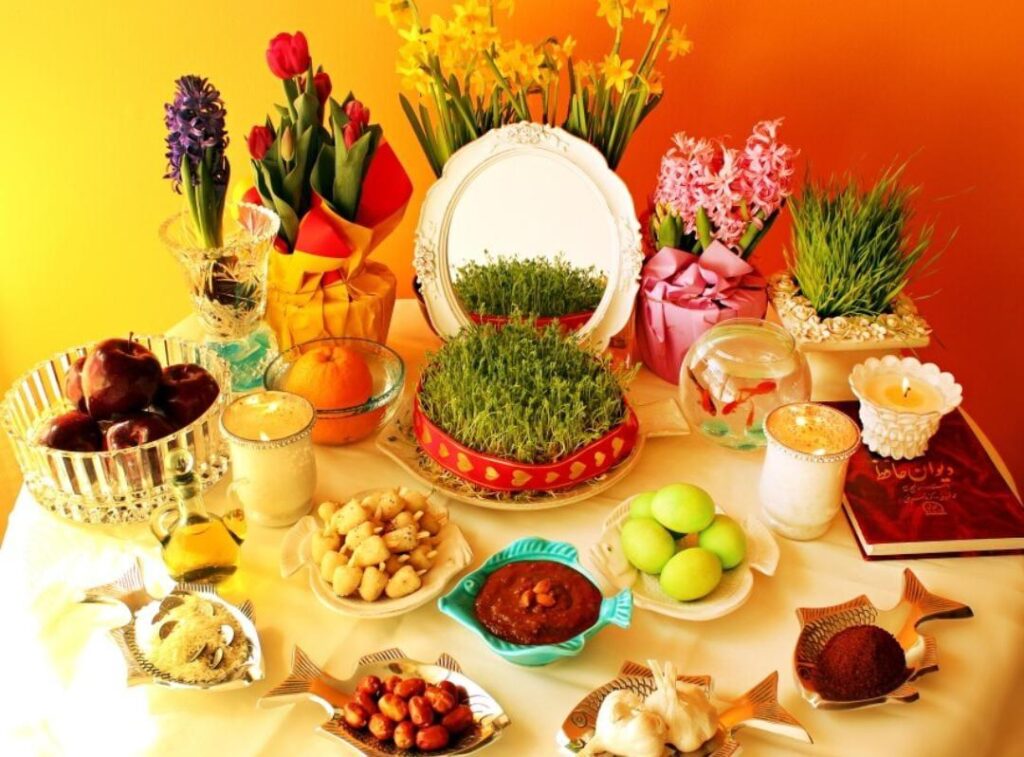
Some people also include the national epic of Iran, the Shahnameh written by Ferdowsi. Although this celebration began with the influence of Zoroastrianism, with the arrival of Islam, Persians adapted their traditions by embracing Islamic values and removing practices that contradicted them. Meanwhile, Zoroastrians living in Iran continue to celebrate this festival in their own traditional way.
Preparations for Nowruz begin with Chaharshanbe Suri, which is celebrated on the last Wednesday of the Iranian year. This day is filled with traditional customs and positive symbolism. One of its most unique rituals is jumping over fire. At sunset, people light bonfires and leap over them while chanting:
*”My yellow (weakness) is yours, and your red (strength) is mine* .”
Through this ritual, people pray for their sorrows and hardships to disappear and wish for strength, health, and a better life. On the final day of the year, people eagerly return to their homes to celebrate the New Year with relatives, friends, and loved ones. After all, what is a New Year celebration if not sharing emotions, hopes, and happiness with those we cherish?

By Zamaa Shifani


