
The development may provide an early test of bilateral cooperation following Bangladesh’s recent political transition, analysts say
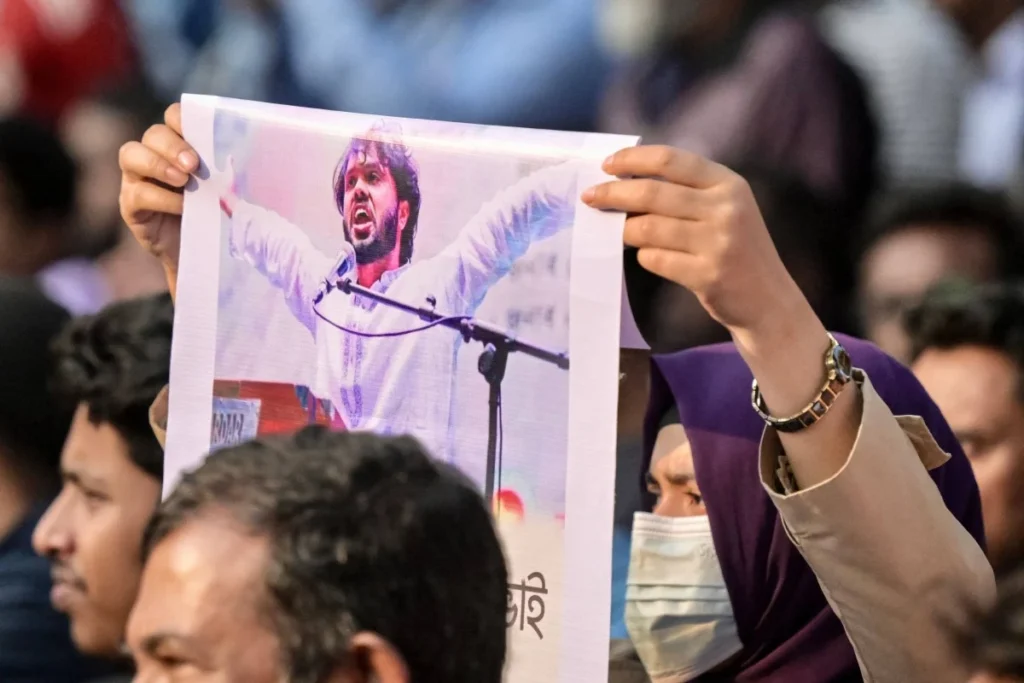
Indian police have arrested two suspects in the killing of a prominent Bangladeshi student leader, a development analysts say could help ease strained ties between the neighboring countries.
The detention of the two men over the death of Sharif Osman Hadi – whose killing last year triggered anti-India protests in Bangladesh – may provide an early test of cooperation between New Delhi and Dhaka following Bangladesh’s recent political transition.
Hadi was shot in the head last December during an election campaign and later died while being treated in a Singapore hospital.
His death sparked speculation in Bangladesh that India was sheltering the killers, despite Delhi’s assurances that it would cooperate with authorities investigating the case.
On Sunday, Indian police said they had detained two suspects – Faisal Karim Masud and Alamgir Hossain – in the state of West Bengal, which borders Bangladesh, according to local media reports.
“There was credible information that two Bangladeshi nationals, after committing serious crimes including extortion and murder in Bangladesh, had fled their country and illegally entered India, and were trying to take shelter in the border area of Bonga on with the intention of crossing back to Bangladesh,” police said in a statement.
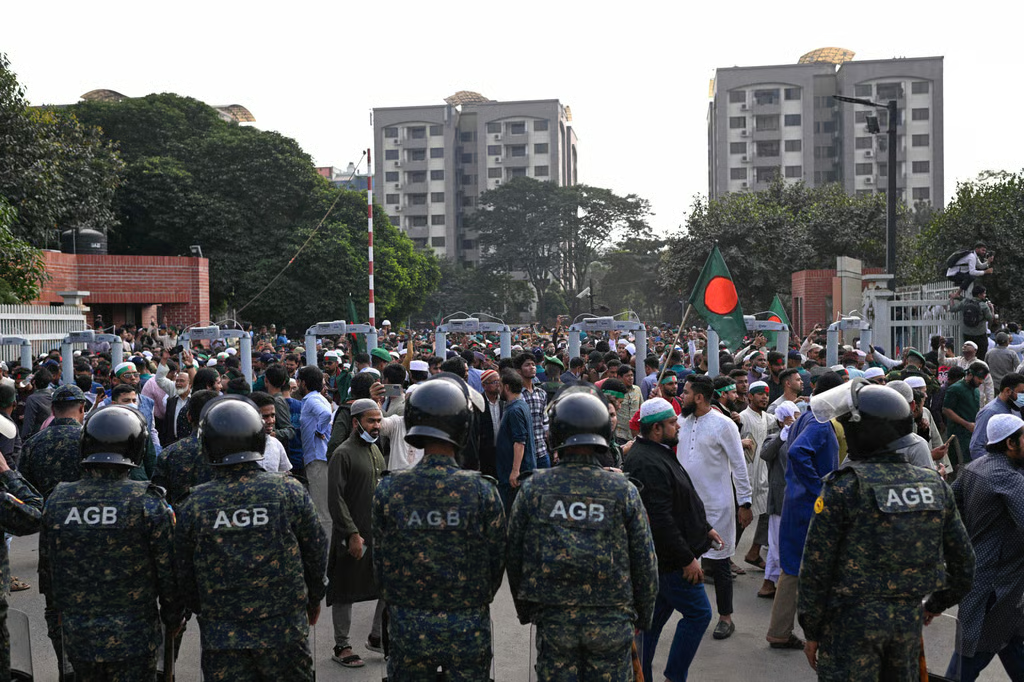
Security forces stand guard at the entrance of Bangladesh’s parliament complex in Dhaka ahead of funeral prayers for activist Sharif Osman Hadi on December 20, 2025. Photo: AP
The two suspects are likely to be deported because they cannot be tried under Indian law since the crime was committed in Bangladesh, officials have said. Dhaka has initiated steps for the suspects’ repatriation, according to reports.
India has an extradition treaty with Bangladesh under which criminals can be deported from each other’s territories.
“If Bangladesh puts in a formal request, then this channel can be activated for their deportation,” said Priyajit Debsarkar, an author who writes on South Asia.
Politically, analysts said the arrests – and the possible return of the suspects – could help build goodwill between the two countries after Bangladesh’s new government took office last month under Prime Minister Tarique Rahman.
“If these people are actually found guilty after being tried by authorities, it will serve as a new benchmark of cooperation between India and Bangladesh. It will only strengthen the people-to-people cooperation and trust,” Debsarkar said.
Ties between Bangladesh and India had frayed since student-led protests in 2024 ousted the regime of former prime minister Sheikh Hasina, forcing her to seek refuge in India – a development that resulted in a gradual deterioration of previously strong relations.
Delhi’s discomfort increased as Bangladesh’s interim administration was seemingly fostering close ties with arch-rival Pakistan. India backed Bangladesh’s 1971 war of liberation following a military crackdown by Pakistan that resulted in a humanitarian crisis.
Speculation over Hadi’s killing had worsened bilateral relations, resulting in a suspension of visa services for each other’s citizens.
Handing back Hadi’s suspected killers would help staunch the anti-India rhetoric of the past months, Debsarkar said.
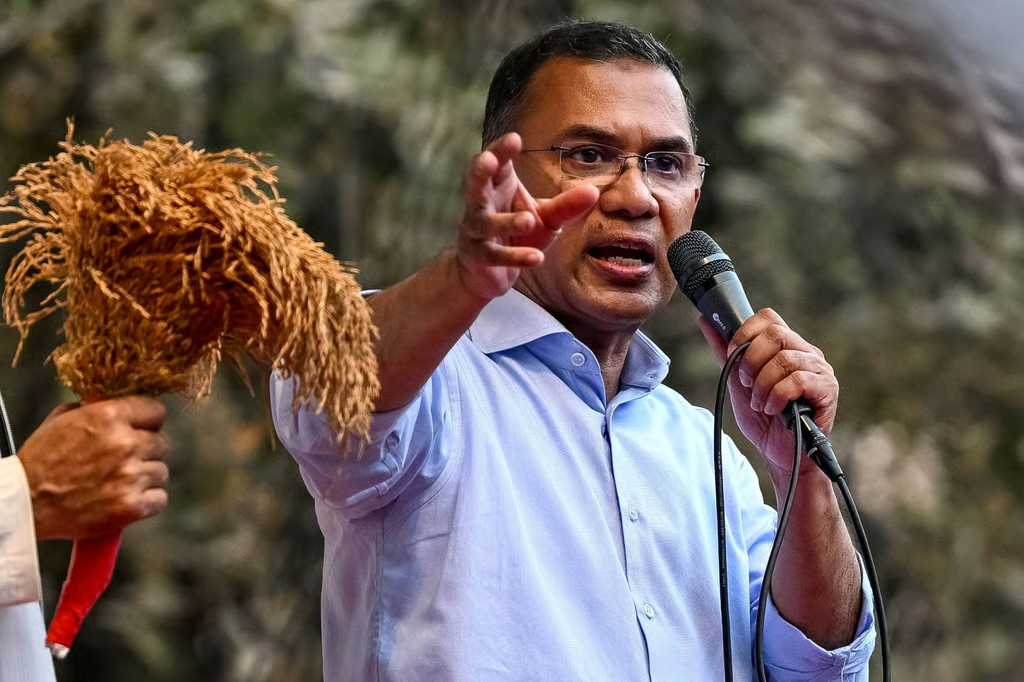
Bangladesh Nationalist Party Chairman Tarique Rahman. Photo: AFP
The ruling Bangladesh Nationalist Party has said it will follow a centrist approach to rebalance Dhaka’s ties with India, Pakistan and China.
Bangladesh’s new government lifted the visa suspension for Indian nationals soon after being elected, while India is believed to be gradually resuming full visa services for Bangladeshi citizens.
Still, analysts said lingering anti-India sentiment among influential student leaders in Bangladesh could complicate efforts to fully reset relations.
“Prime Minister Tarique Rahman will have to convince other leaders in Bangladesh that doing business with India is in their favour,” said Sreeradha Datta, professor of international relations at O.P. Jindal Global University in India’s Haryana.
Datta said the detention of the murder suspects was “a good signal to Bangladesh”, and urged India to build on the positive momentum through measures such as easing visas.
Both countries could also benefit from a reset in diplomatic ties given heightened geopolitical tensions such as the war in Iran, which has sent energy prices soaring worldwide.
“Bangladesh will need a lot of energy. India has always been a very reliable partner for Bangladesh’s energy trade,” Datta said.
Authorities moved the Eid ul-Fitr holiday forward to help conserve electricity and fuel in response to the Middle East crisis.
Bangladesh, which relies on imports for 95 per cent of its energy needs, has also imposed daily limits on fuel sales. It recently bought LNG from the spot market at steep prices, underscoring the energy shortage.

(Biman Mukherji has more than two decades of reporting and editing experience in Asia, focusing on Indian and Asia business.)


