
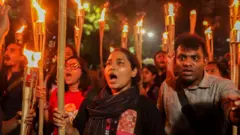
The political upheaval that followed Bangladesh’s July 2024 uprising and the subsequent removal of Prime Minister Sheikh Hasina has ushered in one of the most consequential transitions in the country’s post-1971 history. However, it was not only Bangladesh that experienced this magnitude of political upheaval. The ‘Arab Spring’ experiments in the Middle East and North Africa were characterized by severe violence, peaceful protests escalated into civil war with hundreds of thousands of deaths, destruction of infrastructure, massive displacement, and institutional collapse. Similarly, Nepal, Pakistan, and Sri Lanka in South Asia also experienced one or the other type of political turbulence.
A ban imposed on 26 major social media platforms in early September 2025 by the government of Nepal appeared spark longstanding grievances with corruption, economic stagnation, and political elite dominance. The confrontations that followed between demonstrators and security forces turned violent, resulting in the deaths of around 20 civilians, injuring hundreds, and the parliament and other government offices were set on fire by protestors amid the unrest, resignation of the Prime Minister K. P. Sharma Oli, dissolution of the parliament, and establishment of an interim government. Despite no nationwide mass protests or violent clashes with security forces being reported, now in this final phase of the transitional period before the March 2026 elections, political tensions over the electoral environment have yet to subside as some political parties claimed that dissolving Parliament was unconstitutional and refused to participate in elections under the current conditions.
The removal of Prime Minister Imran Khan in April 2022 via a parliamentary no-confidence vote and subsequent imprisonment appeared to usher in a prolonged deadlock between his party (the Pakistan Tehreek-e-Insaf – PTI), and major political parties in Pakistan. And the deadlock contributed to periodic protests, distrust in democratic processes, and institutional friction over the rule of law and civil-military relations. A march/protest organised in support of Palestinians turned confrontational with authorities, leading to violent clashes, deaths, mass arrests, and banning of TLP under anti-terror laws, etc., which inevitably supported the allegation of a growing pattern of curtailing opposition through legal means.
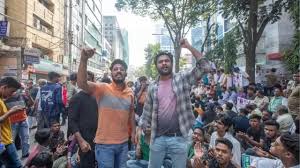
Sri Lanka’s 2022–24 crisis was characterized, like Bangladesh’s, by economic stagnation and the incumbent head of the government fleeing the country. But the similarity seems to end there. Sri Lanka’s 2022–24 crisis was primarily economically driven, due to acute foreign-exchange shortages, fuel and medicine shortages, and fiscal collapse. It was mass civically led (broad social groups mobilized without a unified armed faction), non-destructive at scale (no civil war, no nationwide destruction of infrastructure), and institutionally contained (state institutions such as parliament, judiciary, central bank etc functioned throughout). That movement culminated in an electoralized transition i.e., protests translated into parliamentary elections, constitutional amendment, and legal reforms aimed at checks on executive power.
In contrast, Bangladesh’s turmoil since 2024 is both political and institutional. It combines street power and extra-institutional force (organised militant youth group actions with direct confrontations against state authority), weak institutional enforcement (failure of law enforcement, judiciary, and civil administration to prevent/contain violence and protect minorities), and political fragmentation and polarization (major parties, especially the Awami League, effectively marginalized), thus creating a legitimacy deficit.
While the interim government under Muhammad Yunus has committed to stabilizing the country, it appears the goals are still far away. What transpired is a volatile transition marked by institutional weakness and declining public trust in those institutions, coupled with rising street power and persistent violence. Domestic political tension is acute: the historic ruling party, the Awami League, has been banned from political activity, which polarized supporters and opponents alike. Islamist parties — notably Jamaat-e-Islami, once prohibited — have re-entered mainstream politics and expanded their appeal, raising concerns about a shift in ideological balance.
In a nutshell, Bangladesh’s situation reflects a multi-layered crisis where political decay, economic drag, and social polarization interact. Thus, Bangladesh’s likely trajectory even after the 2026 election seems not that clear. Further, if any external manipulation is involved (as some sections claimed, in the sense of coordinated foreign covert interference), maintaining a safety-oriented cordiality with India, a ‘must’ for a nation in South Asia, would be difficult and impacted decisively in the long run.
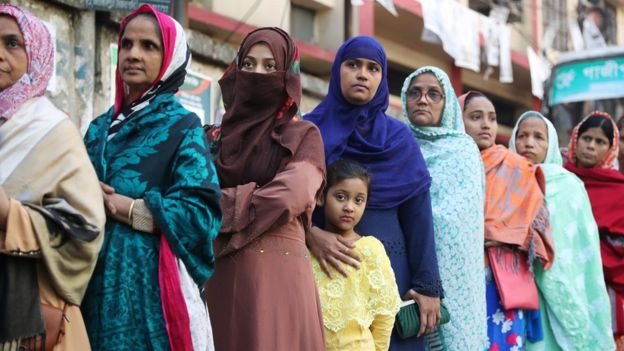
It is in this context that attention of many was being drawn to what the former PM Hassina hurled accusation at i.e. that her refusal to “cede” or hand over access to the St Martin’s Island – a small but strategically located island in the Bay of Bengal near Myanmar – was one reason a foreign power wanted her out of office, and even for the killing of (her father) Bangladesh’s founding leader Sheikh Mujibur Rahman who rejected the same demand. And her accusation, even after leaving office, during a Facebook Live session in June 2025, that the new government led by economist Muhammad Yunus is acting under US influence is another instance that reflects her perception of the whole issue surrounding Bangladesh’s current situation.
Despite the interim government under Muhammad Yunus has articulated a foreign policy of balance, many steps that have been taken; such as visa suspensions, diplomatic caution, symbolic disengagement, restrictions on land transport of certain goods to India, fluctuations in tariff policies, and even statements suggesting Bangladesh as a ‘gateway for Chinese economic influence into India’s northeast’; etc. contributed to widen the gap between the two countries.
The latest move, inviting China to be involved in the Teesta Master Plan (TMP) appeared to be deepening the wedge. TMP is a large-scale river development proposal aimed at managing the Teesta River, which flows from the eastern Himalayas through India’s Sikkim and West Bengal before entering northern Bangladesh. This development, in the backdrop of India’s effort to reach a permanent Teesta water-sharing agreement, has been repeatedly stalled for decades, making the matter worse. Further, it touched a very sensitive nerve in the defense strategy of India, the Siliguri Corridor. The Teesta River flows very close to the Siliguri Corridor (the “Chicken’s Neck”) in northern West Bengal. If that narrow strip of about 20 – 25 km wide is closed or cut off, India’s entire Northeast with eight Indian states (Arunachal Pradesh, Assam, Manipur, Meghalaya, Mizoram, Nagaland, Tripura and Sikkim) would be physically isolated from the mainland by land.
Apart from those concerns and challenges to national security, the current economic sphere also presents daunting tasks to the incumbent interim government. Despite inflation easing from 11.6% in July 2024 to 9.05% in May 2025 and ready-made garment exports increasing by 10%, the continued youth unemployment and loss of 2.1 million jobs remain a pressing concern. With those, inter alia, competing and consequential factors of security and economic domains, Bangladesh is heading to the polls in February 2026, amidst around 62 election-related clashes reported already, including the killing of 16 political activists.
How will the vote of around 120 million voters in nearly 43.000 polling centres shape the Bangladesh’s parliamentary election in February 2026? And how would it shape the Post-2026 Election – the future of Bangladesh? Three (3) scenarios could be discussed.
One scenario is, a fragile democratic reset i.e. a limited stabilization achieved through electoral reset. Minimal legitimacy, revived economic confidence and stabilized foreign relations could be achieved through a broadly participatory election, despite polarization and institutional weakness remain unresolved. Still, if the elected government is open for resolutions instead of bans, respect for civil liberties, and effective in law enforcement, there is a potential to rebuild investor confidence and strengthen democratic legitimacy.
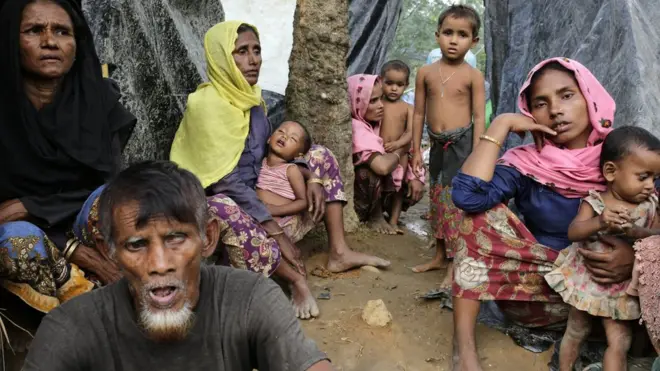
Scenario No 2 is a contested election and prolonged instability; the most likely one, considering the present circumstances. Characterized by limited participation, post-election protests, and weak governing mandate; a non-inclusive or violent election would entrench political fragmentation, weaken governance, minority insecurity, prolong economic stagnation and higher probability of domestic factions resorting to extra-institutional contests. International engagement would be more of short-term reactions rather than strategic preemptive, and foreign partners would avoid long-term commitments.
The third scenario is the ideological shift and authoritarian drift i.e. escalating law-and-order failures could justify stronger executive control, producing an ideologically reconfigured but structurally authoritarian state. It would not only reflect a declining trend of democratic posture, but also the new ideological orientation of the state, sans any focus towards resolving governance deficits. Simply, a situation which mirrors the consolidation of Islamist political influence, combined with stronger executive control justified by law-and-order failures. If Islamist parties significantly expand parliamentary power, the ideological balance within state institutions could shift, affecting civil liberties, minority rights, and foreign policy orientations — though this would still be driven chiefly by domestic politics.
However, one common factor in all future scenarios above appears to be the domestic forces. Aspirations of Bangladesh’s youthful population, sluggish economy, weak institutions, and growing influence of radical Islamist groups are likely to be the decisive factors, despite external geopolitical actors will continue to exert pressure and pursue their interests. Foreign policy issues, especially the relationship with India, and implications of the intensifying U.S.-China rivalry would take the centre stage, while Rohingya refugees languishing in camps near the Myanmar border, and the issues related to climate change as one of the world’s most densely populated countries, would also press Bangladesh for answers. Numerous challenges await whoever comes to power after 12 February 2026 would ensure Bangladesh continues to be in the headlines.
Dr. Prathap Tillekerathne


