———————————————————————————————————————————————————————-
Across the Region, Electricity Demand Surged with Extreme Heat, Population Growth, Desalination Needs, and Industrial Expansion
In 2025, the Middle East’s energy sector held firm amid cooling global markets, geopolitical friction, and an uneven global energy transition. The region continued to underpin global supply, producing roughly 30 percent of global oil and 17 percent of natural gas, according to the International Energy Agency (IEA). Brent crude prices averaged in the low $70s per barrel for much of the year, before trending lower toward year-end as supply surpluses and non-OPEC production weighed on markets. Even so, energy revenues remained resilient, reinforcing hydrocarbons’ central role in regional economies.
What worked in 2025 was the region’s ability to monetize gas while managing oil supply with relative discipline. OPEC+, the group that formed in 2016 to include both OPEC countries and a number of other major producers like Russia, Azerbaijan, and Brazil, began unwinding 2.2 million barrels per day of voluntary production cuts from April, introducing gradual monthly increases, including 548,000 barrels per day in August, while avoiding abrupt shocks to the market. This approach did not stop prices from softening, but it limited volatility and preserved producer revenues.
Natural gas stood out as the region’s most strategic success. Qatar advanced its North Field expansion, with first liquified natural gas from the East phase expected by mid-2026 and total capacity targeting 142 million tons per year by 2030, reinforcing its position as a global liquified natural gas anchor. In the United Arab Emirates, the Abu Dhabi National Oil Company (ADNOC) secured $11 billion in structured financing for its Hail and Ghasha sour gas project, signaling sustained investor confidence in long-term gas demand despite softer prices.
Regional gas trade also deepened. Israel expanded exports to Egypt and Jordan and finalized a landmark agreement linked to the Leviathan field, enabling exports of approximately 130 billion cubic meters of gas to Egypt through 2040, worth upwards of $30 billion. These flows reinforced regional interdependence, even as brief disruptions followed mid-year tensions involving Iran.
Electricity demand, however, exposed persistent vulnerabilities. Across the Middle East and North Africa, extreme heat, population growth, desalination needs, and industrial expansion pushed demand higher, often faster than capacity additions. Gas continued to generate more than two-thirds of regional electricity, while renewables and nuclear made only incremental gains. In Iran, rolling blackouts disrupted industry and intensified domestic criticism of energy management. Iraq continued to struggle with unreliable power supply, despite its hydrocarbon wealth, underscoring infrastructure and governance constraints.
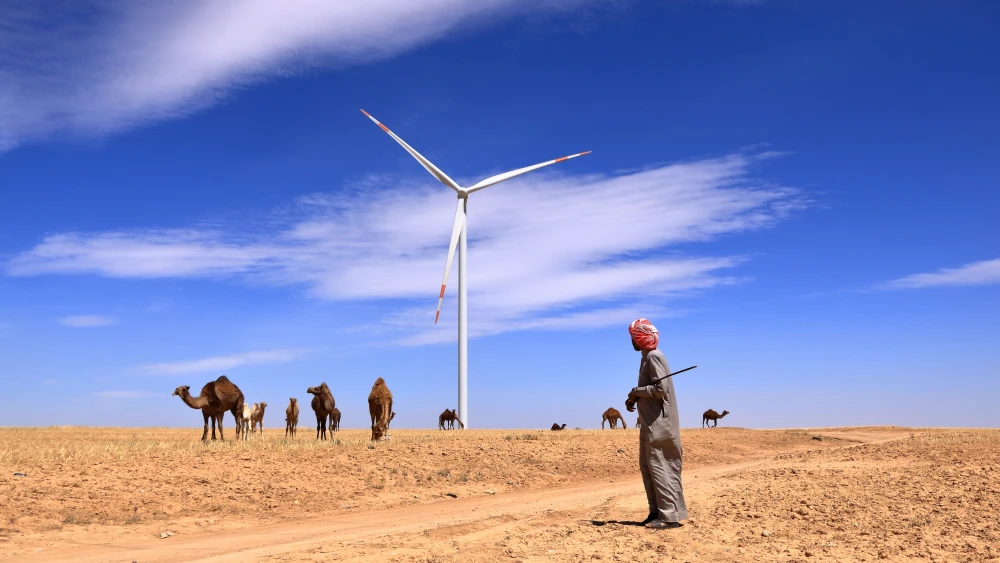
Renewables delivered visible, though limited, progress. Saudi Arabia nearly doubled its installed renewable capacity toward 12.7 gigawatts, driven by large-scale solar projects under the National Renewable Energy Program. The United Arab Emirates advanced Masdar’s $6 billion, 5-gigawatt solar plus 19-gigawatt-hour battery project aimed at delivering round-the-clock clean power and improving grid stability. These initiatives reduced domestic fossil fuel burn and freed gas for export, but renewables still supplied only around 7-15 percent of regional electricity, constrained by subsidies, intermittency, and regulatory fragmentation.
Hydrogen ambitions proved more uneven. While flagship projects such as Saudi Arabia’s green hydrogen facility at NEOM continued to move forward, several blue and ammonia-based initiatives slowed as market demand and financing conditions appeared less certain than earlier projections. Iran’s position deteriorated further as the United States intensified sanctions on petroleum networks, shipping, and intermediaries, tightening export constraints and deepening isolation.
The diplomatic front produced mixed outcomes. Persian Gulf states expanded energy ties with China across oil, gas, and clean technologies, while COP30 in Belém emphasized climate finance and adaptation but avoided binding commitments on fossil fuel phase-out, disappointing climate advocates while preserving producer flexibility.
Energy producers will enter 2026 with gas expansion projects nearing delivery, oil markets showing persistent surplus risks, and electricity systems under growing strain from rising demand. The region’s ability to manage these pressures will increasingly define its energy trajectory.
In 2026, liquified natural gas ramp-ups, particularly from Qatar’s North Field, will shape export volumes and pricing leverage, while expanding regional gas trade will affect energy security across the Persian Gulf and Eastern Mediterranean. Renewable energy growth will hinge less on capacity announcements and more on grid upgrades, storage deployment, and operational reliability. At the same time, OPEC+ supply management will face renewed tests amid uncertain demand, while sanctions enforcement and regional tensions will continue to influence production and investment decisions. How effectively Middle Eastern producers translate existing projects into reliable supply will determine whether 2026 marks incremental diversification or a renewed consolidation around hydrocarbons.
December 25, 2025
By-Umud Shokri
Middle East Forum


